
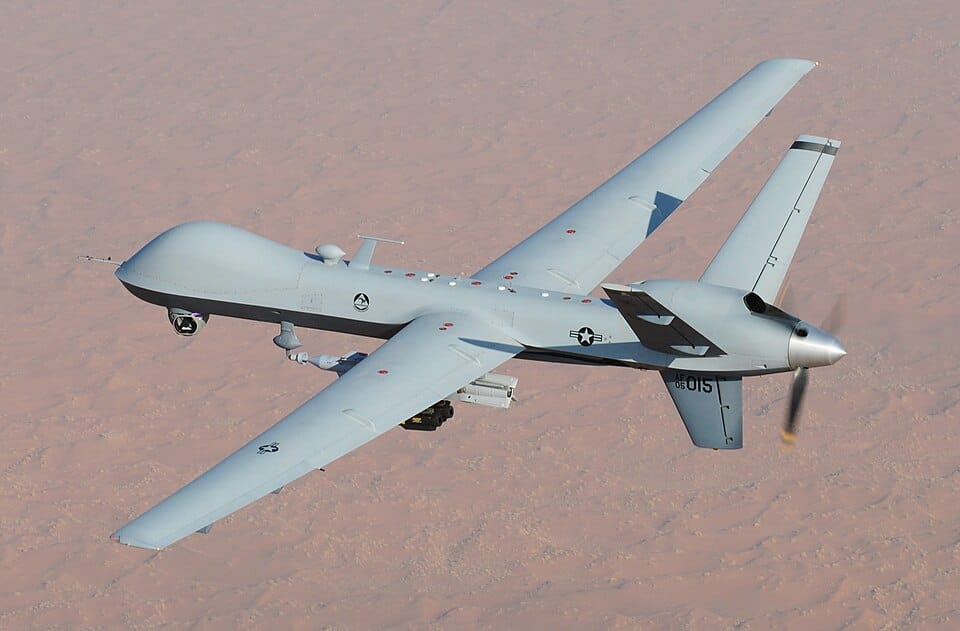
At ILA Berlin, between the static displays and the obligatory handshakes, General Atomics Aeronautical Systems and Germany’s INTEC Group signed the kind of agreement that reshapes European defence procurement for a decade. A memorandum of understanding, dated June 11, tasks INTEC with integrating mission systems, supporting operational entry, and providing sustainment for the Gambit family of collaborative combat aircraft. Translation: America’s most ambitious autonomous drone programme now has a German partner, a German pitch, and a clear line to the Bundeswehr’s chequebook.
The timing is deliberate. Berlin wants roughly four hundred loyal-wingman drones operational by 2029, filling the gap until the Franco-German-Spanish Future Combat Air System delivers a crewed sixth-generation fighter sometime in the next decade. GA-ASI is betting the Gambit can win that race — but so are Boeing-Rheinmetall, Helsing, and Airbus-Kratos.
The competition for Germany’s combat drone future has officially begun, and every contender showed up armed.
Quick Facts
- Agreement: GA-ASI and INTEC Group sign MOU at ILA Berlin Air Show, June 11
- Platform: Gambit CCA — six modular variants sharing 70% common components
- Variants: ISR, air-to-air, trainer, stealth recon, carrier-based, and air-to-ground
- Requirement: Bundeswehr seeks ~400 loyal-wingman drones by 2029
- Competitors: Boeing-Rheinmetall MQ-28 Ghost Bat, Helsing CA-1 Europa, Airbus-Kratos XQ-58A Valkyrie
- Export timeline: First export airframes targeted for 2027; European configurations from 2029
The Gambit Architecture
GA-ASI President David Alexander has described the Gambit series as a modular family built around a common core. The concept is industrial efficiency applied to combat aviation: one chassis, six configurations. Landing gear, baseline avionics, and structural components are shared across approximately 70 percent of the platform. What changes between variants is the mission package — sensors, weapons bays, communication suites, and airframe geometry tailored to the specific role.
The six current Gambit variants cover the full operational spectrum. Gambit 1 handles long-endurance ISR. Gambit 2 is the air-to-air combat variant. Gambit 3 serves as an advanced adversary trainer. Gambit 4 — a flying wing — focuses on stealth ISR. Gambit 5 is designed for carrier-based operations. The newest member, Gambit 6, adds air-to-ground and surface-attack capability, optimised for suppressing enemy air defences or striking naval targets.
“The Gambit Series is a modular family of uncrewed aircraft built around a common core to accelerate development while keeping costs low. Our partnership with INTEC ensures sovereign capability for Germany.”
David Alexander
President, General Atomics Aeronautical Systems
This modular philosophy addresses one of Europe’s chronic defence procurement headaches: interoperability. A Gambit fleet can be reconfigured for different missions without procuring entirely different aircraft. For a Bundeswehr that must balance fiscal austerity with a rapidly expanding threat environment, the economics are attractive.
A Four-Way Fight for the Luftwaffe
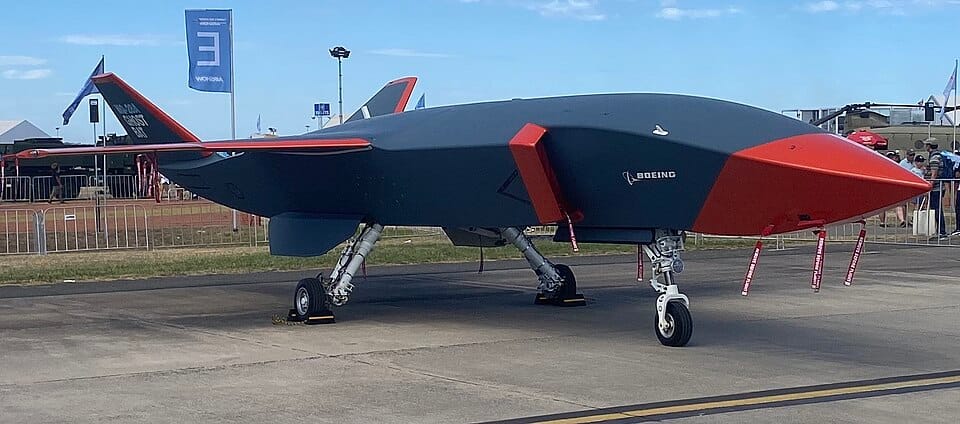
GA-ASI is not alone in courting Berlin. Boeing Defence Australia has partnered with Rheinmetall to offer the MQ-28 Ghost Bat — already flying in Australia and validated in stealth RCS testing. Helsing, the Franco-German AI defence start-up, is pushing its CA-1 Europa, a purpose-built European CCA designed to bypass American export restrictions. And the Airbus-Kratos partnership is pitching the XQ-58A Valkyrie, itself a veteran of the US Air Force’s CCA development programme.
Each contender brings distinct advantages. The Ghost Bat has flight-test maturity and a European production partner. Helsing offers full European sovereignty with no ITAR entanglements. The Valkyrie has logged thousands of test hours in American programmes. Gambit counters with modularity and the institutional weight of General Atomics, which has supplied Reaper and Predator drones to NATO allies for over two decades.
“Germany’s loyal wingman competition is the most significant autonomous combat aircraft procurement in European history. Whoever wins it sets the template for how NATO integrates AI-driven airpower.”
Dr. Ulrike Franke
Senior Policy Fellow, European Council on Foreign Relations
Germany’s 2029 Deadline
The Bundeswehr’s requirement is driven by urgency, not aspiration. The war in Ukraine has demonstrated the decisive role of drones in modern combat, and Germany’s defence spending surge — now tracking toward three percent of GDP — has created procurement budgets that did not exist three years ago. The loyal-wingman concept pairs uncrewed aircraft with manned fighters like the Eurofighter Typhoon, extending sensor coverage, increasing magazine depth, and absorbing risk that would otherwise fall on human pilots.
GA-ASI has set a target of 2027 for first export airframes, with European-specific configurations planned from 2029. INTEC’s role will be critical to that timeline: the German firm will provide the systems integration and sustainment infrastructure that allows Gambit to operate within Bundeswehr doctrine and NATO interoperability standards.
Whether the Gambit, Ghost Bat, Europa, or Valkyrie ultimately wins Germany’s competition, the broader signal is unmistakable. Europe is buying combat drones at scale, and the industrial base to build them is being assembled now, at air shows and in memoranda of understanding, one handshake at a time.
Sources: The Defense Post, Overt Defense, GA-ASI Press Release, UAS Weekly, The War Zone, Defense Daily, EDR Magazine
 English
0 Comments