

Quick Facts
- Announcement: April 9, 2026
- Goal: Develop small, disposable jet engines for tactical weapons
- Applications: Cruise missiles, loitering munitions, expendable drones
- Design life: Hours, not thousands of hours
- Key advantage: Mass production at a fraction of traditional engine costs
Why Throw Away an Engine?
A conventional jet engine like the Pratt & Whitney F135 that powers the F-35 is an engineering marvel — 40,000 pounds of thrust, thousands of precisely machined turbine blades, and a design life of thousands of flight hours. It also costs about $16 million and takes months to build. None of that makes sense for a weapon that flies once. A cruise missile needs an engine that runs for two to six hours at most. A loitering munition might orbit a target area for an afternoon before diving in. An expendable drone wingman might fly a handful of missions before being considered spent. Putting a multi-million-dollar engine in any of these platforms is like bolting a Ferrari engine into a go-kart headed for a demolition derby. What the military needs instead is a small turbojet or turbofan that costs tens of thousands of dollars, can be mass-produced using simplified manufacturing techniques, and delivers just enough performance to get the weapon to its target. No maintenance schedule. No overhaul. No second flight.The Manufacturing Revolution
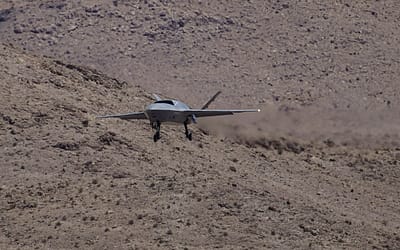
The key enabler is modern manufacturing technology. Additive manufacturing — 3D printing — allows engine components to be produced with fewer parts, less machining, and dramatically shorter lead times. A traditional jet engine might contain thousands of individually machined components assembled over weeks. A disposable engine designed for additive manufacturing might reduce that to dozens of printed parts assembled in hours. Companies like Kratos Defense and several smaller startups have been working on this problem for years. The Kratos TDI-J85 engine, for example, powers the company's XQ-58A Valkyrie drone and is designed for affordability and simplicity rather than longevity. The new Air Force contract pushes this concept further — toward engines so cheap that losing them is a rounding error in the defense budget. The implications ripple outward. If you can build a jet engine for $50,000 instead of $5 million, you can build a missile-carrying drone for the price of the missile itself. Suddenly, the math that has kept precision airpower expensive and scarce for decades collapses. You can afford to lose platforms. You can afford to saturate defenses. You can afford the kind of mass that wins wars of attrition.The Attrition Calculus
Modern air defense systems are extraordinarily lethal — and extraordinarily expensive. A single Patriot interceptor missile costs roughly $4 million. An S-400 engagement can cost even more. Forcing an adversary to expend a $4 million missile against a $100,000 drone with a $50,000 engine is the kind of cost exchange that wins wars before they start. This is the logic driving the Air Force's investment. The future of air warfare is not a small number of exquisite, irreplaceable platforms. It is a large number of affordable, expendable ones — each powered by an engine that was never meant to come home. The throwaway engine is not glamorous. It will never hang in a museum or power a record-breaking flight. But it may be the single most important propulsion development since the afterburner — because it makes possible a kind of air warfare that quantity-limited forces have never been able to fight. Sources: Air & Space Forces Magazine, Army RecognitionRelated Questions
What is a disposable jet engine?
A disposable jet engine is a small, cheap turbine designed to run for only a few hours and then be thrown away with the weapon it powers. In April 2026 the US Air Force awarded a contract to develop such engines for cruise missiles, loitering munitions, and expendable drones — weapons that fly a single mission and never return to base.
Why would the Air Force want throwaway jet engines?
Conventional engines are built for durability — the Pratt & Whitney F135 that powers the F-35 produces 40,000 pounds of thrust, costs about $16 million, and lasts thousands of hours. None of that makes sense for a weapon that flies once. Disposable engines trade longevity for low cost and mass production, reshaping the economics of air warfare.
What weapons would use disposable jet engines?
Disposable jet engines are intended for cruise missiles, loitering munitions, and expendable drones — weapons that need only a few hours of flight. A cruise missile typically runs its engine for two to six hours before striking. Cheap propulsion supports cheap, mass-produced weapons like the AGM-188 'Rusty Dagger' low-cost cruise missile.
How long does a cruise missile's engine need to run?
Not long. A cruise missile typically needs its engine to run for two to six hours at most, a loitering munition might orbit a target area for an afternoon, and an expendable drone may fly only a handful of missions. Because the engine is used once, designers can prioritize low cost over the long service life conventional engines require.
Are there other small engines on aircraft?
Yes. Beyond their main engines, most airliners carry a small auxiliary power unit — a compact gas turbine in the tail that supplies electricity and air on the ground. It shows how small, purpose-built turbines already handle specialized jobs. The military's disposable engines extend that idea to weapons. Learn about the hidden engine in your airliner's tail.

0 Comments