
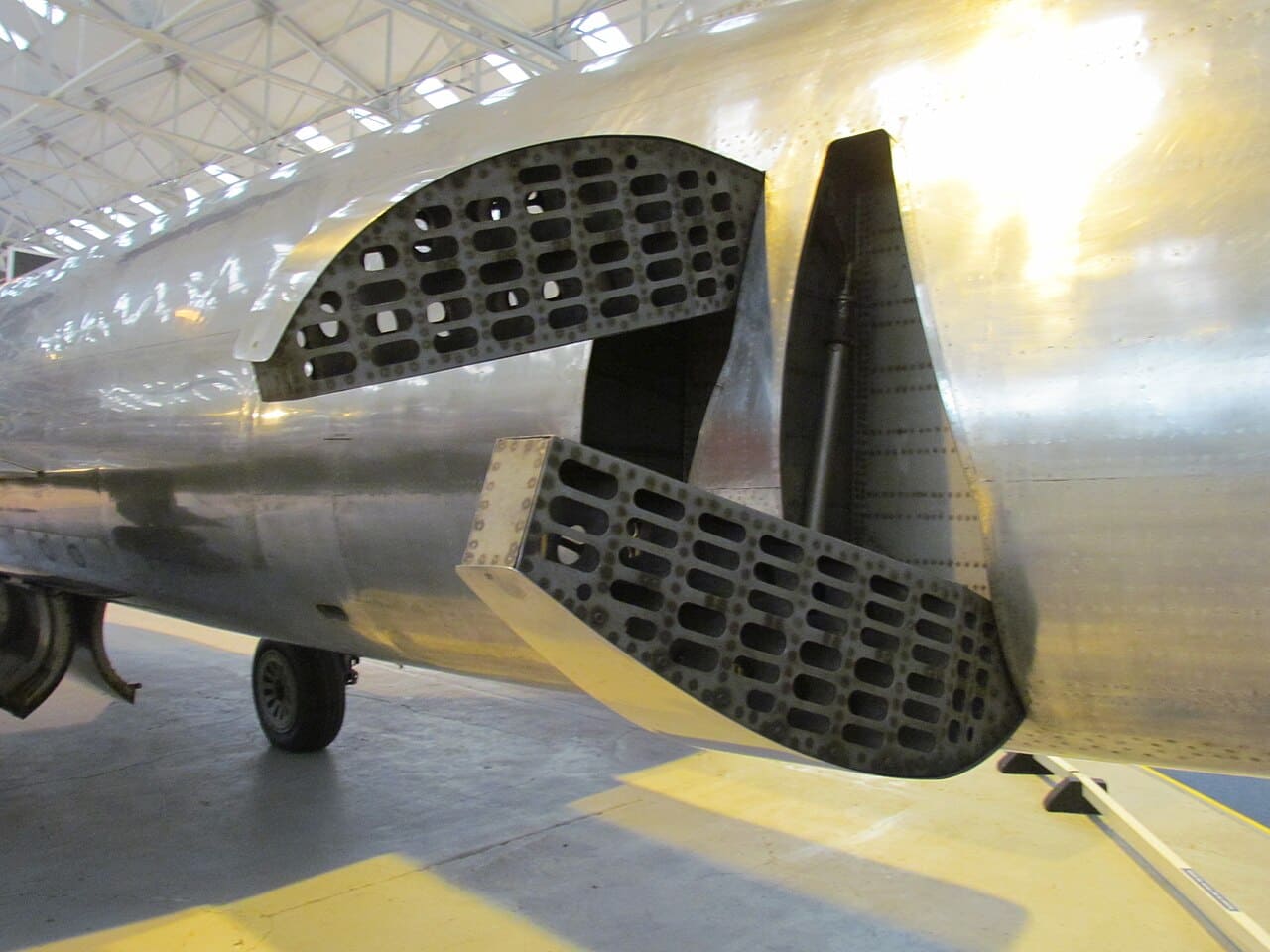
The Bristol Type 188 was Britain’s answer to the X-15: a research aircraft designed to probe the “thermal barrier” — the speed regime above Mach 2 where aerodynamic heating starts to damage conventional aluminium airframes. To survive it, the Bristol engineers constructed the fuselage skin from welded stainless steel. Then they fitted two of the most powerful turbojets available. Then they discovered that the aircraft would not, in fact, reach Mach 2. It could not even reliably stay supersonic long enough to gather thermal data.
Britain’s most expensive Mach 2 research programme produced an aircraft that, on its best day, briefly touched Mach 1.88 before the fuel ran out. Total programme cost was £20 million. The aircraft is now nicknamed, with a certain affection in British aviation circles, “the Flaming Pencil.”
Quick Facts
- Aircraft: Bristol Type 188
- First flight: 14 April 1962
- Wingspan: 10.7 m
- Length: 23.67 m (unusually slender)
- Material: Welded stainless steel structure throughout
- Engines: 2 × de Havilland Gyron Junior afterburning turbojets
- Design speed: Mach 2+ sustained, for thermal-soak research
- Actual maximum speed achieved: Mach 1.88 (briefly)
- Programme cost: > £20 million (1962 prices)
Why stainless steel
By 1955, the British Ministry of Supply understood that the next generation of military aircraft — the unbuilt Avro 730 Mach 3 reconnaissance bomber was the immediate driver — would routinely operate above Mach 2. At those speeds, aerodynamic friction heats the airframe skin to 230°C and above. Aluminium alloys lose roughly half their strength at those temperatures. Aluminium-built supersonic aircraft — the F-104 Starfighter, the English Electric Lightning — could spike above Mach 2 only briefly before the airframe began to suffer.
The solution most countries pursued was titanium (the Americans put it into the SR-71) or specialist heat-resistant alloys. Britain chose stainless steel — specifically, specialist grades including the 12%-chromium Firth-Vickers Rex 448, welded throughout. Stainless was readily available, well understood, and resistant to thermal cycling. It was also extremely heavy and almost impossible to weld in the complex shapes a supersonic airframe required.
Bristol Aircraft accepted the contract in 1953. The first airframe was supposed to fly in 1957. It actually flew in 1962, after a five-year struggle with welded-steel assembly. The welding alone required Bristol and subcontractor Armstrong Whitworth to develop specialised argon-arc systems capable of joining thin stainless plates with metallurgically clean welds. The skin panels were welded continuously rather than riveted; the structure was unprecedented.
Why it could not fly fast enough
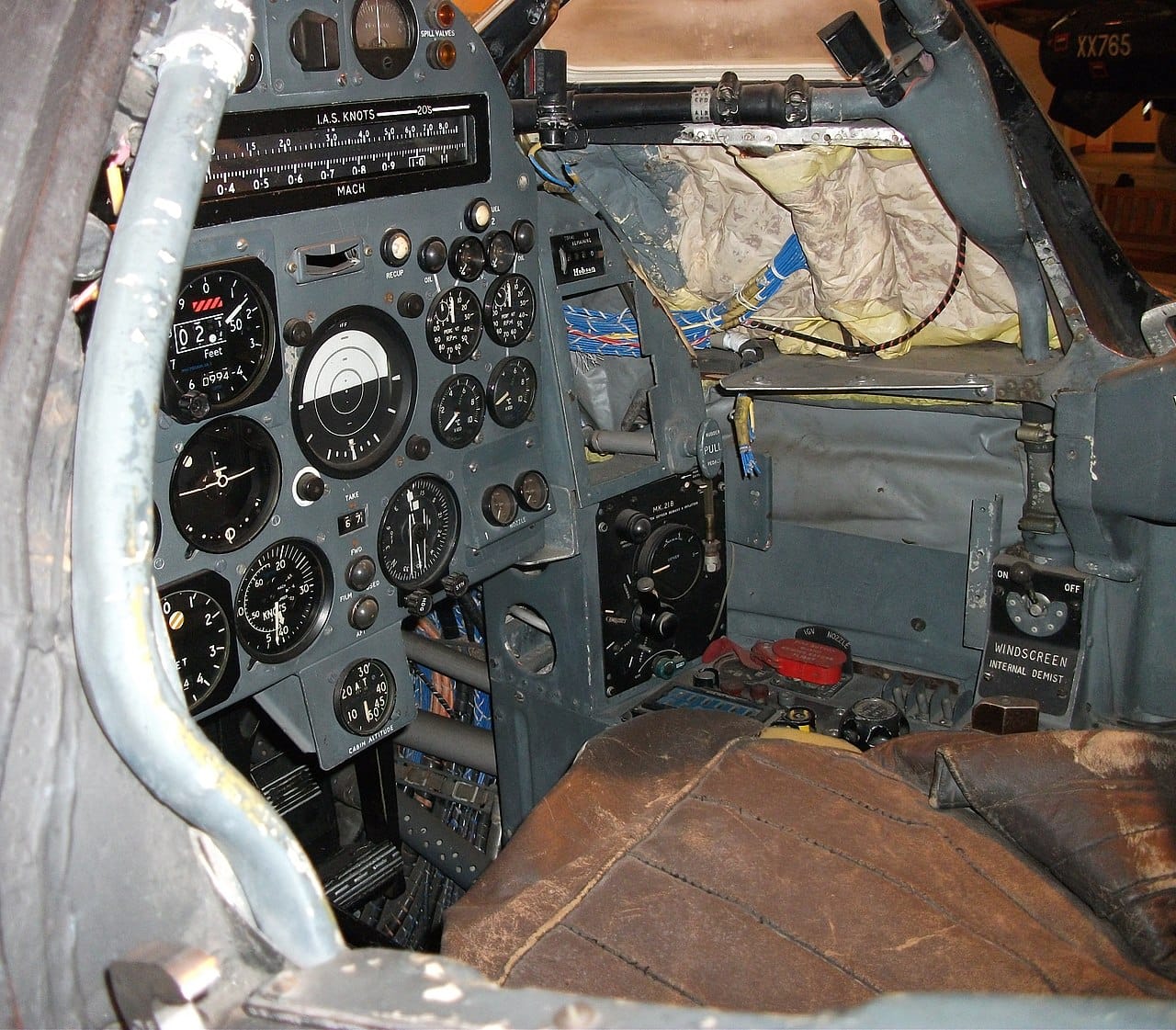
The problem was the engines. Bristol had specified the de Havilland Gyron Junior, a turbojet designed for the cancelled Saunders-Roe SR.177 mixed rocket-and-jet interceptor programme. The Gyron Junior produced 10,000 lbf of dry thrust and 14,000 lbf with reheat — impressive in 1957, marginal in 1962, and inadequate for the Bristol 188’s drag profile.
The Type 188 was, in particular, a fuel-flow disaster. To stay supersonic, both Gyron Juniors had to be in full reheat continuously. The reheat fuel-burn rate was so extreme that the aircraft’s internal fuel load — which, in turn, was constrained by the heavy stainless-steel structure — supported only a few minutes of sustained supersonic flight. The aircraft could not actually reach the high-speed corner of its envelope, gather data, and return.
The programme that should have been cancelled in 1956
A second flying airframe, XF926, had been ordered alongside the first; it flew in April 1963. Three further aircraft, ordered to support the Avro 730 bomber programme, were cancelled in 1957 and never built. Total useful research flying amounted to roughly 70 flights between 1962 and 1964 across both airframes. The aircraft did record some useful skin-temperature data — subsonic and just-supersonic — but never reached the regime where thermal-barrier research becomes interesting.
The programme was cancelled in early 1964. By then the United States was already flying titanium-built aircraft — the SR-71 would enter service in 1966 and routinely sustain Mach 3 — and the data gathered was instead put to use in the Concorde programme.
Only one Bristol 188 airframe survives. XF926 is on display at the RAF Museum Cosford; XF923 was used as a gunnery target at Shoeburyness and subsequently scrapped. The welded stainless construction has aged exceptionally well, which is itself a kind of vindication. The aircraft that was supposed to research the thermal barrier could not actually reach it. But it proved, beyond doubt, that you could weld a supersonic airframe from stainless steel and have it last sixty years in a museum without a crack.
That was perhaps the smallest possible victory for a £20-million programme. But it was a victory.
Sources: FlyPast Magazine, RAF Museum Cosford, Putnam Aeronautical — Bristol Aircraft Since 1910, Aeronautical Research Council Technical Report 27314.


 English
0 Comments