

On the morning of 4 May 1942, two fleets stumbled toward each other across a thousand miles of warm Pacific water. Neither would ever see the other. For the first time in the history of naval warfare, a major battle would be fought entirely by aircraft launched from carriers — ships that never came within gun range of their enemy. The Battle of the Coral Sea changed the rules of war at sea forever.
Eighty-four years ago this week, American and Australian forces clashed with the Imperial Japanese Navy in a confused, desperate engagement off the coast of New Guinea. On paper, Japan won: they sank the fleet carrier USS Lexington, damaged the Yorktown, and destroyed a destroyer and an oiler. But the Japanese objective — the amphibious invasion of Port Moresby — was turned back. And two of their carriers limped home too damaged to fight at Midway a month later. Coral Sea was a tactical draw and a strategic turning point.
Quick Facts
Date: 4–8 May 1942
Location: Coral Sea, northeast of Australia, near New Guinea
Forces — Allies: USS Lexington (CV-2), USS Yorktown (CV-5), plus cruisers and destroyers from the US and Royal Australian Navies
Forces — Japan: Light carrier Shōhō, fleet carriers Shōkaku and Zuikaku, plus invasion transports
Losses — Allies: USS Lexington sunk, USS Yorktown damaged, 1 destroyer and 1 oiler lost; 656 killed
Losses — Japan: Light carrier Shōhō sunk, Shōkaku heavily damaged, Zuikaku’s air group decimated; ~966 killed
Significance: First carrier-vs-carrier battle in history; first naval battle where opposing ships never sighted each other
Strategic result: Japanese invasion of Port Moresby halted; two Japanese carriers unable to fight at Midway one month later
The Fog of Carrier War
The Coral Sea battle was born from Japan’s relentless southward push in early 1942. After Pearl Harbor, the Japanese military had swept through Southeast Asia and the Western Pacific with breathtaking speed. By April, they controlled the Philippines, Malaya, the Dutch East Indies, and most of the Solomon Islands. Port Moresby, on the southern coast of New Guinea, was next. Taking it would put Japanese bombers within range of northern Australia.
American codebreakers at Station Hypo in Hawaii had cracked enough of the Japanese JN-25 naval cipher to know the attack was coming. Admiral Chester Nimitz ordered two carrier task forces — built around the Lexington and the Yorktown — to intercept. It was a gamble. The US Navy had only four operational fleet carriers in the entire Pacific. Nimitz was committing half of them to a single engagement.
What followed was four days of confusion, miscommunication, and lethal courage. On 7 May, American planes found and sank the light carrier Shōhō in just minutes — the first Japanese carrier lost in the war. Lieutenant Commander Robert Dixon radioed the famous report: “Scratch one flattop.” But on the same day, Japanese pilots attacked the oiler USS Neosho and the destroyer USS Sims, mistaking them for a carrier and a cruiser. The fog of war hung thick over the Coral Sea.

Lady Lex’s Last Hours
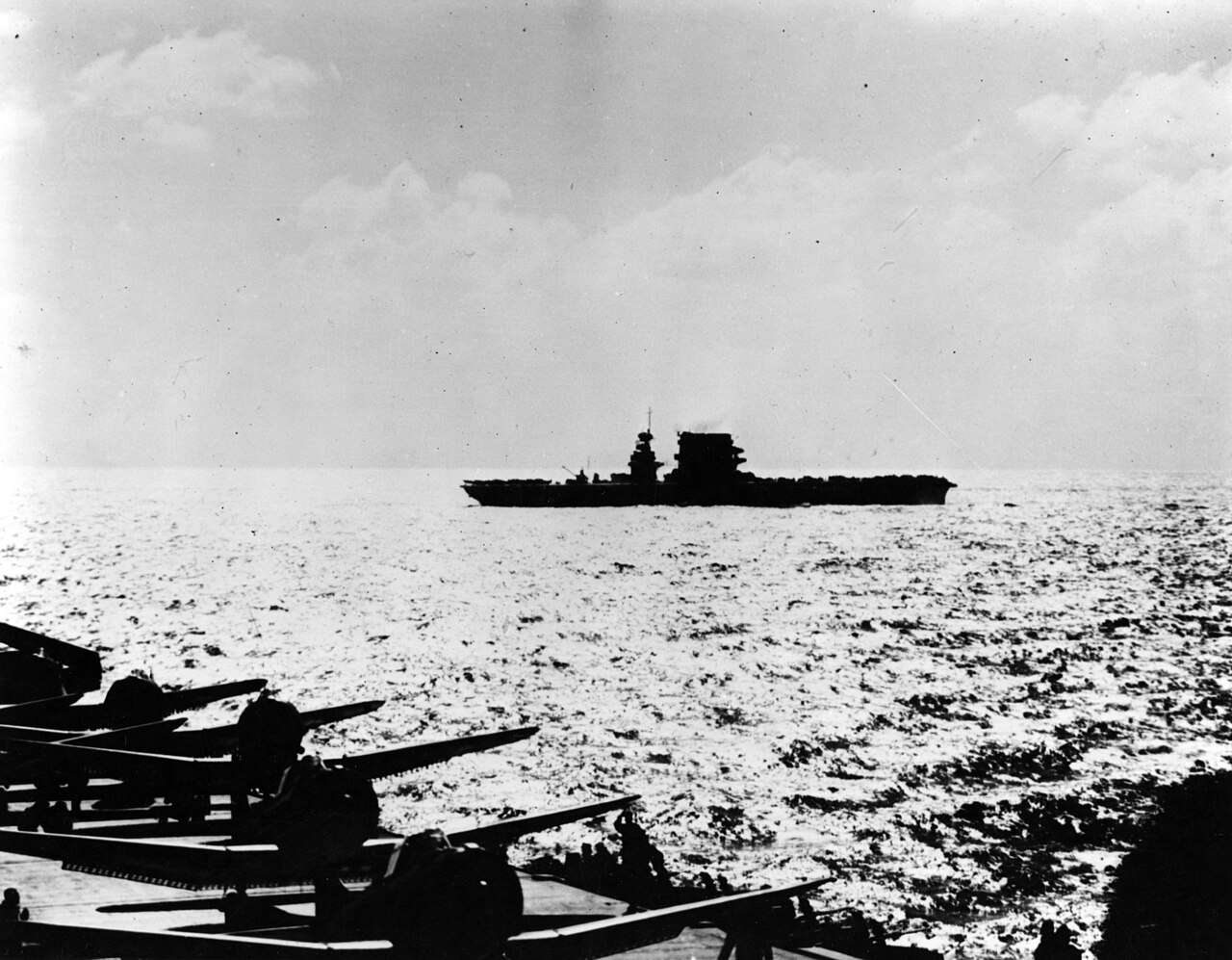
The decisive day came on 8 May. Both sides found each other’s main carrier forces almost simultaneously and launched full strikes. Japanese torpedo planes and dive bombers hammered the Lexington — affectionately known as “Lady Lex” — with two torpedo hits and two bomb hits. The Yorktown took a single bomb through her flight deck but stayed operational.
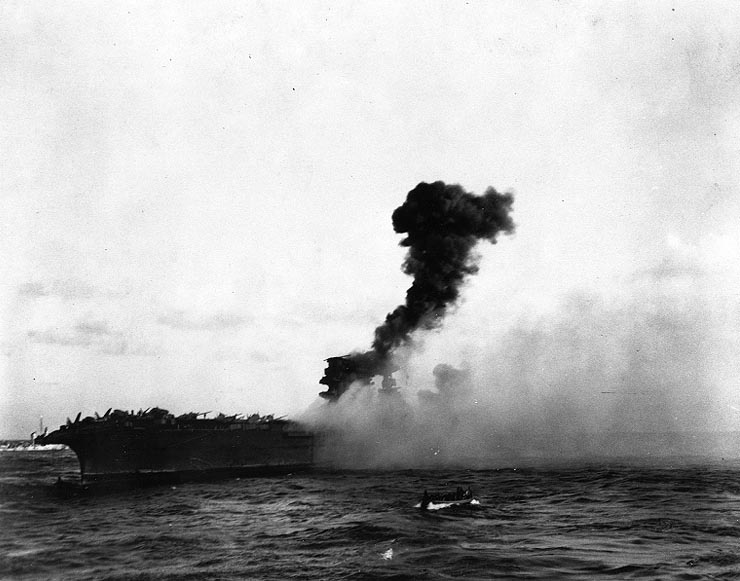
At first, the Lexington’s crew believed they had saved their ship. Fires were under control. The list was correctable. But deep below decks, aviation gasoline vapours from ruptured fuel lines were seeping through the hull. At 12:47 in the afternoon, a massive internal explosion rocked the carrier. Then another. Then another.
Captain Frederick Sherman ordered abandon ship at 17:07. The crew went over the side with remarkable calm — some sailors even stopped at the ship’s store to grab ice cream before climbing down the ropes. Destroyers and cruisers pulled 2,735 men from the water. Two hundred and sixteen died. The destroyer USS Phelps put five torpedoes into the burning hulk to scuttle her. The 42,000-ton Lexington — one of the largest warships in the world — slid beneath the Coral Sea at dusk.
The Thirty Days That Changed Everything
On the Japanese side, the light carrier Shōhō was gone. The fleet carrier Shōkaku had taken three bomb hits and was heading home for months of repairs. The Zuikaku was physically intact, but her air group had been shredded — she had lost so many experienced pilots and aircrew that she too was combat-ineffective. Both carriers returned to the naval base at Kure for refit.
This is where Coral Sea’s true significance lies. The Battle of Midway — the engagement that broke Japan’s offensive power in the Pacific — was fought exactly one month later, on 4–7 June 1942. Had Shōkaku and Zuikaku been available, Admiral Yamamoto would have had six fleet carriers at Midway instead of four. The American victory might never have happened.
The Yorktown, meanwhile, limped back to Pearl Harbor with a bomb-damaged flight deck. Navy engineers estimated three months for repairs. Nimitz gave them three days. Working around the clock, 1,400 shipyard workers patched the Yorktown well enough to fight. She sailed for Midway on 30 May — and helped sink all four Japanese carriers before a torpedo finally killed her on 7 June.
The Alliance That Endures
The Coral Sea battle holds a special place in the Australian-American relationship. The threat to Port Moresby was a threat to Australia itself — Japanese bombers had already struck Darwin twice in February 1942. The Royal Australian Navy’s cruisers HMAS Australia and HMAS Hobart fought alongside their American counterparts in the Coral Sea. The joint effort to stop the Japanese advance cemented a military alliance that endures to this day.
Every year on the anniversary, commemorative services are held in Sydney, Canberra, and aboard US Navy vessels. In 2026, the 84th anniversary carries added resonance: the ANZUS alliance remains the backbone of Pacific security, and the Coral Sea is still the strategic waterway that connects — and divides — Asia and the Pacific.
The men who fought there in May 1942 pioneered a form of warfare that no one fully understood. They flew into anti-aircraft fire from pitching flight decks, navigated by dead reckoning over featureless ocean, and attacked ships they had never trained to fight. Many did not come home. The sea they fought over kept their names.
Sources: US Naval History and Heritage Command, National WWII Museum, Australian War Memorial


 English
0 Comments