
January 2, 1967. Colonel Robin Olds — World War II ace, Vietnam War wing commander, and possibly the most dangerous man ever to strap into a fighter jet — had a problem. North Vietnam's MiG-21s were shooting down American aircraft with near impunity. The rules of engagement forbade striking their airfields. So Olds did something else: he set a trap.
He called it Operation Bolo. In twelve minutes, it destroyed half of North Vietnam's operational MiG-21 force.
The Trick
The MiG-21 pilots of the Vietnam People's Air Force had one reliable advantage: they knew what American aircraft were coming, and when. US strike packages into North Vietnam were predictable — same routes, same altitudes, same formations, the same electronic jamming signatures from F-105 Thunderchief bombers loaded with ordnance and limited to sluggish manoeuvring. The MiG-21s would wait for them, bounce the strike packages on their own terms, and break off before the escort fighters could respond.
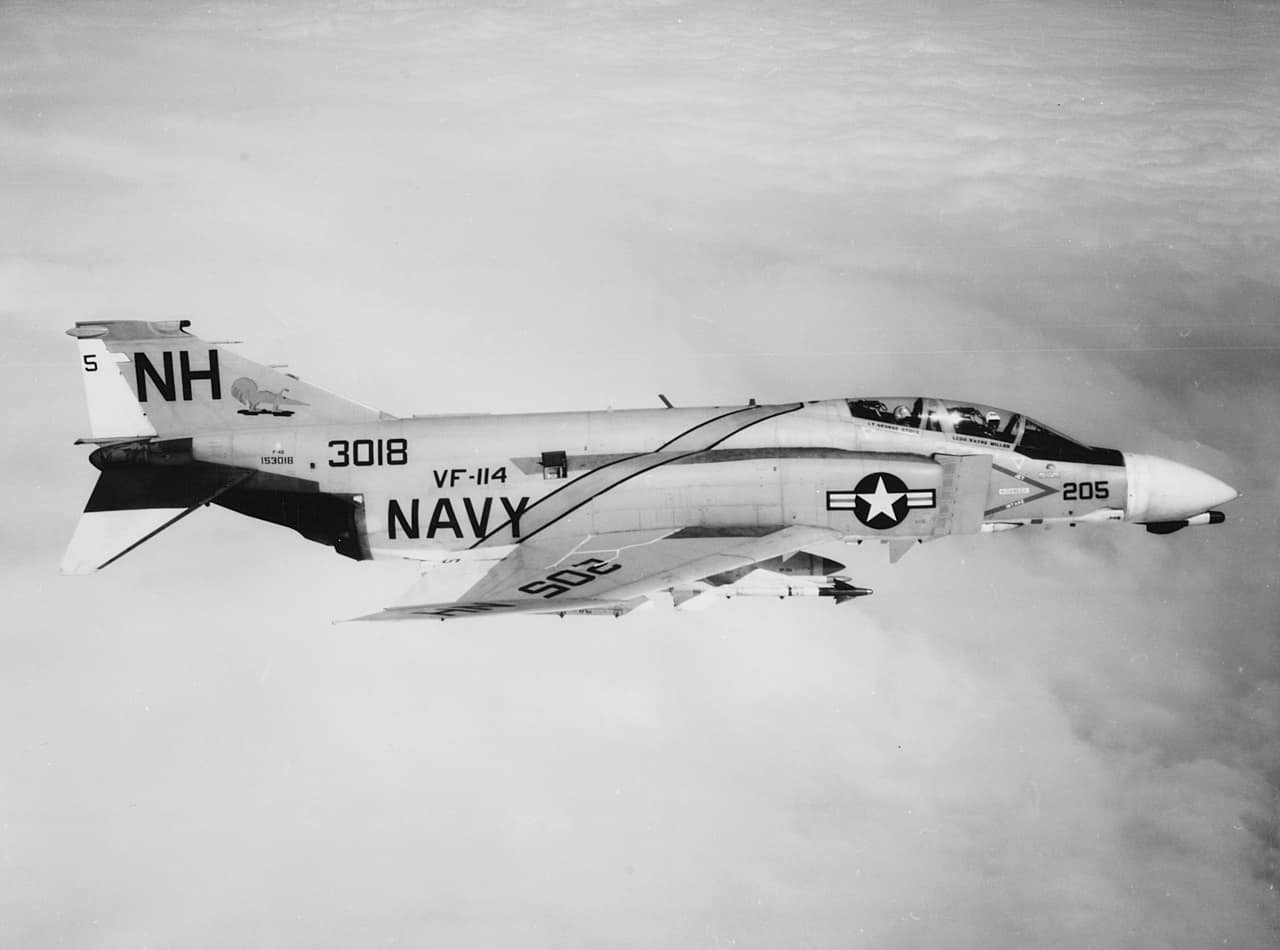
Olds reversed the equation. His F-4 Phantoms flew the identical route, at the identical altitude, with the identical call signs, using the same ECM jamming pods the F-105s always carried. To every radar screen and every radio frequency in North Vietnam, it looked like another routine strike package. The MiG-21s scrambled to intercept what they expected to be slow, bomb-laden bombers. What they found instead was Olds.
Twelve Minutes Over Hanoi
The engagement lasted twelve minutes. Seven MiG-21s were shot down — roughly half of North Vietnam's entire operational strength in the type. Not a single American aircraft was lost. Olds himself downed one of the MiGs; his wingmen accounted for the rest. As the F-4s returned to Ubon Royal Thai Air Force Base, their ground crews lined the taxiway. Cockpits opened. Pilots held up fingers indicating their kills as they taxied past.
The Vietnamese government would later admit that January 2, 1967 was one of the worst single days their air force endured during the entire war.
The Man Behind the Trap
Robin Olds was, by any measure, extraordinary. He had shot down 12 German aircraft in WWII flying the P-38 and P-51. He came to Vietnam as a colonel in his late 40s, an age when most fighter pilots have long since left the cockpit behind. He flew 152 combat missions over North Vietnam. He finished the war with four MiG kills — he would have had five, but falsified a kill report to protect a junior officer who needed the victory more than he did.
Operation Bolo wasn't luck or technology. It was imagination. Olds saw that the enemy's biggest advantage was predictability — and he used that predictability against them. More than fifty years later, it remains the textbook example of how a brilliant mind can turn a tactical disadvantage into a perfect kill.
Sources: National Museum of the United States Air Force; This Day in Aviation; Lyon Air Museum
Related Questions
What was Operation Bolo?
Operation Bolo was a US Air Force ruse on January 2, 1967, during the Vietnam War. F-4 Phantom IIs disguised their flight profiles to mimic vulnerable bomb-laden F-105 strike packages, luring North Vietnam's MiG-21s into an ambush. In about twelve minutes it destroyed roughly half of the enemy's operational MiG-21 force.
Who was Colonel Robin Olds?
Robin Olds was a charismatic US fighter pilot, a World War II ace who became a wing commander in Vietnam. Frustrated that rules of engagement barred attacks on North Vietnamese airfields, he devised Operation Bolo to draw the MiG-21s into the air and defeat them in combat instead.
When did Operation Bolo take place?
Operation Bolo was flown on January 2, 1967. North Vietnam's government later admitted it was one of the worst single days its air force endured during the entire war, losing a large share of its frontline interceptors in a matter of minutes.
How many MiGs were shot down in Operation Bolo?
Seven MiG-21s were shot down during Operation Bolo — roughly half of North Vietnam's operational strength in the type — without the loss of a single American aircraft. Olds himself downed one of the MiGs, and his wingmen accounted for the rest.
How did Operation Bolo trick the MiG-21 pilots?
North Vietnamese MiG-21 pilots had learned to ambush predictable US strike packages. Olds had his F-4 Phantoms fly the same routes, altitudes and electronic jamming signatures as bomb-laden F-105 Thunderchiefs. The MiGs climbed expecting slow bombers and instead met agile fighters waiting for them.
Why couldn't the US simply bomb North Vietnam's airfields?
Restrictive rules of engagement during the Vietnam War forbade striking North Vietnamese airfields, giving the MiG-21s a protected base from which to harass American formations. That political limitation is exactly why Olds resorted to trickery with Operation Bolo rather than destroying the jets on the ground.
What aircraft did the US use in Operation Bolo?
The trap was sprung with the McDonnell Douglas F-4 Phantom II, flying from Ubon Royal Thai Air Force Base. By imitating F-105 strike packages, the Phantoms turned the MiG-21s' own ambush tactics against them — a counterpart to the technology edge the F-86 Sabre enjoyed a decade earlier.
0 Comments