
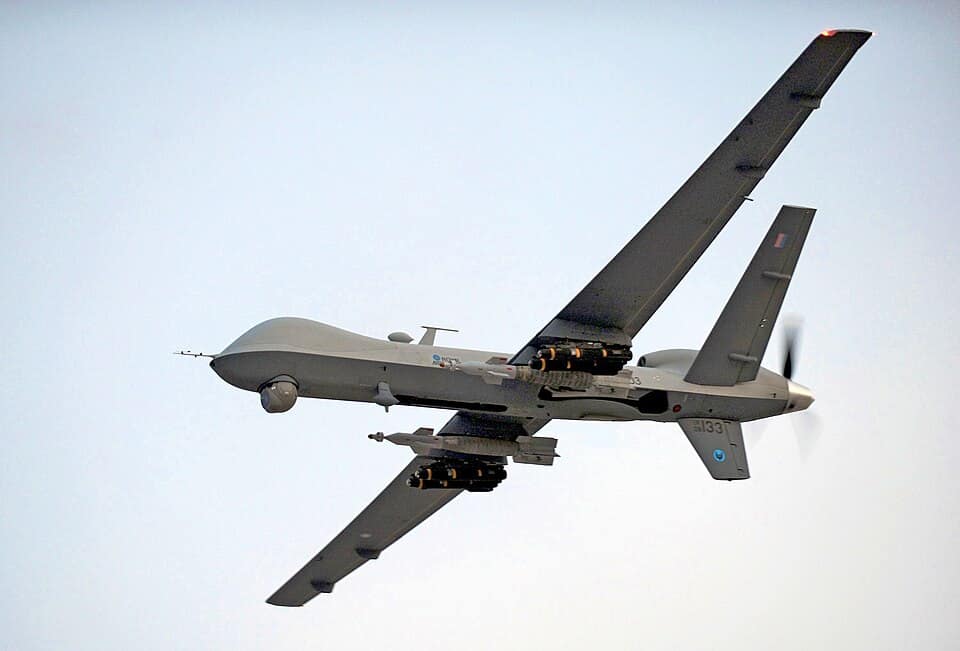
A Ukrainian drone slammed into the chimney of an Estonian power plant at 3:43 a.m. on March 23rd. Hours later, a second exploded in a Latvian field. By March 25th, Lithuania had joined the tally. For the first time in this war, Ukrainian weapons had struck infrastructure across two NATO states in a single night.
The incidents were not isolated accidents. They were spillover from Ukraine's largest coordinated strike campaign of 2026—a devastating assault on Russian energy infrastructure stretching across the Baltic Sea. Some drone targets were positioned up to 1,000 kilometers from Ukrainian territory, magnifying navigational error and creating an invisible battlefield where precision disintegrates into chaos.
The Night Three Allies Got Hit
Between March 23rd and 25th, Estonia, Latvia, and Lithuania each detected Ukrainian unmanned systems crossing their borders. The incursions were undeniable. Physical evidence lay on the ground. Yet none of the three governments invoked Article 4 consultations or Article 5 collective defense measures.
Instead, all three immediately and publicly attributed the incidents to spillover from Russia's war. They issued no formal complaints to Kyiv. The message was clear: we understand. We support Ukraine. And we're not escalating.
That restraint speaks volumes about NATO's internal solidarity—and about how fragile the western consensus on Ukraine actually is. A single drone strike can test an alliance. Three in one night tests it harder.
A Question of Electronic Warfare
Defense analysts now wrestle with a harder question: were these accidents, or something darker?
Russia deploys extensive electronic warfare systems across the Baltic region. These systems can jam GPS signals, corrupt navigation data, and degrade guidance accuracy. Did Russian EW defenses simply create an unintended side effect—pushing drones across NATO borders? Or did Russia actively redirect the drones, weaponizing them as political pressure against the Baltic states?
The answer remains opaque. Ukrainian and NATO officials haven't disclosed technical evidence of active redirection. The leading theory remains navigational degradation—drones designed to strike 1,000 kilometers away, lacking real-time correction, drifting far enough to cross sovereign borders.
But the ambiguity itself is dangerous. In warfare, when you don't know whether an incident was accidental or intentional, threat perception rises. And threat perception can drive escalation.
NATO Feels the Pressure
The three Baltic nations responded not with anger toward Kyiv, but with urgent calls to NATO. Strengthen air defense on the eastern flank, they demanded. The message to Brussels was unavoidable: we need thicker coverage. We need faster sensors. We need to stop this from happening again.
Their continued support for Ukraine remained unwavering. But the underlying anxiety crystallized into something concrete: a gap in NATO's defensive posture. Russian territory sits just minutes of flight time away. Ukrainian drones, often uncontrolled after launch, become vectors of risk.
For years, NATO's Baltic flank relied on air defense systems designed to counter conventional aircraft and cruise missiles. Swarms of small, low-flying drones present a different problem. They're harder to detect. Harder to track. Easier to miss. And when they're Ukrainian, killing them risks a diplomatic crisis.
The Threshold That Held
What didn't happen matters as much as what did. No NATO member invoked Article 5. No emergency Collective Defense clause. No military escalation spiral. The Baltic states proved they could absorb an uncomfortable blow and still hold the line on Ukraine.
Yet thresholds are fragile things. They hold until they don't. The next incursion—or the next series—might test that solidarity again. And if Russia finds a way to actively redirect drones rather than simply jam them, the whole calculus changes.
For now, the Baltic states have sent a message: Ukraine's fight is our fight. But it's also a warning: fix the navigation problem. Because the distance between accident and incident is measured in political will, and political will can erode fast.
Sources: Defense News; CBS News; Ukrainska Pravda
Related Questions
What happened when Ukrainian drones hit NATO countries in March 2026?
Between March 23 and 25, 2026, Ukrainian drones struck infrastructure in Estonia, Latvia, and Lithuania — the first time the war's weapons hit multiple NATO states in a single night. The drones were spillover from Ukraine's largest 2026 strike campaign against Russian energy sites, with some targets positioned up to 1,000 kilometers away.
Why did Ukrainian drones drift into NATO airspace?
The leading explanation is navigational degradation. Drones built to fly up to 1,000 kilometers without real-time correction drifted off course, partly because Russia's electronic-warfare systems across the Baltic can jam GPS and corrupt guidance data. Whether Russia actively redirected them remains unproven, and that ambiguity itself raises the risk of escalation.
Did the Baltic states invoke NATO's Article 5 after the drone strikes?
No. Despite physical evidence on the ground, Estonia, Latvia, and Lithuania declined to invoke Article 4 consultations or Article 5 collective defense. All three publicly blamed spillover from Russia's war, filed no complaints against Kyiv, and signaled they would not escalate — a deliberate show of restraint and support for Ukraine.
What is NATO's Article 5?
Article 5 is the collective-defense clause of the North Atlantic Treaty: an armed attack against one member is treated as an attack against all, permitting a coordinated military response. Article 4 is the lower step, triggering consultations when a member feels its security is threatened. Neither was invoked over the 2026 Baltic drone incidents.
Why are long-range strike drones so hard to keep on target?
Long-range drones rely on GPS and pre-programmed navigation, so without real-time correction small errors compound over distance, and electronic warfare makes this worse by jamming satellite signals. The same cheap, hard-to-stop technology that lets Ukraine reach deep into Russia, explored in why Russia can't stop Ukraine's deep-strike drones, can also drift across borders.
How far can Ukrainian strike drones reach into Russia?
Some targets in Ukraine's 2026 campaign sat up to 1,000 kilometers from Ukrainian territory, deep inside Russian energy infrastructure. That range is what makes the drones strategically valuable and operationally risky: the farther they fly without correction, the more navigational error accumulates, occasionally carrying them across neighboring borders.

0 Comments