
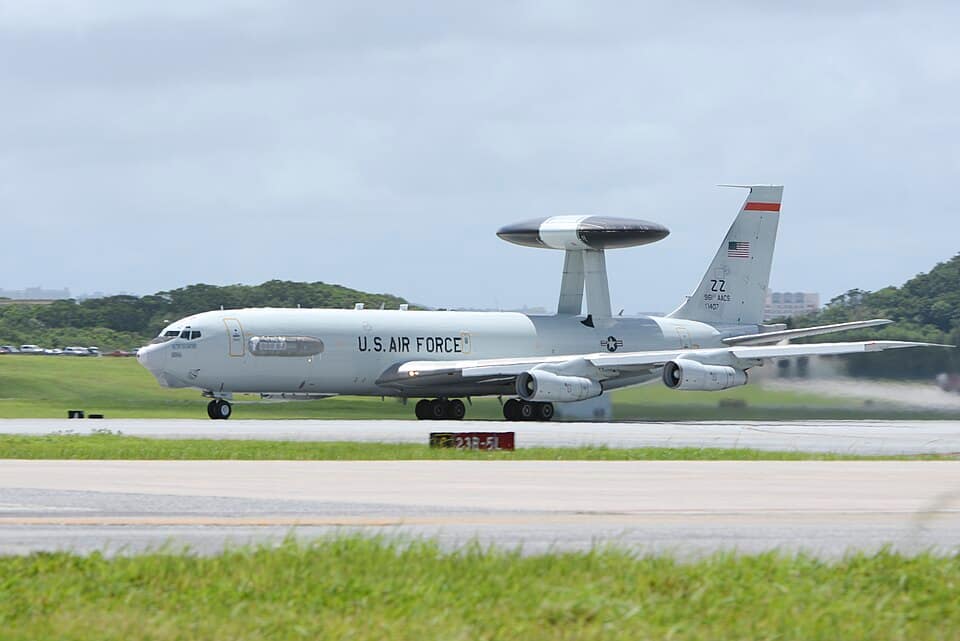
Why Misawa Matters
Pull up a map. Misawa sits on the northern tip of Honshu, Japan’s main island — roughly 1,100 kilometers from Beijing, 1,200 from Pyongyang, and within unrefueled striking distance of virtually every flashpoint in the western Pacific. It has been a cornerstone of American air power in Asia since the Korean War. An F-16 at Misawa could fight. An F-35A at Misawa can fight while invisible. The difference is not incremental — it is generational. The F-35’s low-observable design, fused sensor suite, and ability to share targeting data across a networked battlefield gives the aircraft an advantage that older fourth-generation fighters simply cannot match. A single F-35A can detect, track, and engage threats that an F-16 would never see until it was too late. For China and North Korea, the calculus just changed. Permanently stationed fifth-generation fighters at Misawa mean that the U.S. can project stealth capability into contested airspace from day one of any crisis — no need to wait for carrier strike groups or deploy from distant bases in Guam or Alaska."The more you sweat in peace, the less you bleed in war."
— Norman Schwarzkopf
Growing Pains
Not everyone in Misawa is celebrating. The F-35A is louder than the F-16 on takeoff, and the base sits close to the city of Misawa — a community of roughly 40,000 that has coexisted with jet noise for decades but now faces a significant increase. A senior Aomori prefectural government official stated publicly that “we hope that sufficient consideration will be given to the impact on the stability of daily life of Misawa residents.” Noise complaints are the perennial friction point of forward-deployed air power, and the F-35’s Pratt & Whitney F135 engine — the most powerful fighter engine ever built — produces substantially more thrust and noise than the F-16’s F110. Japan operates its own fleet of F-35As from Misawa as well, flown by the Japan Air Self-Defense Force. The presence of both American and Japanese stealth fighters at the same base creates interoperability opportunities that are difficult to replicate elsewhere — joint training, shared maintenance knowledge, and the ability to surge a combined stealth force from a single location.The Pacific Chess Board
The Misawa deployment is part of a broader U.S. force posture shift in the Indo-Pacific. The Marine Corps is on track to field 261 F-35B and F-35C variants by the end of 2026. The Air Force continues to push F-35As to forward locations across the region. And Japan itself is deepening its investment in fifth-generation capability — both through its own F-35 fleet and through its participation in the GCAP sixth-generation fighter program with the UK and Italy. China’s response has been to accelerate its own stealth programs. The J-20 is operational in growing numbers, and newer variants are entering testing. The western Pacific is becoming the most stealth-dense airspace on the planet. Four jets on a ramp in northern Japan do not change that equation by themselves. But they are a signal — clear and unmistakable — about where American air power intends to be when it matters most. Sources: Nippon.com, Jiji Press, Air & Space Forces MagazineRelated Questions
What is the F-35A Lightning II?
The F-35A Lightning II is the conventional takeoff and landing version of the F-35, a single-engine, fifth-generation stealth multirole fighter built by Lockheed Martin. It combines low-observable design, fused sensors and networked data-sharing, letting it detect and engage threats that older fourth-generation jets like the F-16 cannot see in time.
Where is Misawa Air Base?
Misawa Air Base sits on the northern tip of Honshu, Japan's main island, in Aomori Prefecture. It lies roughly 1,100 km from Beijing and 1,200 km from Pyongyang, within reach of major flashpoints in the western Pacific. It has been a cornerstone of US air power in Asia since the Korean War.
What is the difference between the F-35 and the F-16?
The F-16 is a fourth-generation, non-stealth fighter, while the F-35 is a fifth-generation stealth jet with low-observable design and advanced sensor fusion. An F-16 relies on speed and maneuvering, whereas the F-35 can detect, track and engage threats while remaining far harder to spot on radar.
What is the J-20?
The J-20 is China's fifth-generation stealth fighter, a twin-engine aircraft designed to rival the US F-22 and F-35. It is operational in growing numbers, and newer variants continue testing, alongside China's next-generation J-50 stealth design. Its growth is making the western Pacific one of the most stealth-dense airspaces on Earth.
What is the GCAP fighter program?
GCAP, the Global Combat Air Programme, is a joint effort by the United Kingdom, Italy and Japan to develop a sixth-generation fighter. It merges Britain's Tempest and Japan's next-fighter projects, aiming to field an advanced stealth aircraft in the 2030s — part of a wider push that also sees allied stealth fighters training together.
Why is the F-35 louder than the F-16?
The F-35 is louder than the F-16 largely because of its engine. The F-35's Pratt & Whitney F135 is the most powerful fighter engine ever fielded, producing far more thrust — and noise — than the F-16's F110. Communities near air bases such as Misawa often raise concerns about increased jet noise.
0 Comments