
For most of the year, the Trump administration’s Golden Dome — the most ambitious continental missile defence project since SDI — has run on a single sticker price: $185 billion over ten years. That number was the Pentagon’s. The Congressional Budget Office took a look at it in May 2026 and came back with a different one: $1.2 trillion over two decades. Roughly seven times the Pentagon’s estimate. Roughly the cost of every U.S. combat aircraft programme of the last fifty years combined.
The dispute, made public on 12 May, is now the loudest public fight inside the Department of War since the F-35 production decision a decade ago. The Pentagon insists CBO is costing the wrong system. CBO insists it modelled what the Pentagon’s published architecture documents describe. Both are right in their own ways, and both are slightly disingenuous in the others.
A $1 Trillion Disagreement
CBO’s $1.2 trillion figure breaks down brutally. About $1 trillion is acquisition cost. Of that, more than half — over $500 billion — is the space-based interceptor constellation alone. Seven thousand eight hundred kinetic-kill vehicles in orbit, each capable of intercepting an ICBM warhead during boost phase, distributed in a layered constellation so dense that no single launch corridor opens up.

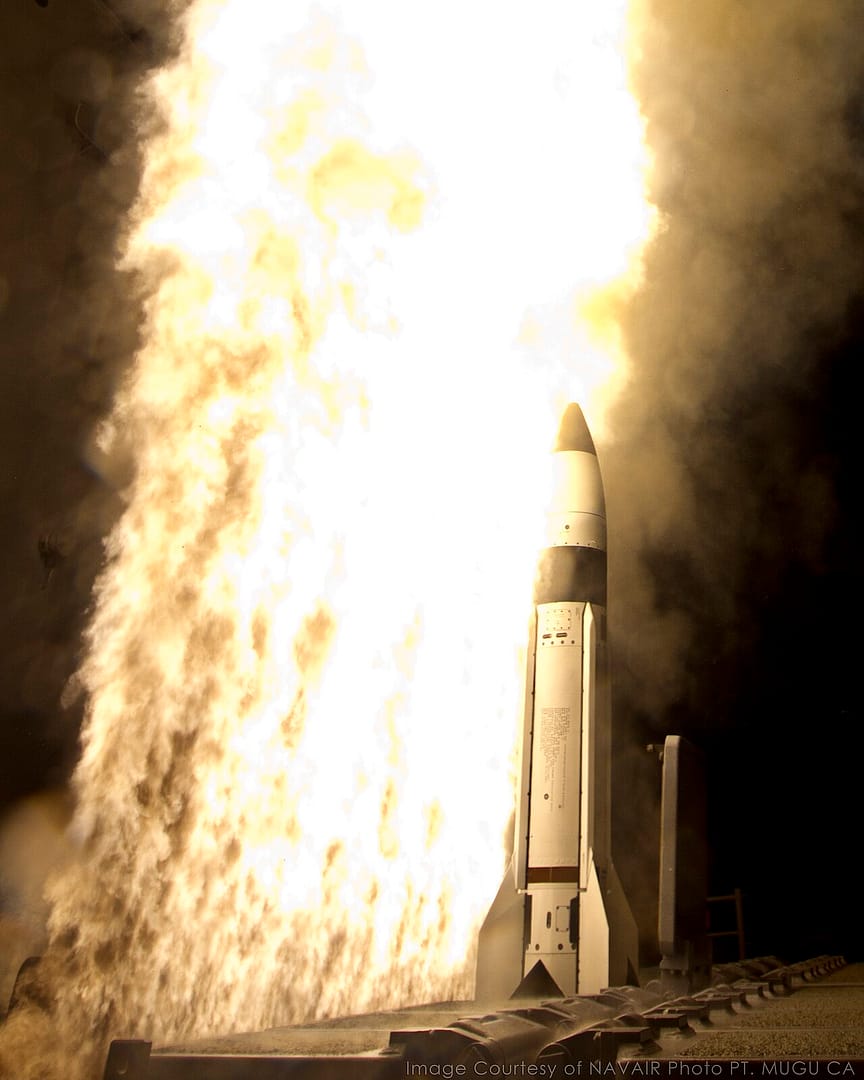
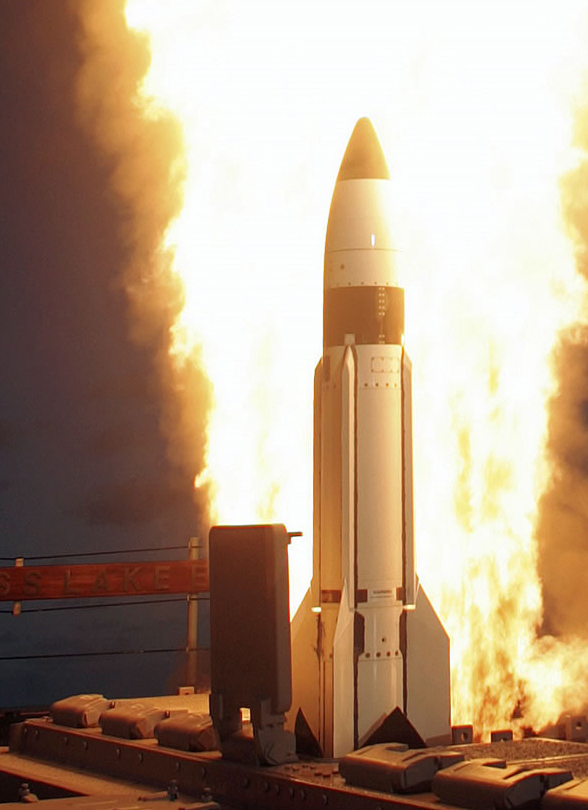
The remaining costs are spread across four other layers. A space-based sensor layer to detect launches in seconds rather than minutes. A ground-based midcourse defence layer, upgrading the existing Fort Greely and Vandenberg interceptors. A sea-based wide-area defence built around SM-3 Block IIA missiles. And a network of 35 regional radar and interceptor sites — Patriot, THAAD, possibly a future hybrid — to handle the inevitable leakers and shorter-range threats.
Each layer is technically defensible. None of them is cheap. CBO’s analysts took the Pentagon’s published architecture, ran their standard cost models, and produced the headline number. The Pentagon’s argument is not that CBO did the math wrong. It’s that CBO modelled an architecture nobody is actually planning to build.
“They’re Not Estimating What We’re Building”
That is, almost verbatim, what General Michael Guetlein — the Space Force four-star running the Golden Dome programme — said at a National Defense Industrial Association event in mid-May. Guetlein’s argument runs as follows: CBO’s model is essentially a 2002-vintage National Missile Defense scaled up. It assumes point-defence, ICBM-against-ICBM intercepts using existing kinetic-kill vehicle technology. The Golden Dome programme office, Guetlein says, is actually planning a fundamentally different architecture — one that mixes directed-energy weapons, distributed sensor networks, and a much smaller (but smarter) space interceptor constellation.
Defence analysts inside the think-tank community split on whether Guetlein is being honest or running cover. The strongest version of his argument: if Golden Dome is genuinely a new-generation architecture leveraging laser interceptors, AI-driven sensor fusion and a fraction of the space-based KKV constellation CBO modelled, then the cost could plausibly come in below half a trillion. The weakest version: Golden Dome’s public architecture documents still call for the 7,800-interceptor space layer. That’s the official plan. If it changes, the Pentagon hasn’t said how.
Even at $1.2 Trillion, It Still Won’t Stop China
The detail buried inside CBO’s report that nobody in Washington wants to discuss publicly is this: even at $1.2 trillion, even with 7,800 space interceptors, the Golden Dome architecture cannot stop a large-scale missile strike from China or Russia. CBO’s modelling shows it provides “essentially complete” coverage against limited regional threats — meaning North Korea, possibly Iran — but is overwhelmed by saturation attacks from peer competitors.
That is the unforgiving math of missile defence. Each interceptor costs millions to develop, deploy and maintain. Each Chinese DF-41 ICBM costs about $5 million and carries up to ten warheads. If China launches a counterforce strike of 200 ICBMs — well within current PLA capability — Golden Dome has to engage 2,000 warheads simultaneously, plus decoys, plus penaids. No interceptor architecture on the foreseeable horizon can do that.

That doesn’t make Golden Dome useless. The strategic argument is that even partial defence raises the price of a peer-level attack — forcing Beijing or Moscow to commit more warheads to overwhelm the system, complicating their strike calculus, and providing limited but real protection against accidental or rogue launches. That is a defensible strategic posture. It is not, however, the “missile shield” rhetoric of the political campaign that created Golden Dome.
The Political Calculus
President Trump’s political coalition has framed Golden Dome as a continental shield. The Pentagon’s actual planning, even before CBO got involved, was always more modest — a layered defence against regional threats, a hedge against accidental launches, a politically resonant signal of investment in American homeland security. The $1.2 trillion figure makes the political messaging harder to sustain. The $185 billion figure makes the strategic claims harder to defend.
Congress is now in the middle. The Senate Armed Services Committee has scheduled hearings for late May. Subject-matter experts from both sides will be brought in. CBO will defend its model. The Pentagon will defend its programme. The 2027 defence budget — the first to include real Golden Dome line items — will be shaped by whichever side wins the framing battle.
What Comes Next
Inside the Department of War, the working assumption is that Golden Dome will end up being a $400-600 billion programme over 20 years — significantly more than the Pentagon’s $185 billion ten-year estimate, significantly less than CBO’s $1.2 trillion twenty-year figure. The compromise is likely to involve scaling back the space-based interceptor count from 7,800 to closer to 1,500-2,000, leaning more heavily on directed-energy weapons that don’t yet exist, and stretching the deployment timeline.
That, in turn, will produce its own credibility problem. Directed-energy weapons capable of engaging ICBM warheads at the kinetic energies and distances required are still a long way from operational. Cutting the space constellation that aggressively reduces coverage. The compromise may be politically necessary but strategically dilute.
For now, Pentagon planners and CBO analysts are arguing in technical reports nobody outside the Beltway will read. The headline numbers — $185 billion vs. $1.2 trillion — are the only thing the public will remember. By that measure, the Pentagon just lost a public messaging round to a non-partisan agency whose job is making numbers.
Sources: Air & Space Forces Magazine (Courtney Albon, 14 May 2026); DefenseScoop; Defense One; Military Times; Bloomberg; Time; Washington Times; Federal News Network; CBO report "Costs of Establishing a Continental Missile Defense System."

 English
0 Comments