
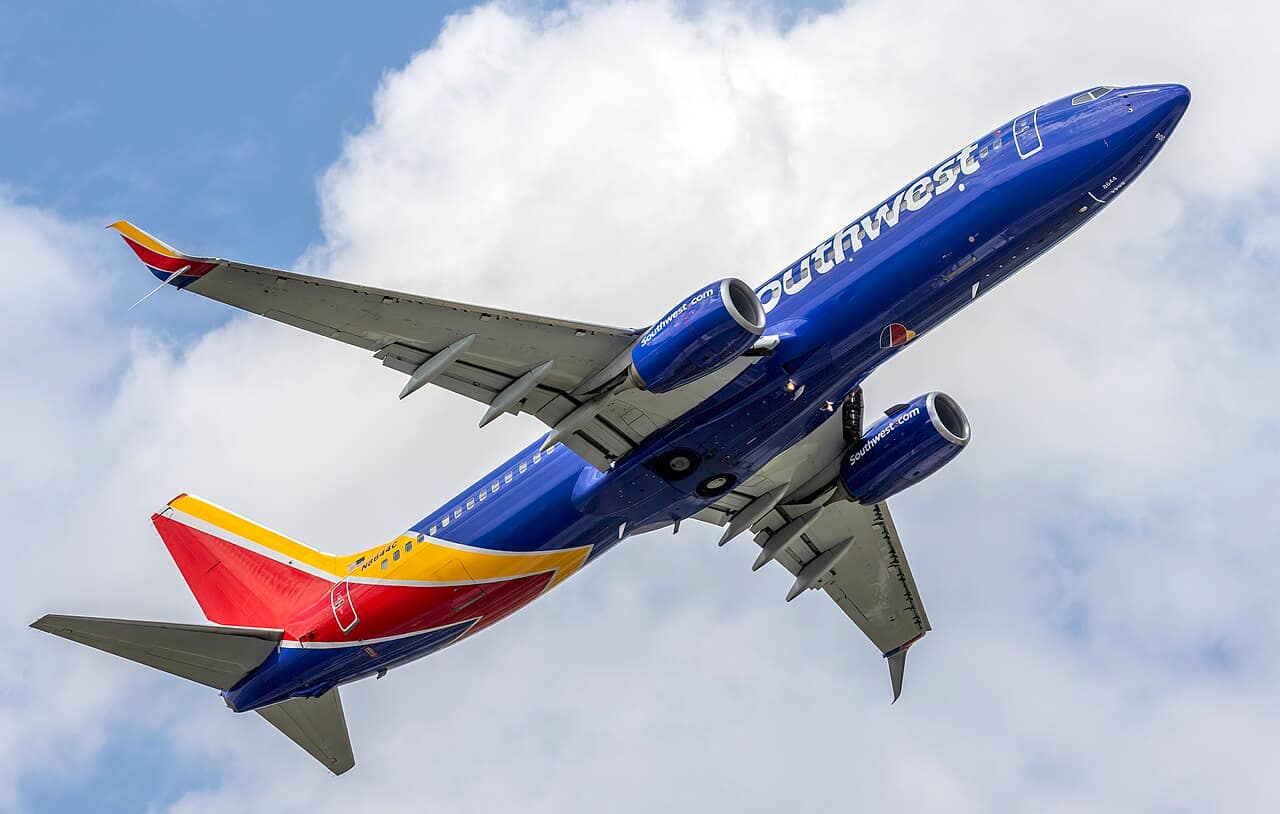
Two days after a 3.5-foot humanoid robot took its own seat on a Southwest Airlines 737 from Las Vegas to Dallas, the airline issued a policy that did not exist in any other carrier's rulebook in May 2026. Effective immediately, Southwest no longer allows passengers to bring “human-like” or “animal-like” robots onto its aircraft. Not in the cabin. Not as checked baggage. Not regardless of size or purpose.
The robot’s name was Stewie. Its owner was Aaron Mehdizadeh, a Dallas business owner who had bought it in Las Vegas and decided the most dignified way to bring it home was to purchase it a window seat. Stewie reportedly sat patiently for the entire flight, plugged into a power bank, occasionally turning its head when other passengers said hello. Southwest's flight crew accommodated the request. Cabin video posted to social media made the rounds. By Monday morning, the airline's safety operations centre had written a new rule.
A Robot Walks Onto a Plane
Mehdizadeh’s reasoning was, on its face, reasonable. The robot — a Chinese-made humanoid product based on Unitree's G1 chassis — was too valuable for the cargo hold and too tall for an overhead bin. The most logical solution was to buy it a passenger ticket and strap it in. Southwest's gate agents looked at the policy manual, found nothing prohibiting a robot in a seat, and let it board.

The flight was uneventful. Passengers took photos. A Southwest cabin video uploaded by another traveller went viral on TikTok over the weekend. By Sunday night, Southwest's legal and safety operations teams were on a video call. By Monday lunchtime, the company-wide safety alert was out.
The Lithium-Ion Argument
The official explanation centres on battery safety. Humanoid robots use large lithium-ion battery packs — Stewie's was reportedly around 3.5 kWh, comparable to an e-bike battery — which exceed the limits the FAA allows in checked baggage and stretch the cabin-baggage thresholds even with explicit cabin-crew approval. Battery thermal runaway events on commercial aircraft are rare but always serious. A 3.5 kWh battery failure in a pressurised cabin is, from a fire-suppression standpoint, a much harder problem than a phone battery failure.

That is the version Southwest's communications team wants on the record. The version Southwest's safety officers are quietly mentioning to industry contacts is somewhat broader. A humanoid robot in a passenger seat creates problems that no airline operating manual currently addresses. Can a robot wear a seat belt that secures it during turbulence? Does the FAA's evacuation-time certification model accommodate a non-human occupant who cannot follow flight-attendant directions in the event of an emergency landing? If the aircraft has to ditch, does the robot count toward the life-raft headcount? These are questions that nobody at Boeing, the FAA or any major U.S. carrier had to think about in 2024. In 2026, with humanoid robots now retailing under $20,000 and 50,000+ units already sold in the U.S., the questions arrive whether the airlines are ready or not.
An Industry Without a Policy
Delta, American and United did not have rules on the matter before Stewie boarded N8676A in Las Vegas. They do not have rules on the matter now. Industry sources at all three major carriers reached after Southwest's policy announcement told AirlineGeeks the same thing: they are watching, they are thinking, they are not yet drafting. Internal legal teams at multiple carriers are reportedly looking at what the FAA could publish as a general-purpose advisory rather than waiting for individual airline policies to splinter.

What no one is willing to say in print is that Southwest's rule is, by definition, going to be hard to enforce. The policy applies to robots designed to “resemble or imitate humans” or animals. That definition leaves a lot of edge cases. A Roomba? Plainly fine. A child's programmable toy dog? Probably not. A 12-inch Mechagodzilla figure with limited motorisation? Now we're in court. The carrier's gate agents will face the actual decisions, often with parents and excited children at the front of the queue.
Why Now Matters
The Stewie episode is the first time a humanoid robot has made it through a U.S. airline boarding process by buying a passenger seat. It is almost certainly not going to be the last. Humanoid-robot sales in 2025 quadrupled year-over-year. Unitree and a handful of Chinese competitors have shipped tens of thousands of units; Tesla's Optimus, despite repeated delivery delays, has begun limited consumer shipments; Figure, 1X and Apptronik have product roadmaps that converge around the same $10,000–$25,000 price band.
The aviation regulatory framework — Federal Aviation Regulations Part 121 for scheduled airlines, IATA dangerous-goods regulations for cargo — was written long before there was any need to consider a non-human passenger that walks, talks, plugs in for hours at a time, and contains an e-bike-sized lithium-ion battery pack. Southwest's policy is the first attempt to write a rule. It will not be the last.
What Happens to Stewie
Mehdizadeh's next planned trip with the robot is reportedly New York. Delta currently has no policy. American Airlines currently has no policy. United currently has no policy. Whether any of those carriers update their rules before Stewie reaches the gate at LaGuardia or DFW remains to be seen. For now, Southwest's position is unambiguous: not on Southwest aircraft. Anywhere else, until further notice, is a gate agent's call.
The 2026 cabin-rules battle of the year is unlikely to be about reclining seats, oversized carry-ons, or service-animal accreditation. It is going to be about who, or what, sits beside you in row 17. Southwest just drew the first hard line.
Sources: CBS Texas; AirlineGeeks (Andrew Joye, 18 May 2026); CNN; Quartz; Travel Tomorrow; WGN TV; KVUE Austin; multiple TikTok cabin videos.

 English
0 Comments