

The Air Force Research Laboratory — the organisation that, over the decades, has pushed everything from the F-117 stealth shape to the X-51 hypersonic scramjet test vehicle into existence — is being restructured.
The Pentagon confirmed this week that AFRL will be reorganised under a Department of War-wide innovation reform effort. The headline change: AFRL’s seven research directorates will be consolidated into four, with a new structure designed to push prototype aircraft, weapons, and sensors out the door faster and into the operational fleet on a much shorter timeline. There will be redundancies. Some directorates will be merged. And a great deal of paperwork that AFRL leadership has long regarded as ballast will be thrown overboard.
It is, depending on who you ask, either a long-overdue cleanup or a bureaucratic shake-up that may take a decade to recover from. Most observers think it is both.
Quick Facts
Organisation: Air Force Research Laboratory (AFRL)
Headquarters: Wright-Patterson Air Force Base, Dayton, Ohio
Workforce: Approximately 12,000 (military, civilian, contractor)
Annual budget: approx. $7 billion
Restructure: 7 research directorates → 4
Goal: Faster prototype-to-fleet timelines
What AFRL actually does
If you wonder where the technology in a modern fighter cockpit comes from — the synthetic-vision displays, the data links, the active electronically scanned arrays, the directed-energy weapons that are starting to appear on aircraft — the answer is, in significant part, AFRL.
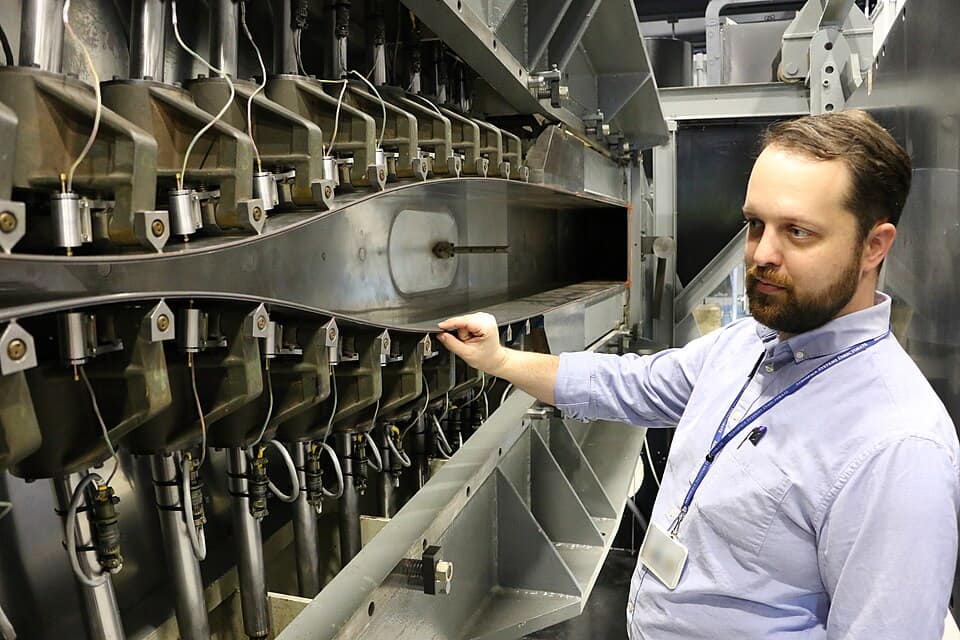
The lab is the U.S. Air Force’s central in-house research and development organisation. It runs wind tunnels at the Arnold Engineering Development Complex in Tennessee. It operates the world’s most powerful airborne laser at Kirtland Air Force Base in New Mexico. It manages high-speed propulsion testing facilities. It funds the universities that train the next generation of aerospace engineers. It works closely with DARPA, but where DARPA looks ten or fifteen years out, AFRL looks five — at the technology that needs to be on a flight line by, say, 2030.
The seven directorates that are being collapsed cover sensors, propulsion, materials, directed energy, space vehicles, munitions, and information operations. The new four-directorate structure is reportedly oriented around mission outcomes rather than scientific disciplines: a directorate for combat air capability, one for space and global strike, one for agile combat support, and one for foundational science.
Why now
The timing is not a coincidence. The U.S. Department of War — the Trump administration’s renamed Department of Defense — has been hammering the services for the past year on the same point: too long from prototype to fielded weapon. The F-47 next-generation fighter is supposed to be in service in 2030 instead of 2040. The CCA collaborative drones must be on the flightline by 2027. New cruise missiles need to ramp from 90 a year to a thousand. None of those targets are reachable on legacy bureaucratic timelines.
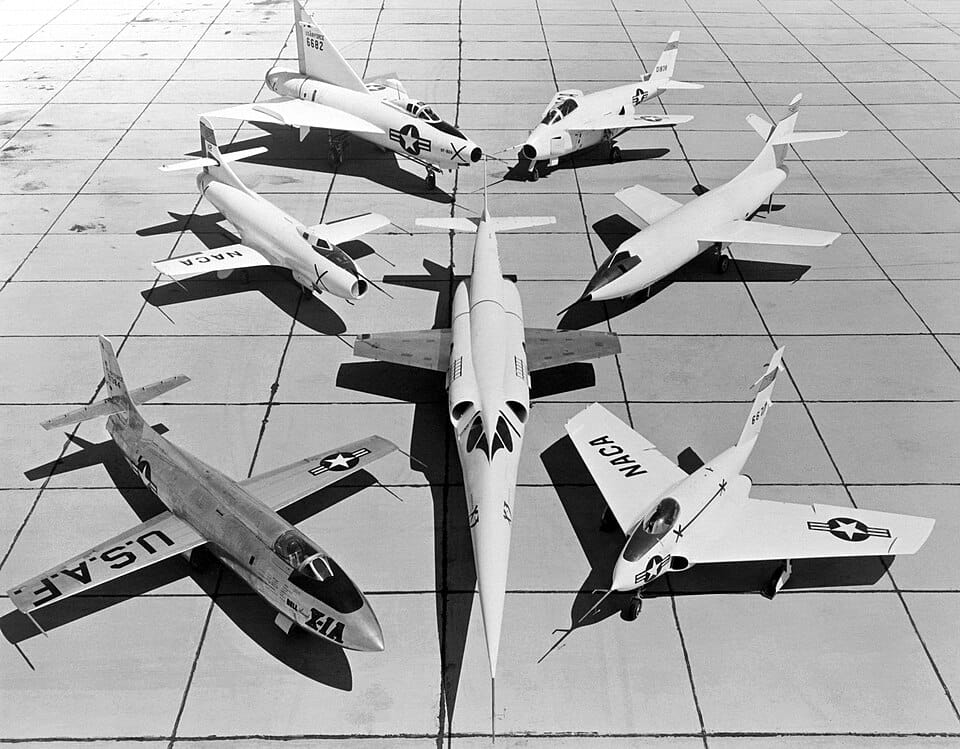
AFRL, by every internal review, is one of the bottlenecks. It funds excellent science — the X-37B unmanned spaceplane, the X-65 active-flow-control demonstrator, the high-energy laser systems on AC-130s — but its handoff to operational programmes is uneven. The new structure is aimed at shortening that handoff.
What gets cut, what survives
The internal AFRL response has been mixed. The directorate leaders most likely to be merged are the ones whose work has the most direct path to combat aircraft programmes — sensors, propulsion, and information operations are widely expected to be folded together under a single combat-capability heading. Directed energy and munitions are likely to be combined. The space directorate may be hived off entirely to the Space Force’s parallel research organisation, the Space Rapid Capabilities Office.
What is less clear is what happens to the parts of AFRL that do basic science with no immediate weapons application — university grants, fundamental aerodynamic research, materials science. Those are the seed corn of the next decade’s combat aircraft. If the restructure cuts them too aggressively, the savings will look good for a few budget cycles and disastrous for the 2040s.
The bigger argument
Underneath the restructure is an argument that has been running, in different forms, since the late 1990s. Should the Air Force run its own internal research lab? Or should it rely on industry — Lockheed, Northrop, Boeing — and on DARPA, and let AFRL focus on a much narrower set of in-house capabilities?
This restructure does not answer that question. But it tilts the answer slightly toward the second option. A leaner, mission-oriented AFRL is implicitly trusting industry to do more of the development work that was once split between the lab and the contractors.
How that bet pays off will be visible only in the aircraft and weapons of the 2030s. The leadership change is the easy part. The execution is everything.
Sources: Air & Space Forces Magazine, U.S. Air Force, Defense News.


 English
0 Comments