

One year on, the question at the heart of the Air India Flight 171 disaster is still the most unsettling one in modern aviation: how did the fuel to both engines of a healthy Boeing 787 get shut off seconds after takeoff?
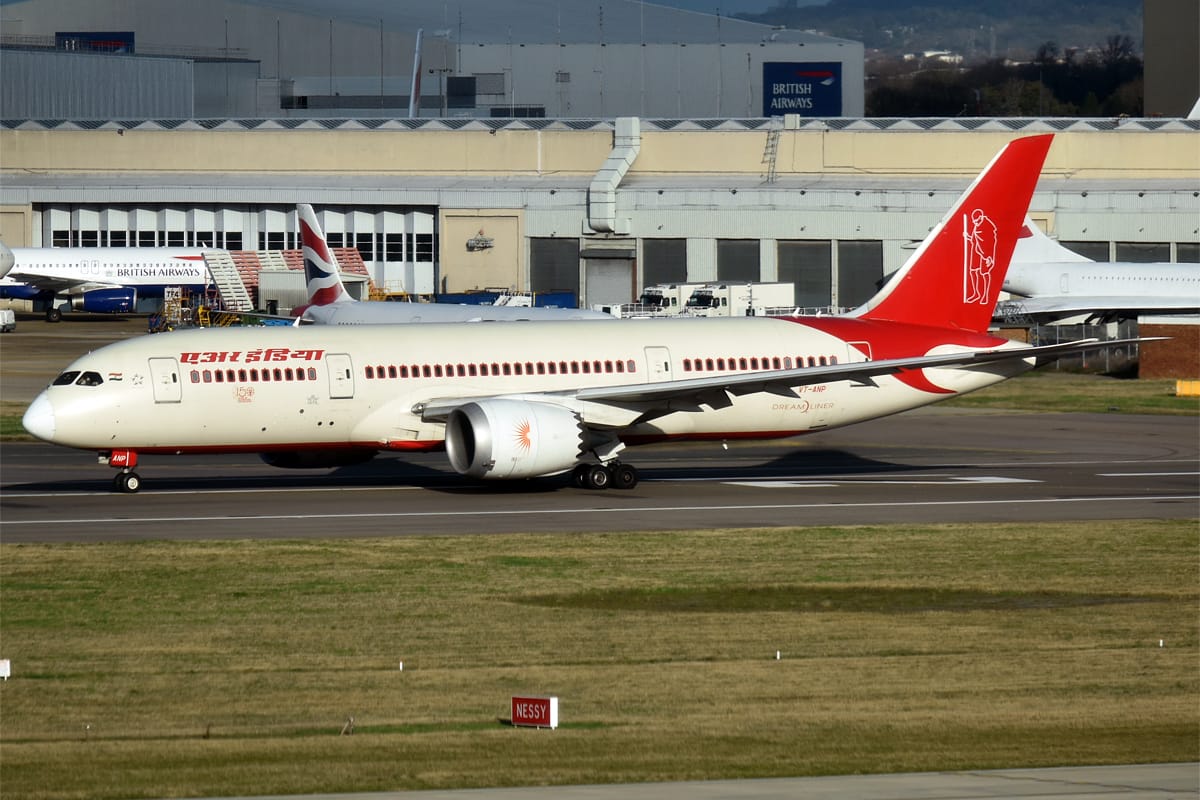
On June 12, 2025, the Dreamliner bound for London lifted off from Ahmedabad and almost immediately began to sink. It came down on a medical college hostel barely a kilometre beyond the runway. Of the 242 people on board, 241 died; more were killed on the ground. It remains the deadliest aviation accident involving a Boeing 787.
On the first anniversary, India’s Aircraft Accident Investigation Bureau issued an interim update — and reopened a debate it may have hoped to close.
Quick Facts
- Flight: Air India 171, Ahmedabad–London Gatwick
- Aircraft: Boeing 787-8 Dreamliner, VT-ANB
- Date: June 12, 2025
- Toll: 241 of 242 aboard killed, plus deaths on the ground
- Key finding: Both engine fuel-control switches moved from RUN to CUTOFF seconds after takeoff
- Status: Interim report issued June 2026; final report expected later in 2026
Two Switches, One Second Apart
The AAIB’s preliminary report, released in July 2025, contained the detail that has haunted the investigation ever since. Within seconds of liftoff, both engine fuel-control switches transitioned from RUN to CUTOFF, one after the other, about a second apart. Thrust fell away on both engines at once. The switches were later returned to RUN, and the engines were relighting — but there was no altitude left to recover.
The same report referenced a brief, devastating exchange on the cockpit voice recorder: one pilot asking the other why he had cut off the fuel, and the other replying that he had not.
Accident or Action? Two Camps Form
The findings split investigators into two camps. One argues for a technical cause: an electrical fault that could have triggered the ram air turbine and disrupted systems, with the switch movements a symptom rather than a deliberate act. The other reads the cockpit audio as evidence of intentional shutdown by one of the pilots.
Pilots’ associations have pushed back hard against the second theory. The Federation of Indian Pilots called for a fresh technical review and rejected any suggestion of pilot suicide, arguing the crew had been blamed before the engineering was fully understood.
A discovery in February 2026 gave the technical camp new ammunition: on a separate Air India 787, a fuel-control switch reportedly moved from RUN to CUTOFF twice on the ground before a London–Bengaluru flight — hinting at a possible mechanical fault in the switch mechanism itself.
A Year of Waiting
For the families, the interim report changes little. It confirms what happened to the fuel switches without yet explaining why. The final report, expected later in 2026, will have to choose between two conclusions that could not be more different — a faulty switch, or a human hand — and the credibility of that verdict will rest on engineering, not assumption.
Until then, the most modern airliner in the world is left with the oldest question in accident investigation: what really happened in those last forty seconds.
Sources: India AAIB preliminary and interim statements; The Air Current; Airline Ratings; Al Jazeera; Gulf News.
This article discusses a fatal aviation accident. It is reported here as a matter of public safety and investigation; details are drawn from official sources.
 English
0 Comments