Why one was won in days and the other drags into year four
Two ongoing conflicts. Two air forces attempting to dominate enemy skies. Two very different outcomes. The contrast between how Israel and the United States established air superiority over Iran — and how Russia has failed to do the same over Ukraine after four years of war — has become one of the most closely studied case studies in modern military doctrine.
How Israel Systematically Dismantled Iran’s Air Defenses
The groundwork was laid well before the first bomb dropped. In April 2024, Israel conducted a limited but precise strike on Iranian territory, destroying an S-300 air defense radar guarding the Natanz nuclear facility. It was a message — and a preparation. At the time, Iran operated just four Russian-supplied S-300 batteries, its most capable long-range surface-to-air missile systems. Israel had quietly removed one.
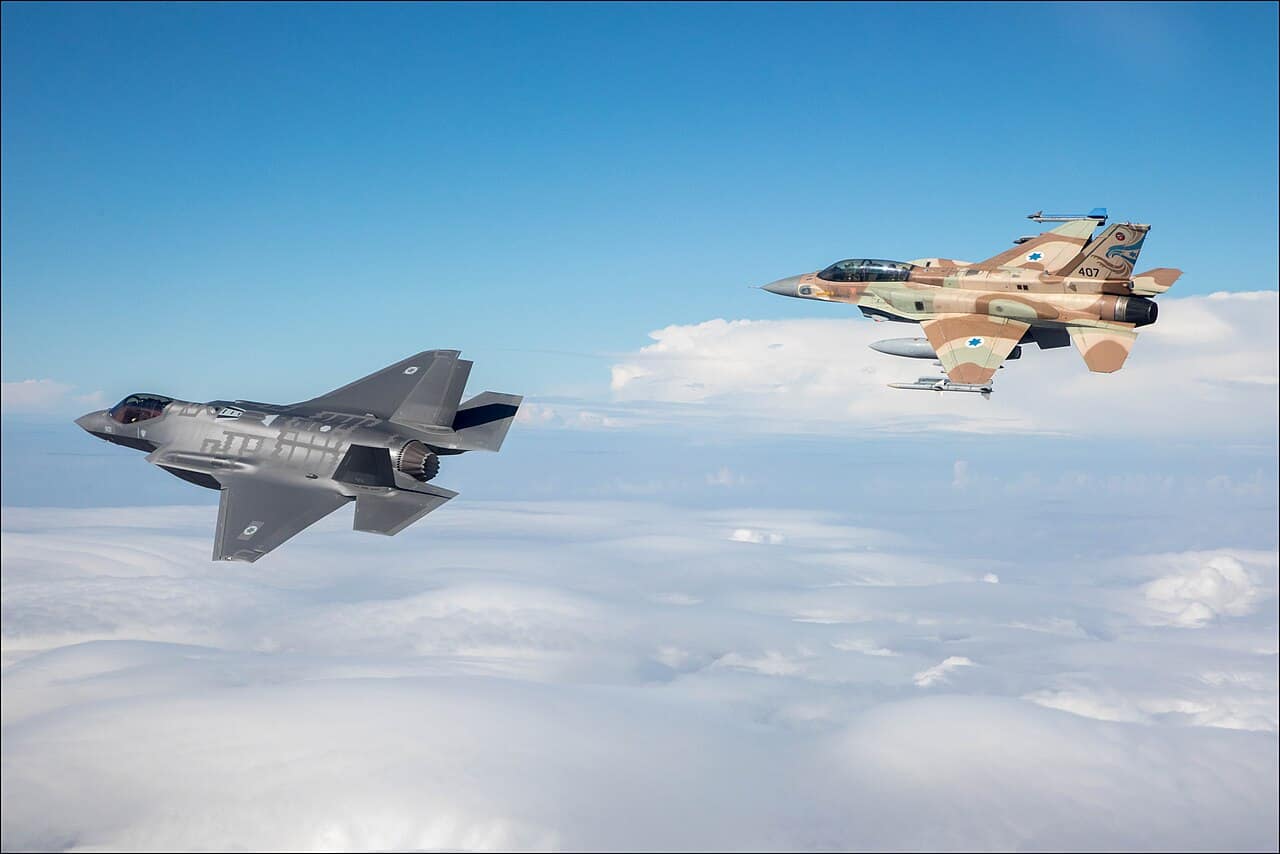
Then came October 26, 2024. In a strike involving over 100 aircraft — including F-35 Lightning II stealth fighters flying round trips of more than 2,000 kilometres — Israel systematically destroyed what remained. U.S. and Israeli officials confirmed that virtually all of Iran’s S-300 systems were knocked out in a single night, leaving Iran’s airspace, in the words of one intelligence report, “essentially naked.”
By June 2025, when the Twelve-Day War broke out, Iran’s air defenses had been so thoroughly degraded that Israel established full aerial superiority in less than four days. The Center for Strategic and International Studies (CSIS) captured the significance: Israel achieved this over a country nearly 1,000 miles away from its nearest airbase — a logistical and operational feat with few historical parallels. By the time a ceasefire was reached, Israel had reportedly destroyed 120 Iranian ballistic missile transporter-erector-launchers (TELs), eliminating a large portion of Iran’s strike capability along with its ability to defend against air attack.
When a new phase of the conflict opened in March 2026, the results were even more lopsided. U.S. Joint Chiefs Chairman General Dan Caine announced that the combined U.S.-Israeli force had established “localized air superiority across the southern flank of the Iranian coast.” By that point, analysts estimated roughly 80 percent of Iran’s remaining air defense network and over 60 percent of its ballistic missile launchers had been eliminated.
Russia Over Ukraine: Four Years and Still No Air Superiority
The contrast with Russia’s performance in Ukraine could hardly be sharper. When Russian forces invaded in February 2022, the assumption — including among many Western analysts — was that the Russian Air Force (VKS) would rapidly overwhelm Ukrainian defenses. It never happened.
Lt. Gen. Scott Kindsvater (ret.) was blunt in his assessment: “Russia’s air force is losing a lot of aircraft and has nothing close to air superiority.” He pointed to a structural problem at the core of Russia’s failure: the VKS lacks the air staff and joint planning capacity to coordinate complex, multi-domain air campaigns alongside ground forces. What NATO air forces treat as basic doctrine — combined arms integration, dynamic targeting, suppression of enemy air defenses followed by systematic follow-up strikes — Russia has struggled to execute at scale.
The International Institute for Strategic Studies (IISS) put it plainly in its 2024 Military Balance assessment: rather than air superiority, what exists over Ukraine is closer to air parity — neither side able to freely operate in the other’s airspace. Russia’s air force has suffered significant attrition of high-value jets, while Ukrainian air defenses — repeatedly resupplied with Patriot systems, NASAMS, and IRIS-T — have proven far more resilient than Moscow anticipated.
Lt. Gen. David Deptula (ret.), Dean of the Mitchell Institute for Aerospace Studies, identified the strategic cost of this failure: “Without air superiority, operations devolve into attrition-based trench warfare — not unlike what we saw in World War I.” That is precisely what has unfolded along Ukraine’s eastern front: grinding, static lines and enormous casualties on both sides, with neither able to achieve the decisive breakthrough that air dominance would enable.
Why One Succeeded Where the Other Failed
CSIS analysts identified the core differences in a landmark 2025 study comparing the two conflicts. Israel succeeded by building and equipping a force that matched an offensive air superiority doctrine, preparing the battlefield with special operations forces months in advance, and leveraging a decisive intelligence advantage. Mossad operatives reportedly smuggled precision weapons into Iran and established a covert drone base near Tehran well before the June 2025 conflict — disabling radar networks and command nodes before a single Israeli jet crossed the border.
Russia, by contrast, failed at the first and most critical step: the systematic suppression of enemy air defenses (SEAD). CSIS noted that Russia’s failure to conduct follow-on strikes when Ukrainian air defenses were briefly suppressed allowed them to reconstitute within days. Ukraine, meanwhile, played its hand well — dispersing and concealing mobile air defense units, refusing to concentrate assets that could be destroyed in a single strike, and using Western intelligence to stay a step ahead of Russian targeting cycles.
Technology is part of the story, but only part. Israel’s F-35s, with their stealth profiles and advanced sensor fusion, gave them a decisive edge in penetrating Iran’s radar networks. Russia’s aircraft, while capable on paper, were deployed with outdated tactics, limited electronic warfare integration, and — critically — a shortage of precision-guided munitions needed to hit hardened or mobile targets at range. Many early Russian strike sorties relied on unguided bombs, making them ineffective while exposing crews to MANPADS and short-range SAMs at low altitude.
What This Means for the Future of Air Power
The two conflicts have fundamentally reshaped thinking about what air superiority means in the 21st century. The European Council on Foreign Relations noted that these wars demonstrate the importance not just of aircraft and missiles, but of the intelligence architecture, special operations preparation, and electromagnetic warfare capabilities that make air dominance possible. Air supremacy no longer begins in the cockpit — it begins months earlier, in the shadows.
For military planners and air forces worldwide, the lesson is unambiguous. The gap between a force that has genuinely invested in doctrine, training, and joint operations — and one that has coasted on legacy equipment and paper strength — becomes devastatingly visible the moment the first shots are fired. Israel proved that even a small air force, operating at extreme range, can achieve rapid and decisive air superiority when the preparation is right. Russia proved that size and history are no substitute for execution.
Sources: CSIS, “Air Superiority in the Twenty-First Century: Lessons from Iran and Ukraine” (2025–2026); Mitchell Institute for Aerospace Studies; IISS Military Balance 2024; The War Zone; Iran International; FDD conflict analysis, March 2026; Institute for the Study of War