
On March 3, 2026, an Iranian ballistic missile got through the air defenses surrounding Al Udeid Air Base in Qatar. No one was killed. But the message was impossible to ignore: the largest U.S. military installation in the Middle East — home to the air operations centre coordinating strikes across the entire region, housing some 10,000 American personnel — was not invulnerable.
Related: Iran Hits a US Air Base in Saudi Arabia
The Pentagon’s response, revealed in a March 23 federal contract notice, was immediate and blunt: find someone who can deliver pre-fabricated, hardened blast shelters within 30 days. Not in a year. Not after a lengthy procurement process. Thirty days.
Building Bunkers in a War Zone
CENTCOM is seeking “prefabricated, transportable, hardened shelter systems designed to protect personnel from blast and fragmentation threats.” The contract notice asked vendors to specify delivery timelines of 3, 15, and 30 days, and to state the maximum threat level the bunkers could withstand. The urgency is stark — this is wartime procurement stripped of the usual bureaucratic delay.
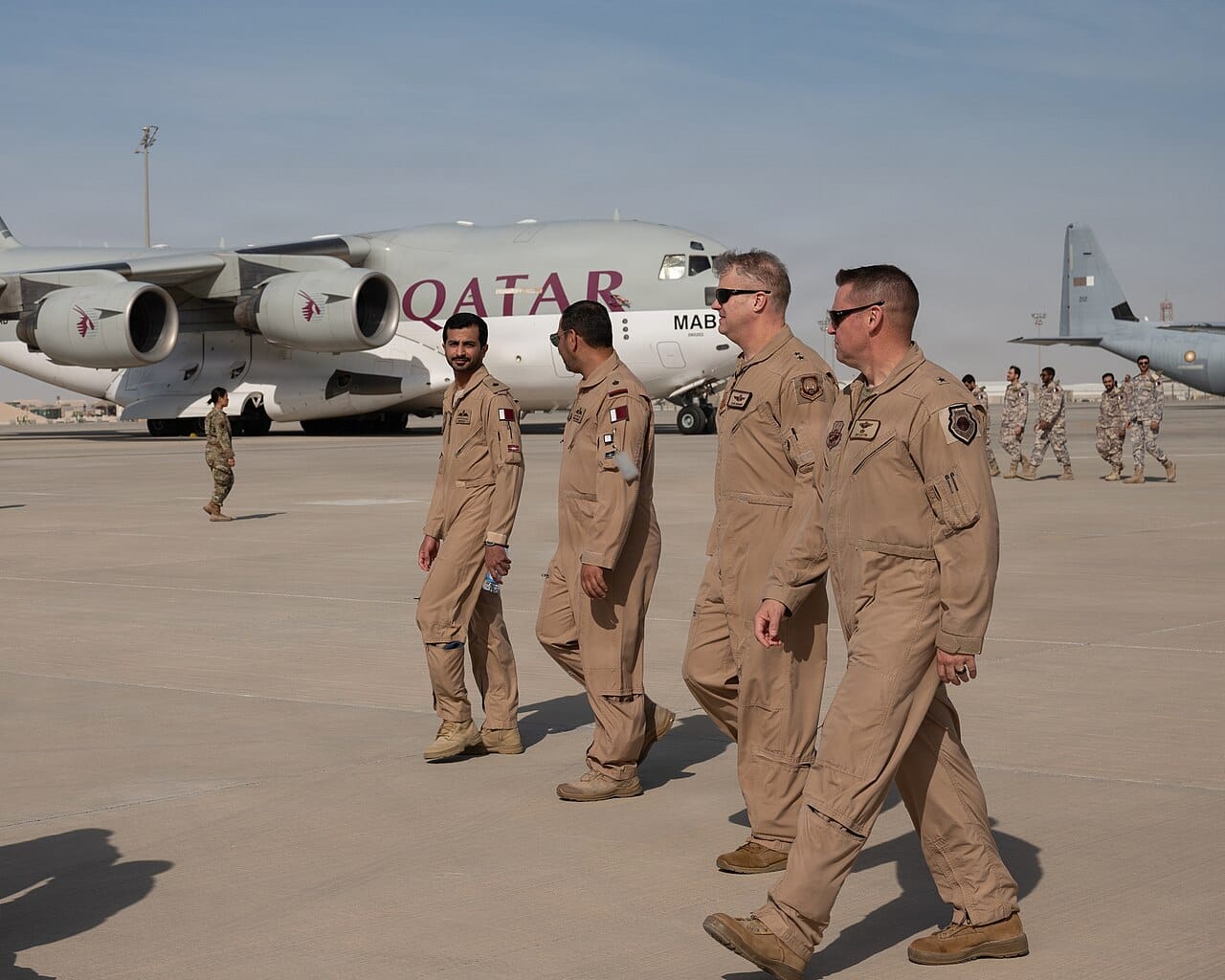
Task & Purpose reported that the Pentagon is looking for vendors capable of supplying the shelters within a month — an extraordinary timeline for military construction. The request reflects a simple reality: Al Udeid was designed for a different era. Its infrastructure was built assuming U.S. air superiority and the absence of credible ballistic missile threats. Iran, in one strike, exposed how much that assumption had been taken for granted.
A $10 Billion Hardening Plan
The emergency bunker procurement is just the immediate response. The longer-term answer is already in planning: Qatar has committed to funding a Strategic Master Plan 2040 — a portfolio of over 170 projects worth $10 billion — that will fundamentally harden Al Udeid against the kind of precision ballistic missile threat Iran demonstrated in March. Underground facilities, reinforced aircraft shelters, hardened command centres.
Qatar, which hosts the base under a bilateral defence agreement, has extraordinary financial incentive to see the plan succeed. Al Udeid is as much a shield for Doha as it is a power-projection platform for Washington. The March 3 strike — and the dramatic interception of two Iranian Su-24 bombers by Qatari F-15s just the day before — made that reality unmistakably clear.
The Lesson for Every US Base
Al Udeid is not alone. U.S. bases across the region — in Bahrain, the UAE, Iraq, Jordan — were built in an era when no adversary could reliably threaten them with ballistic missiles. That era has ended. Iran has demonstrated both the will and the capability to reach them. The race to harden American infrastructure in the Middle East has begun — and it is running against a war that shows no sign of slowing down.
Sources: The War Zone; Task & Purpose; Stars and Stripes; CNN
 English