
For roughly a decade, the U.S. Army has been quietly anxious about one math problem it could not solve: a Tomahawk cruise missile costs about $2 million a copy, the Pentagon’s stockpile keeps shrinking after every Middle East flare-up, and the Indo-Pacific theatre is the size of a planet. You cannot deter China with sticker prices like that. You need volume — Costco volume, not Tiffany volume.
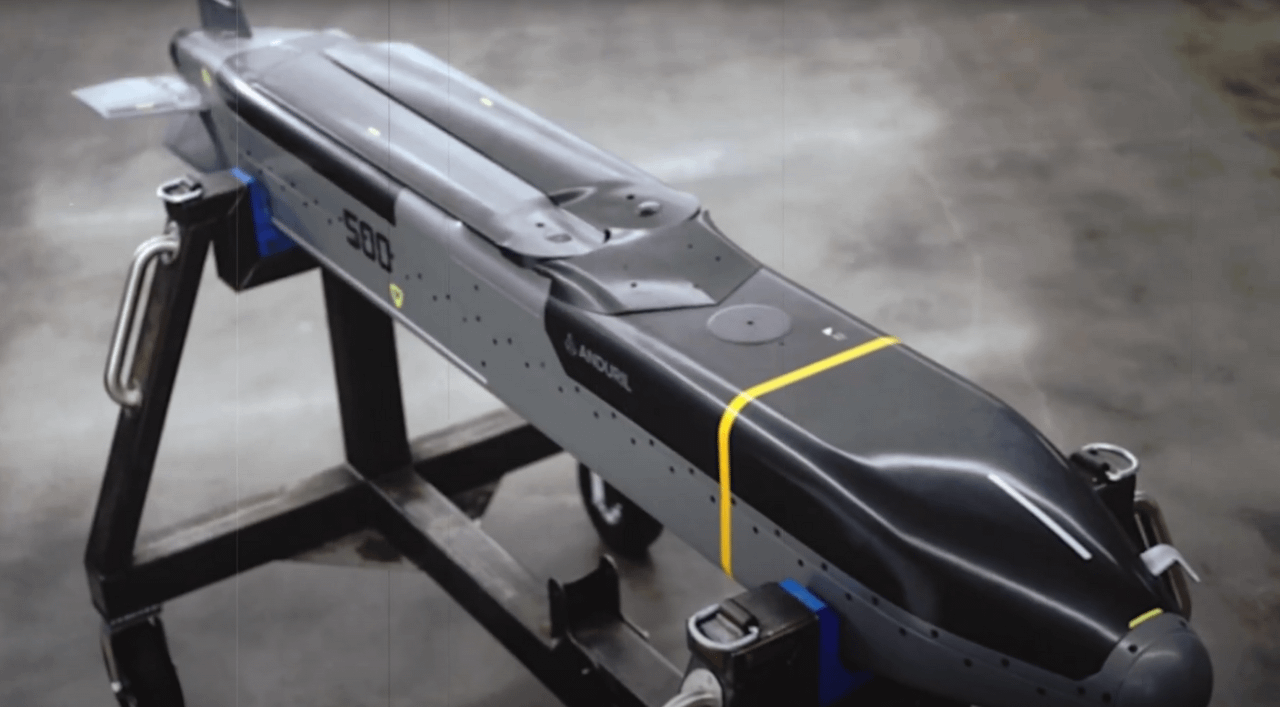
On 13 May 2026, Anduril Industries and the newly renamed Department of War signed the deal that bets the farm on Costco. The framework agreement runs three years, starts deliveries in 2027, and locks in a minimum of 3,000 Barracuda-500M cruise missiles plus more than 60 containerised launchers. That is roughly 1,000 missiles a year — about three times the U.S. Army’s entire current Tomahawk-equivalent procurement, ordered from a defence start-up that didn’t exist a decade ago.
A Missile You Ship in a Box
The headline-friendly detail is the launcher. Every Barracuda-500M ships in a standard 20-foot ISO shipping container — the same dimensions as the brown box that brings your Amazon delivery on a flatbed truck. Sixteen all-up rounds fit per container. The container hides among normal cargo on a flatbed, a barge, a rail wagon, a C-130 ramp. You can park it inside a warehouse, on a Filipino island, on a Polish forest road, or on the back of a Stryker. The U.S. Marine Corps has been begging for exactly this kind of “everything looks like everything else” missile logistics since the 2010 Distributed Maritime Operations doctrine was written.

The launcher’s biggest virtue is that it does not look like a launcher. Russian and Chinese long-range strike doctrine — the doctrine the U.S. Army needs to deter — relies heavily on finding TEL trucks and destroying them before they fire. A pre-loaded SLB-500M container is indistinguishable from a refrigerator unit on an Iveco truck. By the time a satellite analyst figures out which container holds missiles, the missile is already inbound.
The Cost Curve
Pentagon procurement officers will not give a unit cost. Anduril hasn’t either. The contract value also has not been disclosed. But every analyst working from the numbers comes to roughly the same place: a Barracuda-500M needs to cost between $150,000 and $300,000 a copy to make sense at this volume. A Tomahawk Block V costs about $2 million. A JASSM-ER costs about $1.5 million. Even if Anduril hits the high end of that range, the Army is buying 3,000 long-range strike rounds for what a single fully equipped Patriot battery costs.

That price collapse is structural, not magical. Anduril builds the Barracuda-500M out of 70% commercial off-the-shelf parts — the same trick SpaceX uses on Falcon 9. The remaining 30% is open-architecture, so multiple suppliers can drop modules into the same airframe. The single small turbojet engine is bought in volume from a commercial drone supplier. The flight-control computer runs on hardware you could find in a high-end industrial robot. There is no exquisite radar seeker. The munition trades terminal precision for production tempo and gets the price down to a number the U.S. Army can actually afford to use.
Where Tomahawk Runs Out, Barracuda Begins
The Tomahawk is not going away. It has range the Barracuda lacks — about 2,500 km versus 926 km — and a 1,000-lb warhead that the Barracuda’s 100 lb cannot remotely match. The Barracuda is not a Tomahawk replacement. It is a complement, designed to take the volume off the Tomahawk so the big missile can be saved for the hardest targets.

The Pentagon has been explicit about this two-tier approach. The 13 May procurement plan calls for 10,000 low-cost cruise missiles and a similar number of Blackbeard hypersonic missiles over the next three years. Anduril’s 3,000 Barracudas are the first contract under that plan. The rest will be split between Lockheed Martin’s CMMT-D programme and other competitors, but the message is clear: the Army’s long-range strike inventory is going to be dominated by cheap, mass-produced, container-launched missiles before the decade is out.
The Indo-Pacific Calculation
Read the Defense News announcement carefully and you find a single phrase that explains everything: Indo-Pacific Program Acquisition Executive FIRES. This is the Army’s office for delivering long-range fires inside the China-deterrence theatre. The 3,000 Barracudas are not going to be parked in Texas. They are going to be deployed across the first and second island chains — Japan, the Philippines, Guam, Palau, northern Australia — pre-positioned in containers that look like the rest of the regional cargo flow.
That deployment posture is what gives the missile its strategic weight. Three thousand long-range strike rounds, dispersed across a thousand islands, in containers that cannot be reliably distinguished from any other shipping container on any other dock, is a very different deterrent than three Carrier Strike Groups. The Carrier Strike Groups can be tracked. The containers cannot.
From Silicon Valley to a Pentagon Contract
The other story buried in this deal is what it says about Anduril. Founded in 2017 by Palmer Luckey (the Oculus Rift inventor Mark Zuckerberg fired in 2017) and a handful of former Palantir engineers, Anduril built its reputation on autonomous surveillance towers and AI-driven targeting software before adding hardware. The Barracuda family was unveiled in late 2024. By mid-2026, Anduril is on the verge of out-shipping Raytheon on a per-unit basis for tactical cruise missiles.
That trajectory — Silicon Valley start-up to anchor Army supplier in under three years — is itself the story Pentagon procurement reformers have been chasing for a decade. The Army’s Program Acquisition Executive FIRES has, in effect, treated Anduril like an emergency vendor: contract-first, certification-second, deliver-and-iterate. It is the model the Pentagon has been struggling to apply to almost every other strategic weapon. Whether Anduril can actually deliver 1,000 missiles a year, every year, starting in 2027 — that is the part nobody knows yet.
The first 16-missile container leaves Anduril’s Mississippi facility in mid-2027. If you are an analyst in Beijing, you cannot tell whether that container is loaded or empty. That, in the cold logic of deterrence, is the whole point.
Sources: The Aviationist (16 May 2026); Defense News (Joseph Trevithick); Sandboxx (Alex Hollings); The War Zone; Military Times; Anduril Industries press release; armyrecognition.com; Wikimedia Commons for photography.
 English
0 Comments