
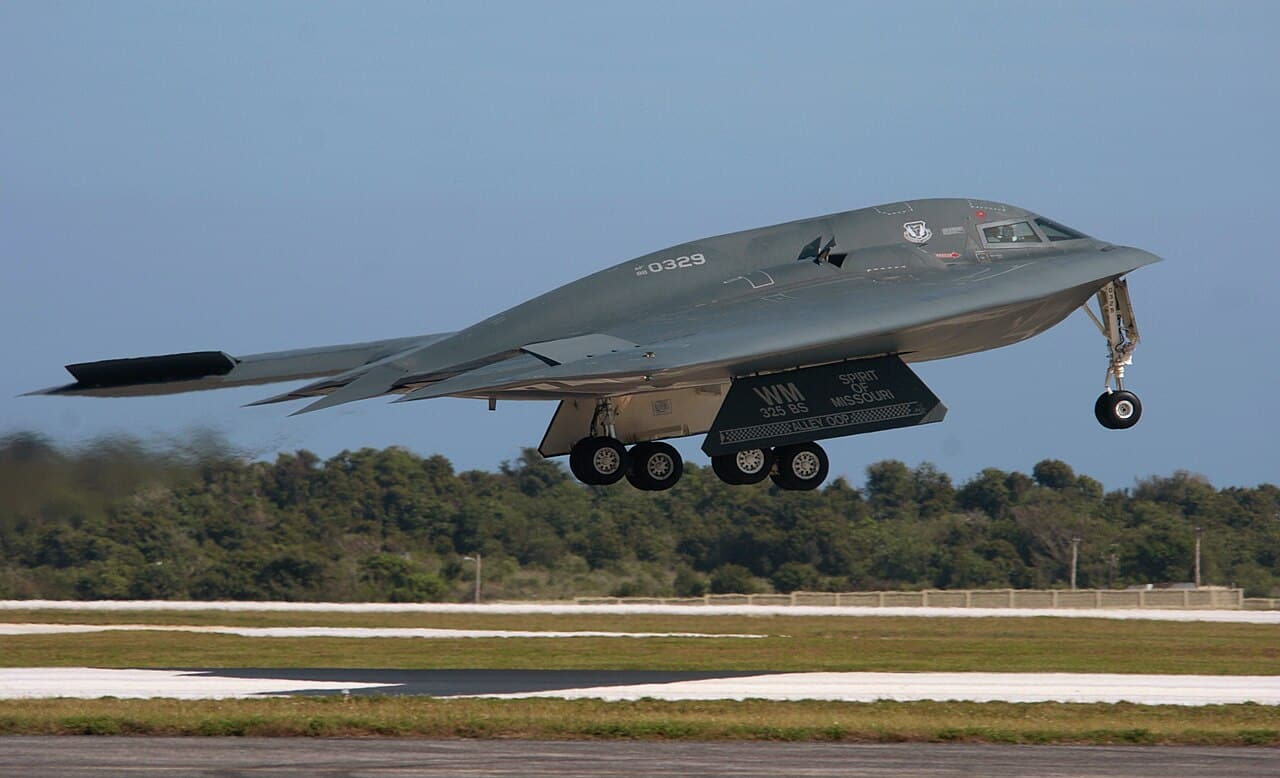
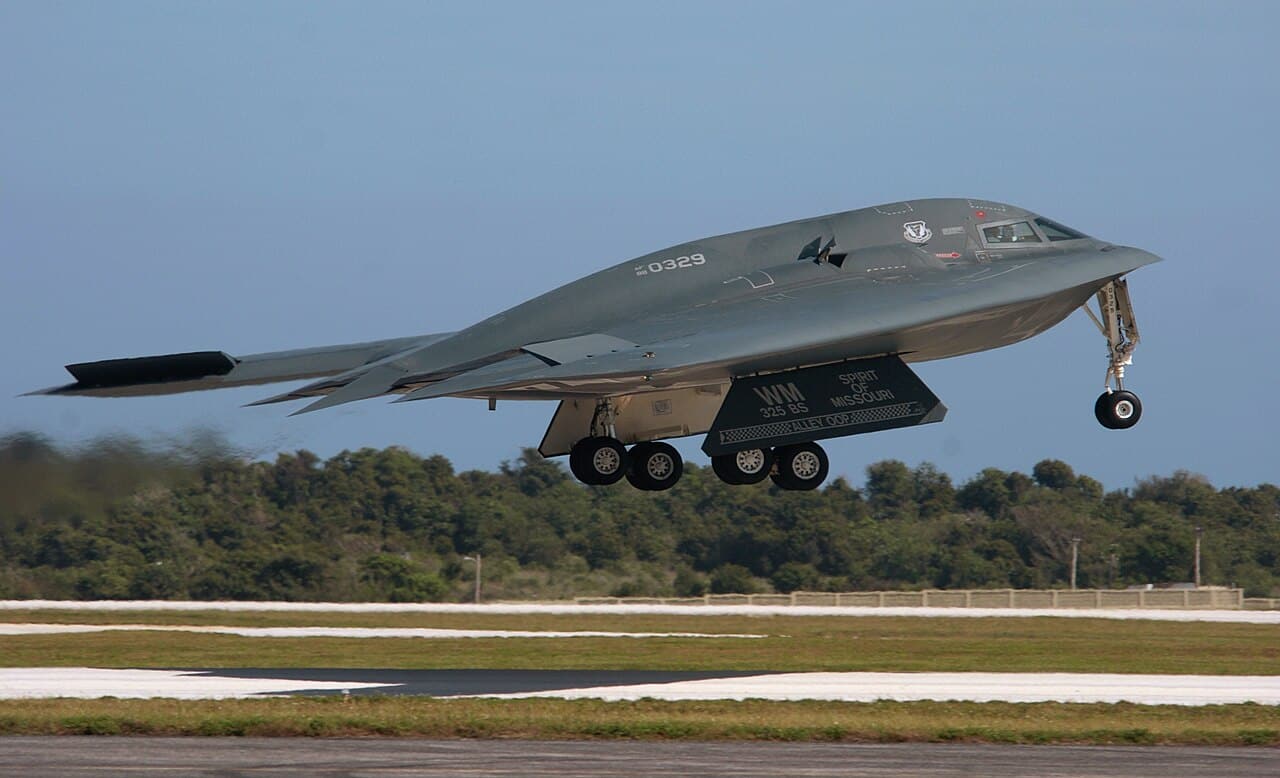
On 23 February 2008 at 10:30 local time, Spirit of Kansas — a Northrop Grumman B-2A stealth bomber, USAF tail number 89-0127 — taxied out for take-off on runway 06L at Andersen Air Force Base, Guam. The crew, Captain Justin Grieve and Major Ryan Link, had run their pre-flight checks the way they had run them dozens of times before. The aircraft, valued at approximately US$1.4 billion, was being deployed home to Whiteman AFB after a four-month rotation through the Pacific.
Seconds after rotation, Spirit of Kansas was a fireball alongside the runway. Both crew members ejected. Both survived, one with a spinal compression injury. The aircraft was a total loss. It is, by some distance, the single most expensive aviation accident in history. And the entire chain of failure can be traced to a small amount of moisture inside three air-data sensors on the leading edge of the wing.
Quick Facts
| Aircraft | Northrop Grumman B-2A Spirit, tail number 89-0127 (“Spirit of Kansas”) |
| Operator | 393rd Bomb Squadron, 509th Bomb Wing, Whiteman AFB |
| Date of crash | 23 February 2008, 10:30 ChST |
| Location | Andersen AFB, Guam — runway 06L threshold |
| Crew | Capt. Justin Grieve (Aircraft Commander), Maj. Ryan Link (Mission Commander) — both ejected, both survived |
| Cost of loss | ~US$1.4 billion — most expensive aircraft accident in history |
| Root cause | Moisture in three Port Transducer Units corrupted air-data calculations → uncommanded 30° pitch-up at rotation → stall and crash |
A flush sensor that is not supposed to be wet
The B-2 has no conventional pitot tube. A protruding probe on a stealth aircraft would be a radar reflector and a manufacturing nightmare. Instead, the B-2 uses 24 flush-mounted air-data sensors — small ports embedded in the leading edge of the wing that measure pressure differentials and feed data to the flight control system, which then computes airspeed, angle of attack, and altitude. These flush sensors are known as Port Transducer Units (PTUs).
On Guam in February, the local humidity is high. The B-2s deployed to Andersen sat outside on the ramp during the rainy season for weeks at a time. Moisture worked its way into the PTU cavities — undetected — and the standard procedure for clearing it, which involved turning on the air-data heaters before calibration, had been incompletely documented and was not in the official checklist.
The crews knew, informally, to “heat-cycle” the sensors before flight. The Air Force’s formal Pacific Air Forces directive had not yet incorporated this step. The 393rd had been operating off Guam for months. Moisture remained inside the sensors of 89-0127.
The calibration that lied
The crash sequence began before the aircraft moved. On startup, the flight control computers ran an air-data calibration that compared sensor readings against a baseline. The moisture inside the PTUs introduced systematic bias: the corrupted sensors read a higher absolute pressure than reality. The flight control computers wrote this bias into the calibration as the correct atmospheric baseline. The faulty calibration was now treated as the truth against which every subsequent reading would be compared.
The aircraft taxied normally. On take-off roll, the wing-mounted sensors began producing airspeed data — but data calibrated against a wrong baseline. The computer saw the aircraft as flying slower and at a much steeper angle than it actually was. To “correct” for the apparent low airspeed and high angle, the flight control system commanded an aggressive pitch-up at rotation.
Seconds to disaster
Spirit of Kansas rotated 12 knots slower than its cockpit displays indicated. The flight control system commanded an immediate 30-degree nose-up pitch — far steeper than any normal departure attitude. The aircraft climbed to roughly 25 metres above the runway, lost lift on the now stalled wing, and rolled left. The left wingtip struck the runway. The aircraft began to come apart.
The crew ejected as the left wingtip began gouging the ground. The two ACES II ejection seats fired through the escape hatches above the cockpit. One pilot was evaluated and released at Guam Naval Hospital; the other was hospitalised with a spinal compression injury. Both were alive. The B-2, valued at roughly US$1.4 billion, was burning on the runway threshold.
The lessons that survived
The B-2 fleet was grounded for 53 days. The Air Force amended its calibration procedures to require pitot-heat cycling before every flight in humid conditions, and updated the formal flight manual. No B-2 has been destroyed in a crash since, although a second airframe damaged in a 2022 mishap was later retired rather than repaired. The fleet returned to flight status on 15 April 2008.
The accident is now a standard case study in human-factors and procedural-knowledge research. The “informal knowledge that did not make it into the formal procedure” is the precise failure shape that aviation safety researchers spend their careers trying to eliminate. In this case the gap between what crews knew and what the manual said cost the Air Force a 21-aircraft fleet that became a 20-aircraft fleet — and an irreplaceable Cold War strategic asset that the United States can no longer manufacture, because the production line was closed in 1997 and the tooling was destroyed.
A detailed reconstruction of the Spirit of Kansas crash sequence — the moisture, the calibration, the few seconds from take-off to total loss.
Sources: USAF Accident Investigation Board Final Report (June 2008); Wikipedia; Wikinews; National Interest; NASA System Failure Case Study (January 2009); The Aviation Geek Club.
 English
0 Comments