
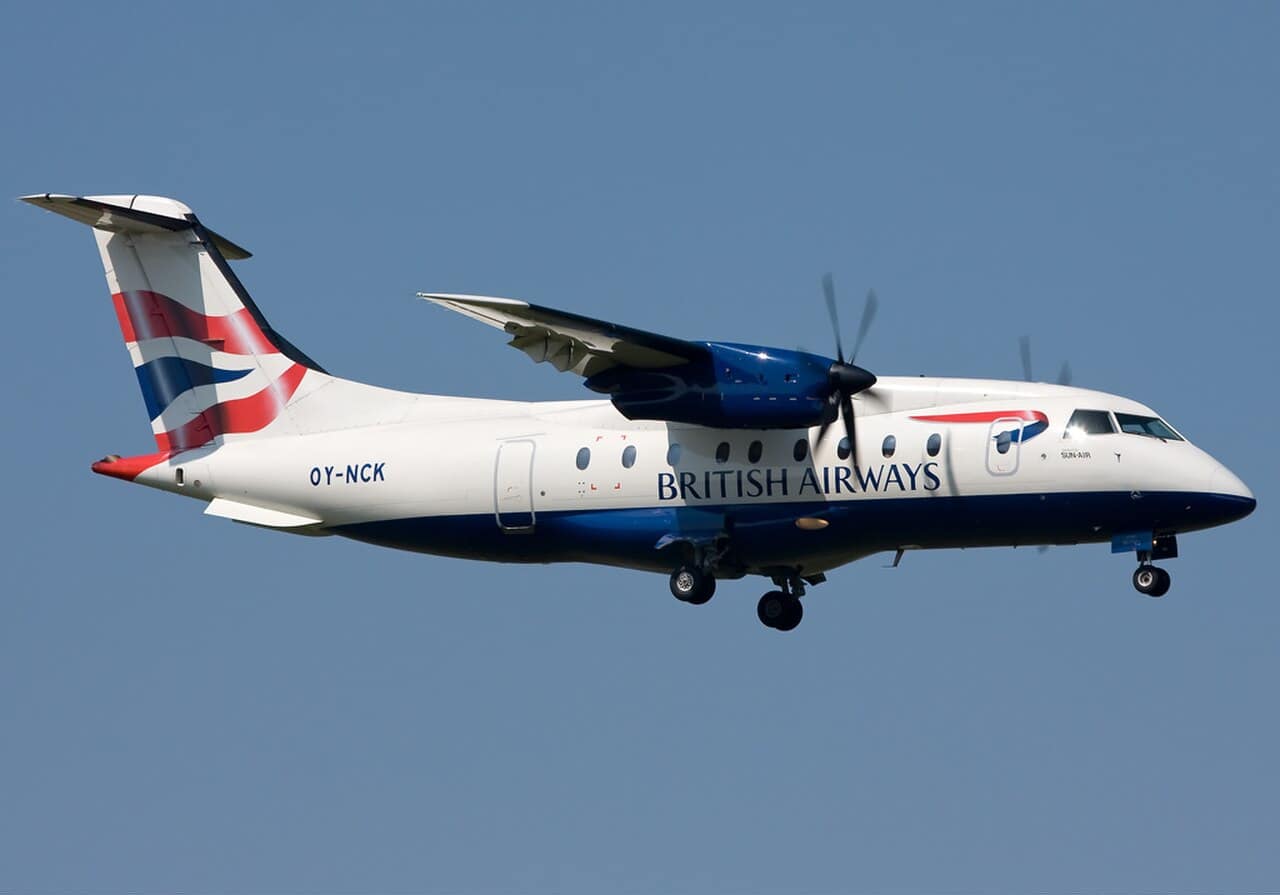
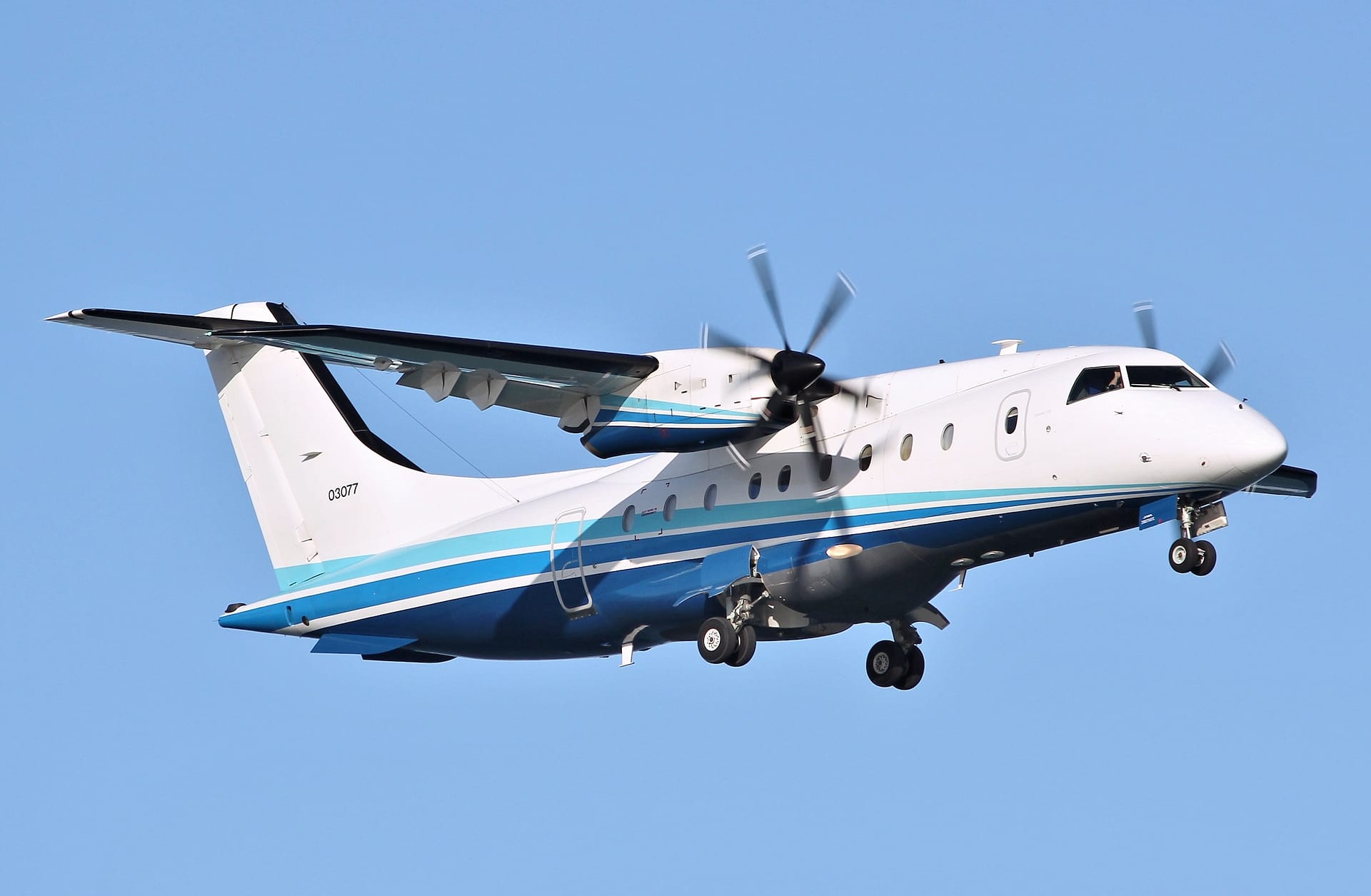
Most Americans have never heard of it. That is the point. The C-146A Wolfhound — a militarised Dornier 328 in unmarked colour schemes — is the quietest workhorse in the entire U.S. military aviation inventory. On any given day, a handful of Wolfhounds are dropping into dirt strips in the Sahel, the Caucasus, the Pacific archipelago, ferrying small Air Force Special Operations Command teams to places the public never learns about.
And it is breaking. After two decades of being flown into ground that other aircraft cannot reach, the fleet is becoming impossible to sustain. Special Operations Command has now formally started the hunt for a replacement.
Quick Facts
Aircraft: C-146A Wolfhound — military variant of the Dornier 328 commuter turboprop
Operator: Air Force Special Operations Command (AFSOC), 524th Special Operations Squadron
Mission: Discreet personnel and light cargo transport for U.S. special operations forces worldwide
Capacity: 27 passengers or roughly 2,700 kg of cargo
Origin: Acquired second-hand from the civilian market from 2011 onward, painted in non-descript livery
Key feature: Short take-off and landing capability from austere unprepared strips
Problem: The Dornier 328 production line was closed for years; spare parts increasingly scarce
Replacement timeline: SOCOM confirmed the search for a successor in May 2026; $55 million requested in its FY2027 budget for the first three replacement aircraft
The plane built to land where nobody is watching
The C-146 entered AFSOC service in 2011 as a stopgap. The Air Force needed a small, fast, civilian-looking transport that could slip into and out of grass strips in West Africa, Central Asia, and Southeast Asia without attracting attention. Buying militarised C-27Js would have raised red flags. Modifying C-130s for the role was overkill. So Special Operations Command quietly bought a fleet of used Dornier 328 commuter turboprops, repainted them in colour schemes that resemble corporate executive transports, and started flying.
It worked. The Wolfhound can carry 27 troops or about 2,700 kilograms of cargo. It lands on 900 metres of grass. It cruises at 300 knots — fast enough to cover useful distances, slow enough to slip into airfields without an airliner’s landing fee. Its civilian heritage means it does not announce itself when it arrives in a foreign capital. To the unfamiliar eye, it looks like a corporate shuttle. To AFSOC, it is irreplaceable.
Why it is dying
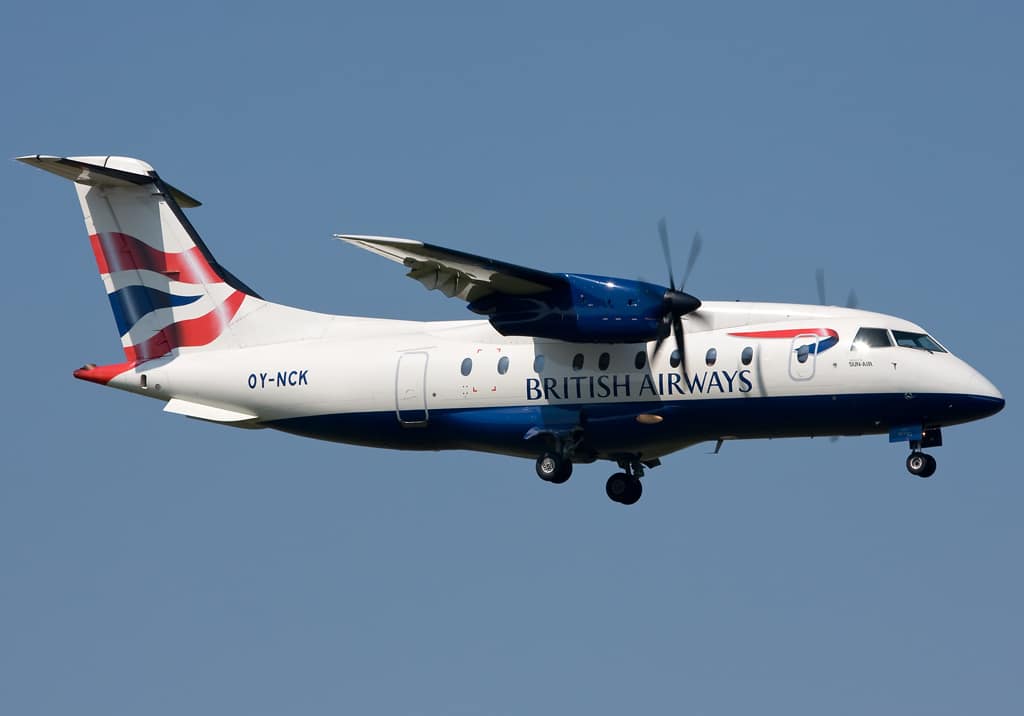
The Dornier 328 was an excellent regional turboprop. It was also a commercial failure. Dornier built fewer than 200 of them before the production line shut down in 2002. The owners of the type certificate have changed hands several times since — it now sits with US defence contractor Sierra Nevada Corporation, whose German subsidiary Deutsche Aircraft is attempting to restart production with a stretched D328eco variant that has yet to reach customers.
For AFSOC, the practical consequence is brutal. Every part on the Wolfhound is bespoke, low-volume, and increasingly scarce. Engines, avionics, hydraulics, landing gear components — all coming out of an aftermarket that gets thinner every year. The 524th Special Operations Squadron at Duke Field, Florida, has had to start cannibalising aircraft to keep others flying. After more than a decade of hard global use, the fleet’s high-time airframes are steadily using up their remaining fatigue life.
What replaces it
SOCOM is still defining the requirements, but the outline its programme officials sketched at SOF Week in May 2026 reads like the original Wolfhound spec, sharpened: more cost-effective, sustainable through a commercial supply chain, and still able to work from the same remote, austere strips. Candidates already being discussed in the industry press include the Italian Leonardo C-27J Spartan (perhaps too obvious), the Pilatus PC-24 (too small), the Cessna SkyCourier (too slow), and a possible restarted production of the Dornier D328 itself by Deutsche Aircraft.
Dark-horse possibilities include a militarised version of one of the new generation of utility turboprops — ATR 72MP, or a custom airframe built around modern composite materials. Whatever wins, it will fly out of Duke Field and RAF Mildenhall in livery you are not supposed to notice. That is the entire point.
Sources: The War Zone; SOCOM FY2027 budget documents; AFSOC press releases and fact sheets.


 English
0 Comments