
Gray water, a steel-cold sky over Long Island Sound, and a sound you feel in your sternum before you hear it — the slap-slap-slap of six rotor blades clawing the air. Hanging above the surface is a Sikorsky CH-53, nose down, straining. Trailing from its belly is a cable. And on the far end of that cable is a warship.
Not a launch. Not a barge. A 17,000-ton amphibious transport dock, USS Austin (LPD-4), inching across the water with a helicopter for a tugboat. The photograph looks like a hoax. It is not.
It is one of the strangest images in American naval aviation — and like a lot of strange images, the caption everyone repeats online is only partly nailed down. Here is what we can actually verify, and where the record gets slippery.
Quick Facts
- The ship: USS Austin (LPD-4), lead ship of the Austin-class amphibious transport docks, commissioned 6 February 1965.
- The aircraft: a Sikorsky CH-53 Sea Stallion, the Marines’ new heavy-lift helicopter; the prototype first flew 14 October 1964.
- The place: Long Island Sound, off Sikorsky’s Connecticut home turf.
- The date: widely cited as 1968 (some captions say 1967) — a Sikorsky capability demonstration, not a combat emergency.
- The point: prove a single helicopter could pull a warship — raw advertising for the CH-53’s muscle.
- The catch: the towing event is well attested in photos and aviation sources, but the exact date and “official test” framing come from social-media captions, not the Navy’s official ship history.
A helicopter as a tugboat
Helicopters move cargo. They sling howitzers, lift wrecked jets off mountainsides, drop water trailers into the bush. What they are not supposed to do is drag a steel hull the length of a city block through open water.
Yet that is exactly what the photo shows: a CH-53 acting as tug for USS Austin in Long Island Sound. The aviation press dates the picture to January 1968, and the framing is consistent across multiple outlets and decades of reposts — a deliberate demonstration of the Sea Stallion’s brute pulling power, staged on the doorstep of Sikorsky’s Connecticut plant.
The logic was pure salesmanship. Sikorsky had a new heavy-lifter to sell, and nothing sells raw capability like a stunt the competition cannot match.
Why pull a stunt like this?
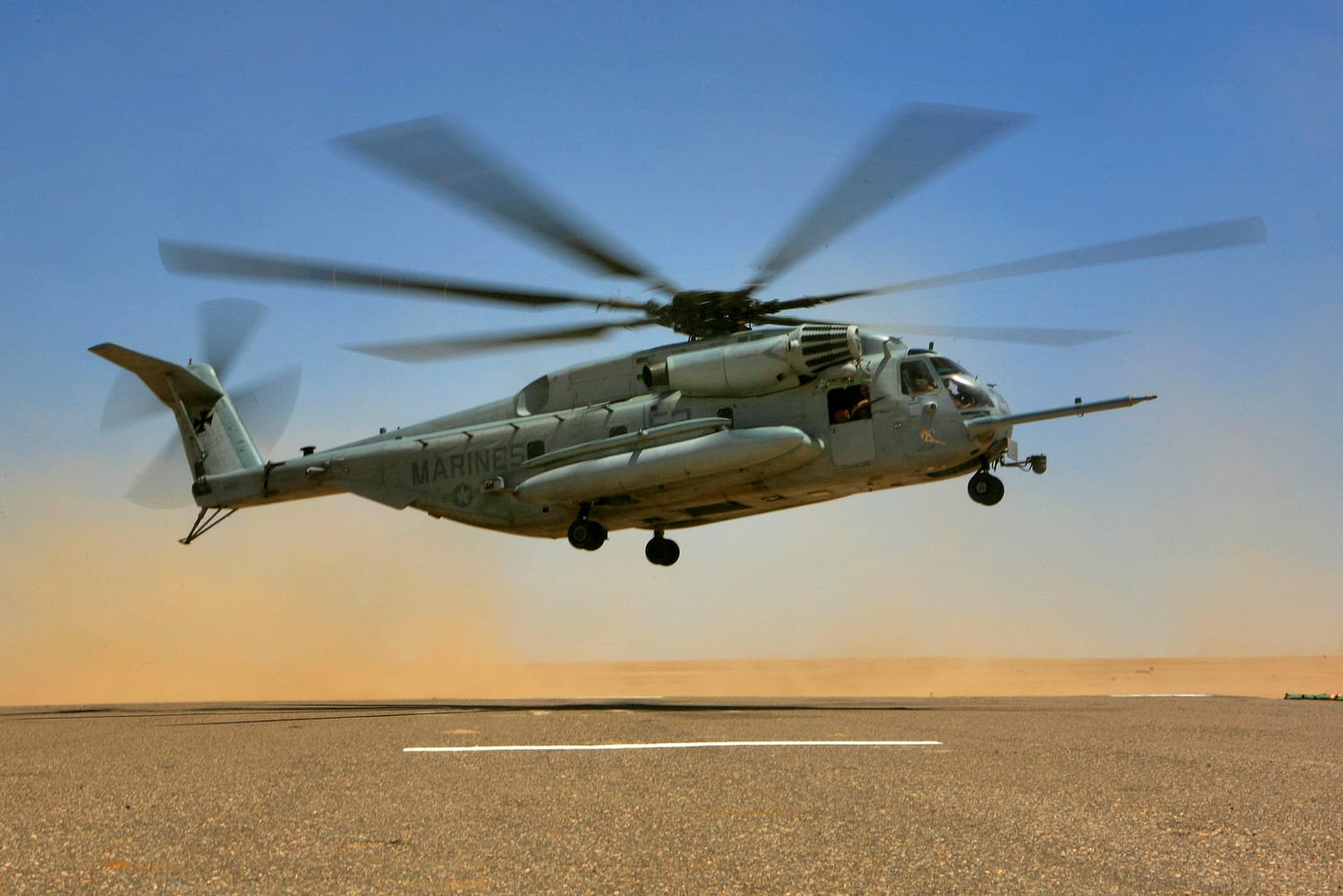
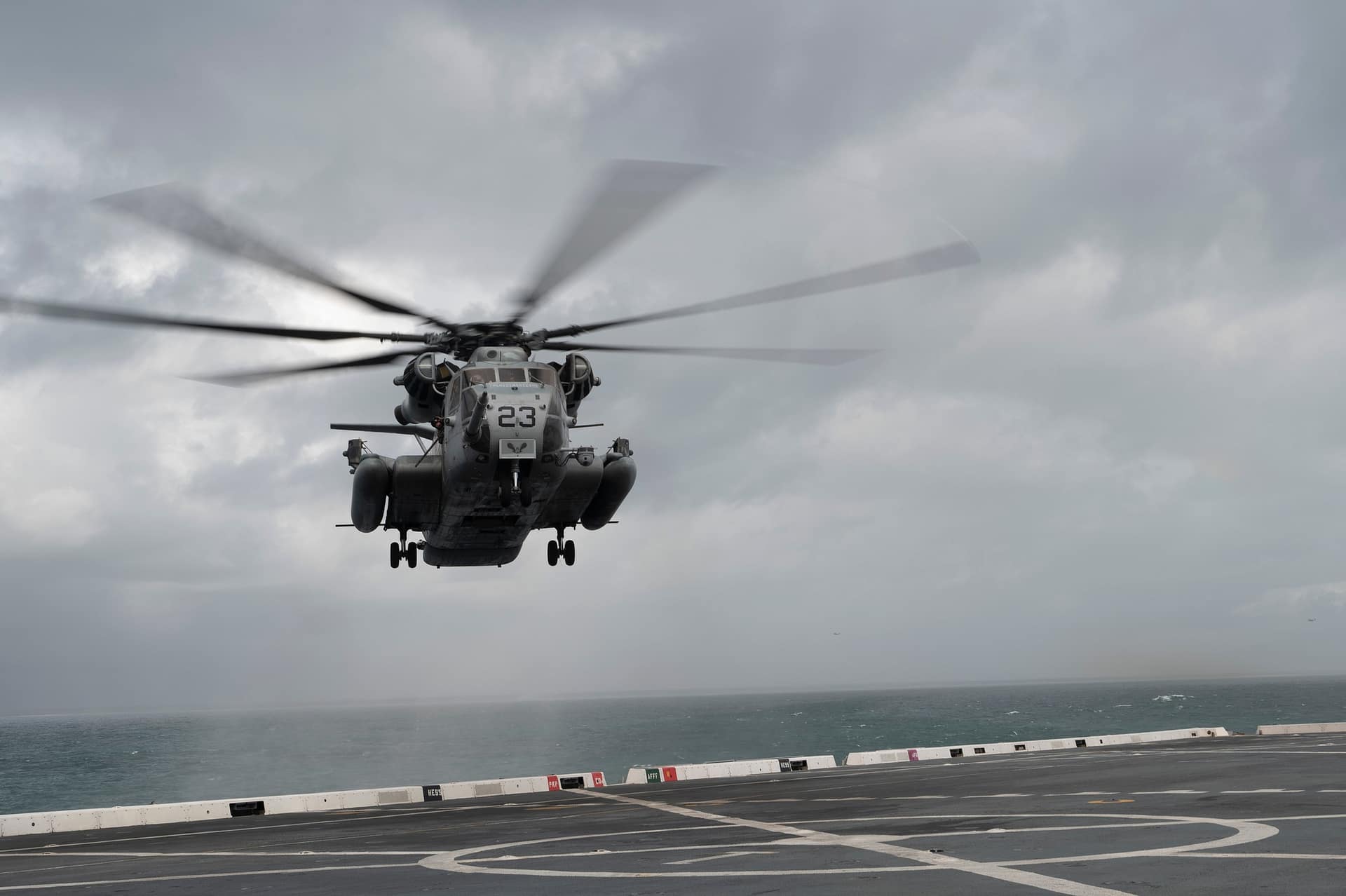
By the late 1960s the CH-53 was the most powerful helicopter the U.S. military had ever fielded. Sikorsky won the Marine Corps’ heavy-helicopter contest in 1962 with a scaled-up design driven by twin General Electric T64 turboshafts. The first prototype lifted off from Stratford, Connecticut, on 14 October 1964; deliveries to operational units began on 12 September 1966.
On paper the early CH-53A could sling 13,000 pounds on a single belly hook and haul nearly half its own empty weight. In Vietnam it was already proving its worth dragging downed aircraft out of the jungle. Towing a ship was a different kind of math — a heavy hull in water moves at a crawl, and the load on the cable is enormous — but it made a vivid point.
Show a Navy admiral a helicopter that can budge a warship, and the conversation about buying more of them gets a lot easier.
Not the first ship a helicopter ever towed
The Austin image feels unique, but the idea was older than the CH-53. A decade earlier, the Royal Navy had run the same experiment in miniature. In October 1957 a single-engined Westland Whirlwind of 705 Naval Air Squadron’s Special Trials Flight hooked up to the 360-ton minesweeper HMS Gavinton and dragged her two miles off the Isle of Wight.
It worked — barely. The trial was judged too risky to the helicopter and to the sailors wrestling the tow rope, and the Royal Navy never adopted it. The U.S. Coast Guard had flirted with the concept too, using Sikorsky HO4S “Tugbird” helicopters to haul small vessels out of trouble off Florida in the late 1950s.
So when a CH-53 took up the slack behind USS Austin, it was scaling up a proven party trick — just with a vastly bigger helicopter and a vastly bigger ship.
“The Need for Heavy Lift” — Naval Air Systems Command on why the Marine Corps has leaned on the CH-53 family since Vietnam. (YouTube / NAVAIRSYSCOM)
Where the record gets murky
Here is the honest part. The most-shared caption says Austin visited Bridgeport, Connecticut, from 12 to 23 February 1968 specifically to take part in CH-53 tests with Sikorsky, and that the tow was part of that program. That detail traces back to a 2020 social-media post, repeated since across aviation blogs.
The Navy’s own official biography of the ship — the Dictionary of American Naval Fighting Ships, maintained by the Naval History and Heritage Command — tells a different story for early 1968. It has Austin sailing on 8 January 1968 to Key West and Roosevelt Roads, Puerto Rico, returning to Norfolk on 25 January, then training along the east coast through April. It makes no mention of Bridgeport or any Sikorsky CH-53 test.
That does not make the photograph fake — the image is real, the ship is unmistakably Austin, and the aircraft is a CH-53. But it does mean the precise date and the tidy “official test” label should be treated with caution rather than stated as gospel.
The legend the photo earned
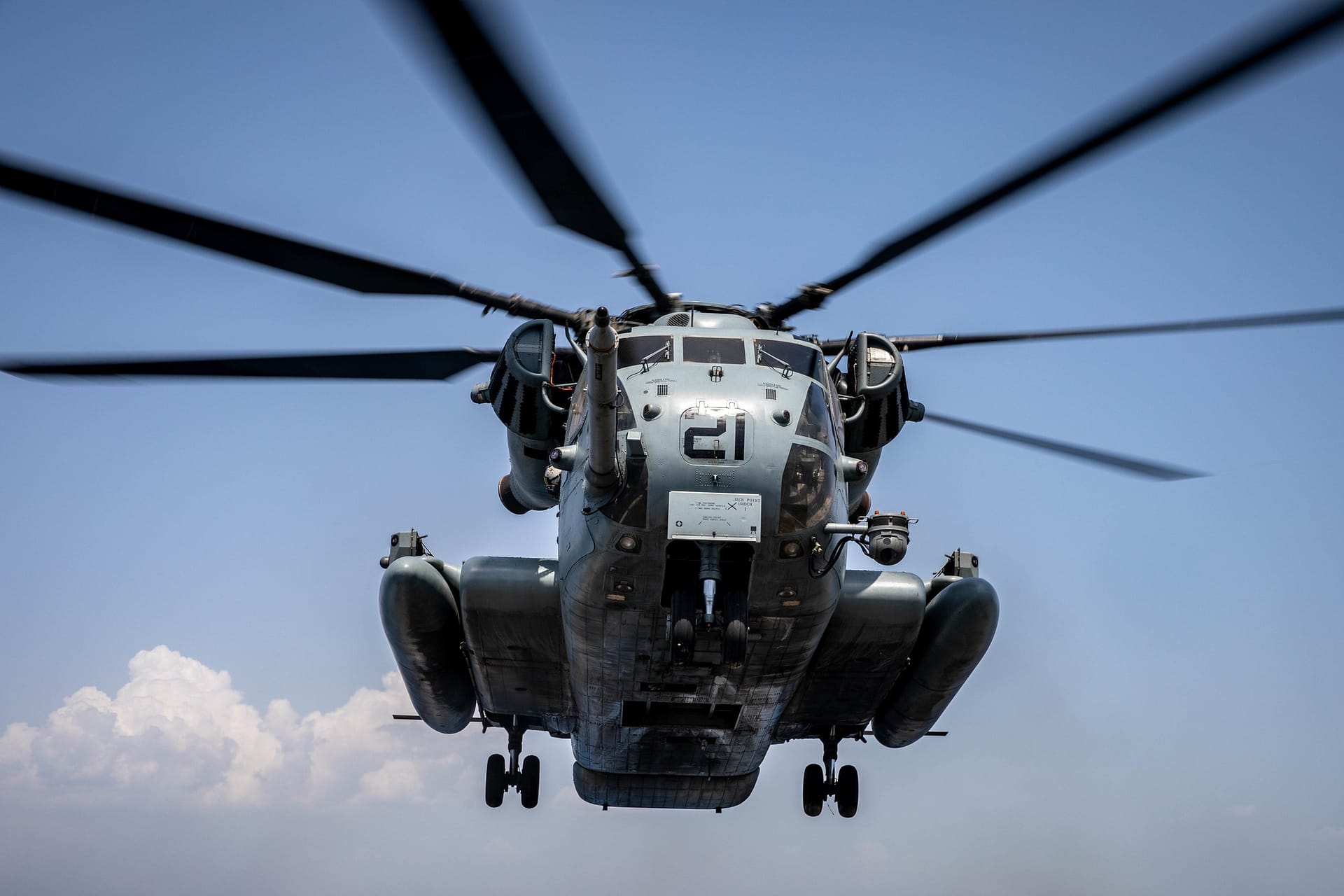
Whatever the exact date stamped on the negative, the picture did its job. It became shorthand for everything the CH-53 promised: a helicopter strong enough to move things that have no business being moved by air.
The Sea Stallion went on to a half-century career and spawned the three-engined CH-53E Super Stallion and today’s CH-53K King Stallion, a machine cleared to sling tens of thousands of pounds — even, in testing, another helicopter. USS Austin, for her part, served until 2006, from Cold War landings to Beirut to the Persian Gulf.
Two icons, one cable, one impossible-looking afternoon on Long Island Sound. The story behind the photo is a little messier than the caption claims — and somehow that makes it better.
Sources: Naval History and Heritage Command (DANFS, USS Austin LPD-4); Wikipedia (USS Austin LPD-4 and Sikorsky CH-53 Sea Stallion); The Aviation Geek Club; Royal Naval Association; This Day in Aviation.
 English
0 Comments