
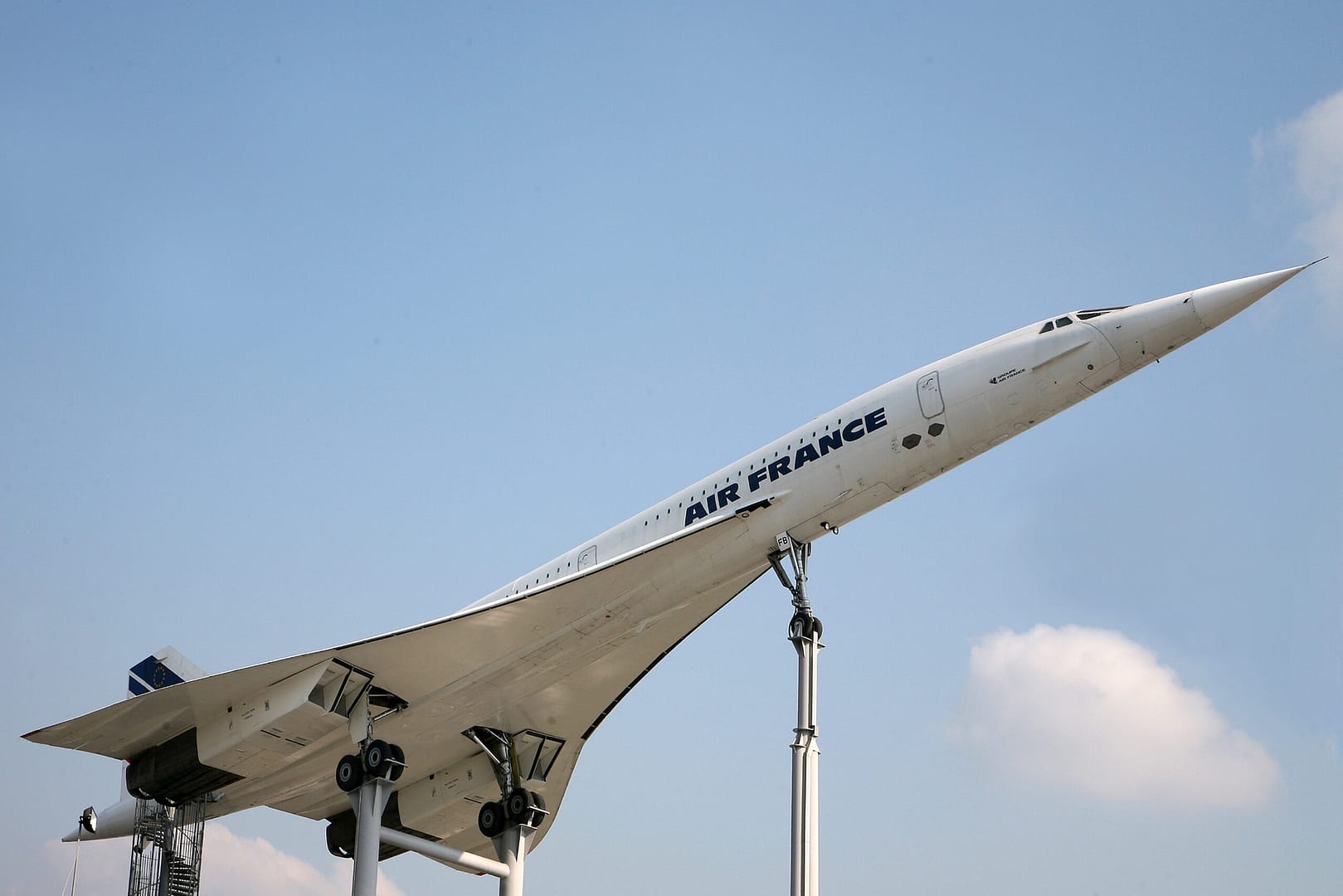
The Last Day
British Airways orchestrated the farewell with theatrical precision. Captain Mike Bannister flew the final transatlantic crossing — BA002 from New York JFK — landing at Heathrow at 16:01 local time. He taxied past crowds of spectators, engineers, and retired Concorde pilots who had gathered on the apron to watch the end. Air France had already retired its Concordes on May 31, 2003. The BA retirement was the final act. When Bannister shut down the four Olympus 593 engines, the age of supersonic passenger flight was over. Concorde had been in service for 27 years. In that time, it carried more than 2.5 million passengers at Mach 2.04 — twice the speed of sound. London to New York in three hours and twenty minutes. A morning meeting in Manhattan and home for dinner in London. Nothing before or since has matched it.“From today, the world is a bigger place.”
— Captain Mike Bannister, Chief Concorde Pilot, after landing the final Concorde flight at Filton on 26 November 2003
Why It Ended
Three things killed Concorde: economics, politics, and a crash. The economics were never good. Concorde burned roughly 25,000 litres of fuel per hour — four times more than a 747 carrying six times as many passengers. A return ticket on the London–New York route cost approximately £8,000 in 2003 (roughly £15,000 today). At that price, Concorde needed every seat filled with passengers who valued speed over cost. There were enough of them — barely — but the margins were razor-thin. The politics dated back to the aircraft’s birth. Concorde was a Franco-British prestige project, funded by taxpayers, and the sonic boom it produced made it politically toxic. The United States banned overland supersonic flight in 1973, restricting Concorde to oceanic routes. Only fourteen aircraft were built for airline service — seven for British Airways, seven for Air France — and no other carrier ever ordered it. The crash was Air France Flight 4590 on July 25, 2000. A Concorde taking off from Paris Charles de Gaulle struck a metal strip on the runway, which blew a tyre, which sent debris into the fuel tanks, which ignited. The aircraft crashed into a hotel in Gonesse, killing all 109 people aboard and four on the ground. Concorde returned to service in November 2001 with modified fuel tanks and burst-resistant tyres. But the crash, combined with the 9/11-induced downturn in premium air travel, sealed the aircraft’s fate. British Airways and Air France announced retirement in April 2003.Concorde by the Numbers
- First flight: 2 March 1969 (prototype 001, Toulouse)
- Entry into service: 21 January 1976
- Final flight: 24 October 2003
- Top speed: Mach 2.04 (2,180 km/h / 1,354 mph)
- Cruise altitude: 60,000 feet (18,300 m)
- London–New York time: 3 hours 20 minutes
- Passengers carried (lifetime): ~2.5 million
- Aircraft built: 20 (14 production, 6 pre-production/prototypes)
- Engines: 4 × Rolls-Royce/Snecma Olympus 593 Mk 610 turbojets with afterburners
- Seat capacity: 100 (BA) / 92 (Air France)
What Replaced It
Nothing. In the 23 years since Concorde’s retirement, no supersonic passenger aircraft has entered commercial service. Several companies — Boom Supersonic, Spike Aerospace, Aerion — have announced plans. Boom’s Overture has attracted orders from United Airlines and American Airlines. But as of mid-2026, no successor has flown passengers. The barriers remain formidable. Fuel consumption and emissions make supersonic flight politically difficult in an era of climate targets. The sonic boom ban over land limits routes to oceanic crossings — exactly the same restriction that constrained Concorde. And the economics require either much better engines or much higher ticket prices.“For a pilot, she handled like a thoroughbred racehorse; so responsive that you could fly it with your fingertips.”
— Captain Mike Bannister, Chief Concorde Pilot, British Airways
What It Meant
Concorde was proof that aviation can go backwards. The history of flight is generally a story of faster, higher, further. Concorde broke that pattern. Passengers in 2026 cross the Atlantic more slowly than passengers in 1976. No other transport technology has regressed so dramatically. For the people who flew on it, Concorde was not a curiosity. It was a tool. Business travellers on the London–New York route could attend meetings in both cities in a single day. Concorde’s retirement did not just end supersonic travel. It ended a way of working. Captain Bannister, after shutting down the engines for the last time, said: “This is the end of an era. But it is also the start of a new chapter.” Twenty-three years later, that chapter has not yet been written.“Concorde will never really stop flying, because it will always have a place in people’s imaginations.”Sources: British Airways Heritage, Air France, Smithsonian National Air and Space Museum, Flight Global, BBC News
— Jean-Cyril Spinetta, Chairman of Air France
 English
0 Comments