
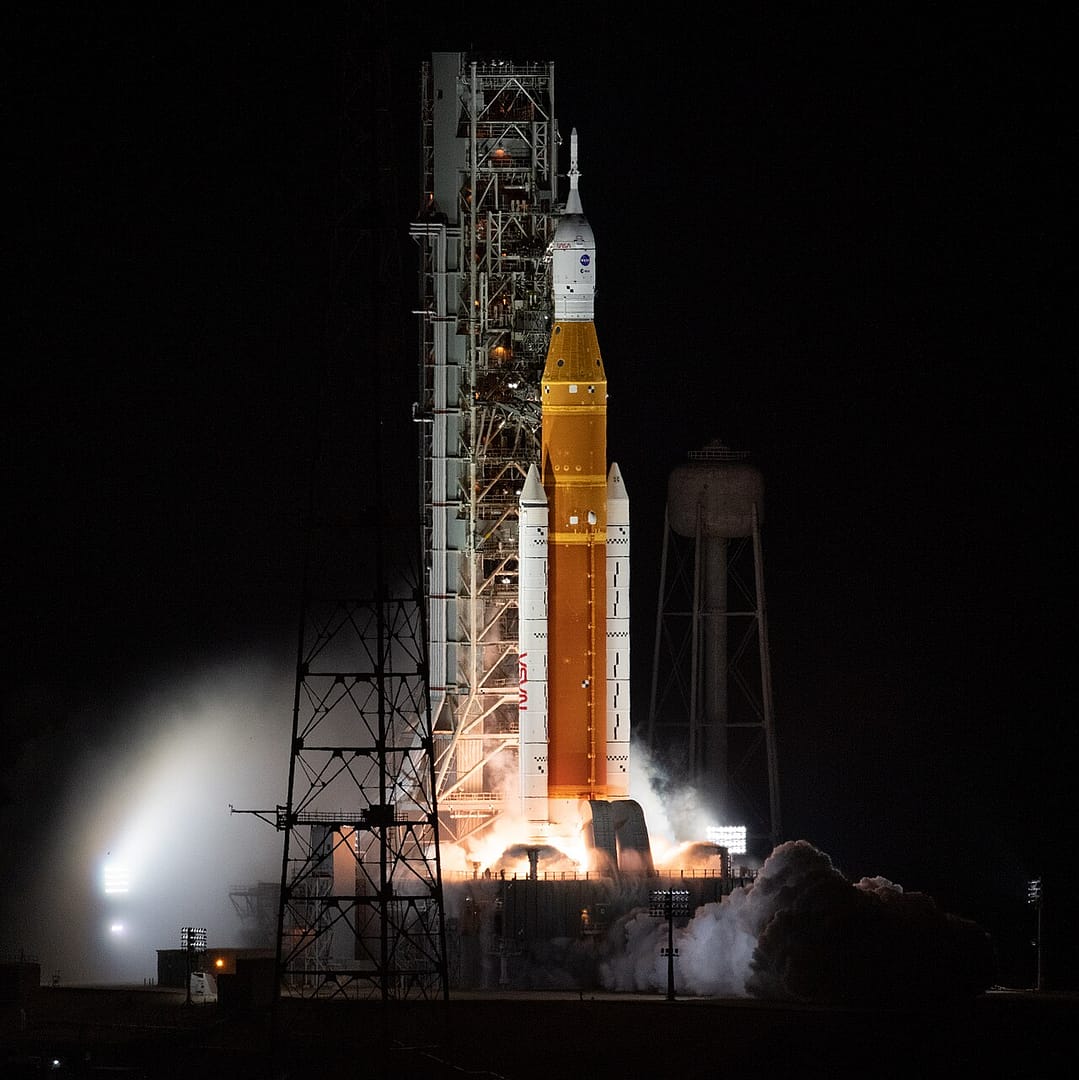
Quick Facts: Artemis II
| Launch Date | April 1, 2026, 6:24 PM ET |
| Launch Site | Kennedy Space Center, LC-39B |
| Rocket | Space Launch System (SLS), 322 ft tall |
| Mission Duration | 10 days around the Moon |
| Crew Size | 4 astronauts |
| Historic First | First crewed lunar flyby since Apollo 17 (1972) |
| Weather Outlook | 80% favorable conditions |
Tonight. At 6:24 PM Eastern Time, a rocket the height of a 30-story building will roar to life at Kennedy Space Center—and humanity will once again reach beyond Earth's orbit toward the Moon. For the first time in 54 years, four astronauts will make that journey. Artemis II is happening. Right now.
This isn't background. This is the moment.
The stakes are monumental, but so is the readiness. NASA's Space Launch System, the most powerful rocket ever flown, has been standing on Launch Complex 39B for weeks. At 322 feet tall, the SLS dwarfs the Statue of Liberty. Its twin solid rocket boosters alone generate 7.2 million pounds of thrust at ignition. This machine was built to defy gravity—and tonight, it will prove it can.

Mission Specialist Christina Koch represents NASA's deep bench of expertise—she's logged 328 days in space across three ISS missions. But there's someone else on this crew who carries enormous symbolic weight: Mission Specialist Jeremy Hansen of the Canadian Space Agency. Hansen will become the first Canadian to leave low Earth orbit. He'll be the furthest from home any person from north of the U.S. border has ever traveled.
Four astronauts. Four nations' worth of achievement and pride riding 5.75 million pounds of rocket fuel.
## The Machine That Could Have Been The Space Launch System didn't have to exist. For a decade, skeptics questioned whether NASA should even build it. "Too expensive," they said. "Too slow." The program ballooned over budget and behind schedule, as big government projects often do. Congress funded it anyway, because some dreams are worth more than quarterly earnings reports. Tonight's launch vindicates that bet—at least partially. The SLS isn't the cheapest way to reach the Moon. It is, however, the most powerful. It will send Orion and its crew on a trajectory no commercial rocket can yet match: a distant retrograde orbit that swings around the far side of the Moon, farther from Earth than any human has traveled since 1972.Artemis I proved the system works. That uncrewed test flight in November 2022 launched flawlessly, flew perfect trajectories, and brought Orion home safely. The heat shield held. The electronics chattered correctly. Every subsystem that NASA needed to validate for crewed flight performed. Confidence is high. Not arrogance—careful, data-backed confidence.
Space Force's Space Launch Delta 45 has been monitoring weather patterns all week. Florida's spring skies can be temperamental. Rain. Thunderstorms. Lingering winter fronts. But today, the forecast shows 80% favorable conditions. Not perfect, but the kind of odds you take when you've got four astronauts ready to fly.

It matters because 54 years is too long to wait for your own kind to return to the Moon.
It matters because four people are trusting their lives to systems designed, built, and tested by thousands of engineers who understood that failure wasn't an option.
And it matters because tonight, we'll remember something essential: humans are explorers. We push outward. We dream bigger than our circumstances. We build rockets tall enough to touch the sky, and we strap our best people to the top.
Countdown to the Moon begins at 6:24 PM Eastern. Watch the skies. History launches tonight.
Related Questions
What is Artemis II?
Artemis II is NASA's first crewed Moon mission since Apollo. It sends four astronauts on a roughly 10-day flight around the Moon aboard the Space Launch System rocket and Orion spacecraft. It launched from Kennedy Space Center's Launch Complex 39B on April 1, 2026.
When did Artemis II launch?
Artemis II launched on April 1, 2026, at 6:24 PM Eastern Time from Launch Complex 39B at Kennedy Space Center, with an 80% favourable weather outlook. The mission carries four astronauts on a roughly 10-day journey around the Moon.
How many astronauts are on Artemis II?
Four astronauts crew Artemis II. They are making the first crewed lunar flyby since Apollo 17 in 1972, the first time in 54 years that humans have travelled beyond Earth orbit toward the Moon.
What rocket does Artemis II use?
Artemis II flies on NASA's Space Launch System (SLS), the most powerful rocket ever flown. Standing 322 feet tall, taller than the Statue of Liberty, its twin solid rocket boosters alone generate 7.2 million pounds of thrust at ignition. The Apollo era it echoes once relied on aircraft like the Guppy flying whales that hauled Apollo hardware.
When was the last crewed mission to the Moon?
The last crewed lunar mission was Apollo 17 in 1972. Artemis II, launched in April 2026, is the first crewed flight back toward the Moon in 54 years, a step toward returning astronauts to the lunar surface after the Apollo program ended.
How tall is the SLS rocket?
NASA's Space Launch System stands 322 feet tall, roughly the height of a 30-story building and taller than the Statue of Liberty. It is the most powerful rocket ever flown, with twin solid rocket boosters producing 7.2 million pounds of thrust at liftoff.

0 Comments