
For three months the Pentagon let the headlines do the talking, and the headlines were vague. Then a 12-page memo from the Library of Congress put a number on the air war with Iran, and the number was 42.
That is the count of American aircraft lost or damaged during Operation Epic Fury, the 38-day campaign that opened with joint U.S.–Israeli strikes on Feb. 28. The tally comes from the Congressional Research Service, the nonpartisan analysts who brief lawmakers — and it is the most complete public accounting yet of what the campaign cost in airframes.
The CRS had no access to classified damage assessments. Its researchers built the list from news reports and statements by the Defense Department and U.S. Central Command, and they flag that the figure may yet move. Even with that caveat, the breakdown is sobering: a modern air force bled hardest where it expected to be safest.
Quick Facts
- The CRS report (IN12692), dated May 13, 2026, lists 42 U.S. aircraft lost or damaged in Operation Epic Fury.
- Drones took 25 of the 42: 24 MQ-9 Reapers plus one MQ-4C Triton.
- Crewed losses include 4 F-15E Strike Eagles, 7 KC-135 tankers, 2 MC-130Js, an A-10, an E-3 Sentry, an F-35A and an HH-60W.
- The only fatalities on the list: six aircrew aboard a KC-135 that went down over Iraq on March 12.
- The Pentagon’s running cost estimate for the campaign has reached $29 billion.
- CRS works from open sources and warns the count is “subject to revision.”
Defense analyst Preston Stewart laid out the full ledger the day the report dropped, and it spread fast across the OSINT community.
The Reaper Bled the Most
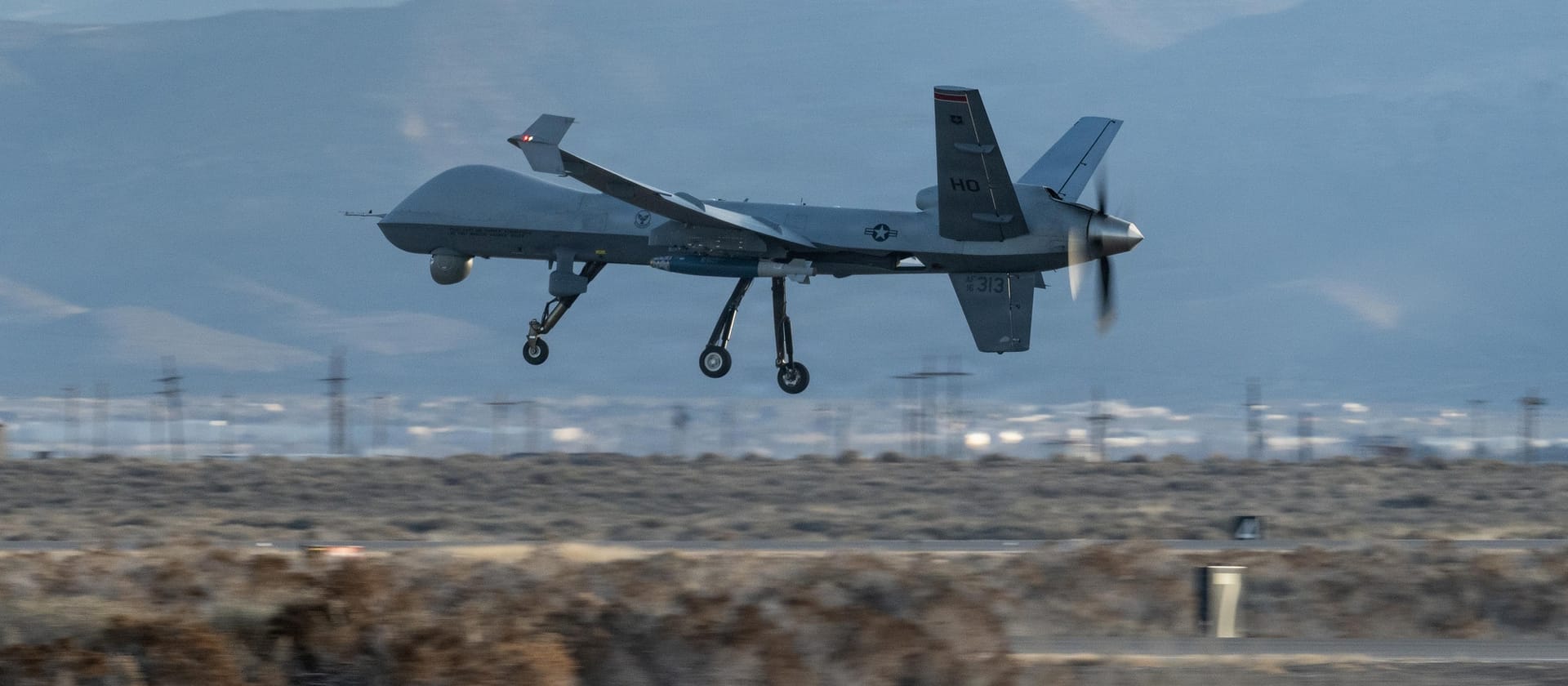
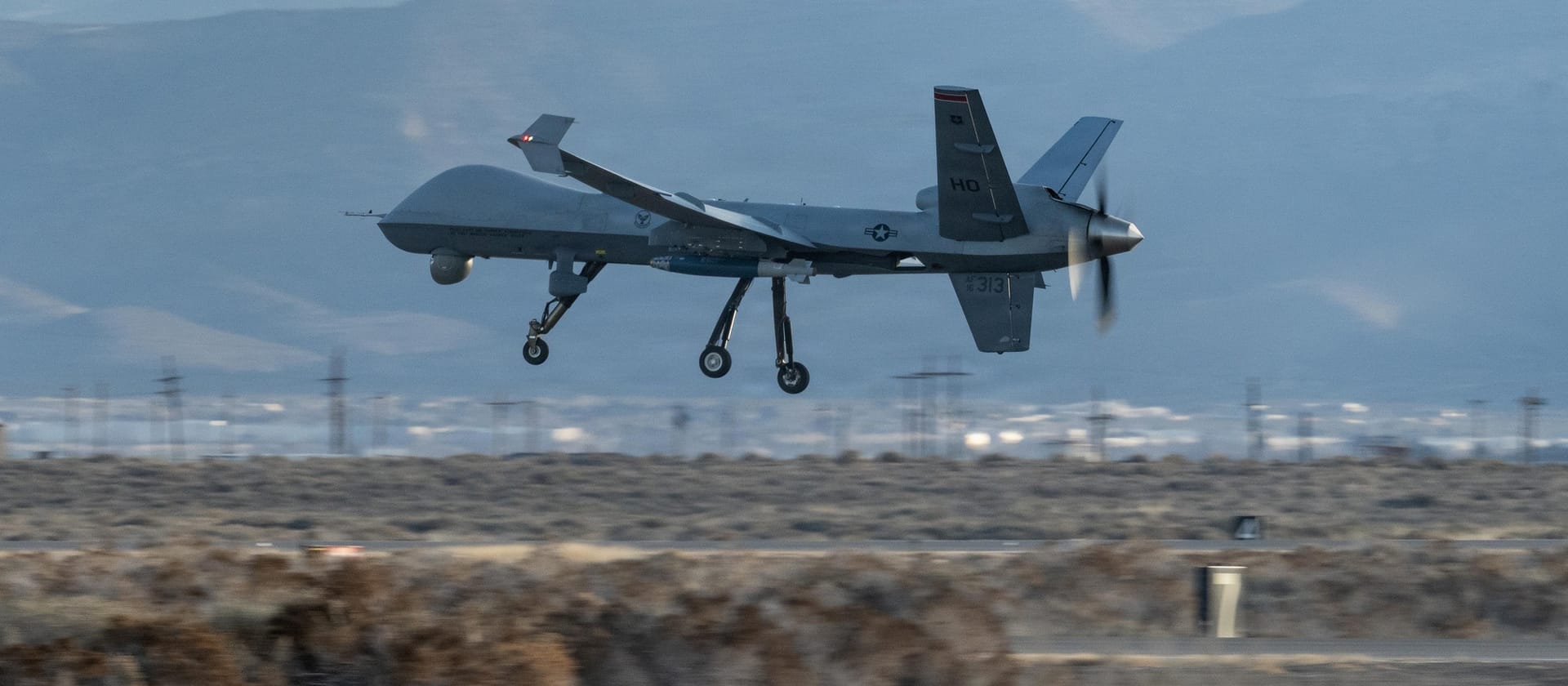
Two dozen MQ-9 Reapers fell over Iran — more than half the entire loss list, and roughly $1.2 billion in airframes if you take the $30-million-a-copy sticker price at face value. The Reaper is a medium-altitude, propeller-driven hunter built for permissive skies, not for threading a dense, layered air-defense network.
Over Iran it found neither. The losses are the predictable price of flying a slow, non-stealthy ISR platform deep into the teeth of modern surface-to-air missiles and radar-directed guns. What is striking is that the Air Force does not seem to regret it.
That is the trade the service made on purpose: spend cheap, attritable drones to keep crewed jets and their pilots out of the worst of it. Twenty-four burning Reapers is the bill for that bargain — and, by the Air Force’s own telling, a bargain it would strike again.
Seven Tankers, and the Only Funeral
The KC-135 Stratotanker line tells the campaign’s grimmest story. On March 12 a tanker went down over western Iraq during a refueling sortie, killing all six crew aboard — the only fatalities anywhere on the CRS list. A second KC-135 caught up in the same incident landed safely.
CENTCOM says the crash was neither hostile nor friendly fire. But early intelligence reporting, surfaced by The Atlantic, suggested the pilots may have been jinking to evade anti-aircraft fire from Iran-backed militias in congested airspace. The Air Force investigation is expected to land on a blunter verdict: an avoidable mishap.
Two days later the tanker fleet took five more hits on the ground when Iranian missiles and drones struck Prince Sultan Air Base in Saudi Arabia. That brought total KC-135 losses to seven — and underlined a theme that runs through the whole report.
The Danger Was on the Ramp
Some of the most valuable airframes never got the chance to fight. Iran hit Prince Sultan again on March 27, damaging an E-3 Sentry — the flying radar that knits an air campaign together. A Washington Post report cited by CRS said the jet had been parked, exposed, on an unprotected taxiway.

Here the CRS list may understate the damage. Several outlets reported the E-3 was not merely dinged but written off, with photos appearing to show the rear fuselage burned through. The Air Force fielded just 16 E-3s before the war; losing even one airborne early-warning jet is a strategic dent, not a line item.
The lesson is old and keeps having to be relearned: against an adversary who can reach your bases, a parked aircraft is a target, and ramp space is not a sanctuary.
For a visual walk through the loss list and the questions it raises on Capitol Hill, this rundown is a useful primer.
A breakdown of the reported U.S. aircraft losses in Operation Epic Fury. (Firstpost / Vantage)
Fighters, Friendly Fire and a Rescue That Cost More Jets
The first losses were self-inflicted. On March 1–2 a Kuwaiti F/A-18 mistakenly shot down three F-15E Strike Eagles over Kuwait amid a chaotic engagement that included Iranian aircraft, ballistic missiles and drones. All six aircrew ejected and were recovered.
A fourth F-15E was downed over Iran on April 3. The rescue of its crew turned into a small campaign of its own: an A-10 was lost to enemy fire during the search-and-rescue effort, an HH-60W Jolly Green II took small-arms hits, and U.S. forces deliberately blew up two MC-130J Commando IIs on the ground in Iran when the transports couldn’t fly out of a forward strip. An F-35A, meanwhile, was struck by an Iranian surface-to-air missile over Iran on March 19 and limped home — the first known combat damage to an American fifth-generation fighter.
What the List Leaves Out
The 42 figure is a floor, not a ceiling. Open-source analysts note the report lists no AH/MH-6 Little Birds, even though several of the 160th SOAR’s helicopters were reportedly destroyed in place at the same airstrip where the MC-130Js were demolished. The absence of a CENTCOM or DoD statement on those special-operations aircraft is the likely reason they never made the count.
The HH-60W tally may also be low — at least one general’s account suggested two helicopters took fire during the rescue, not one. CRS itself is upfront: classification, ongoing combat and attribution disputes mean the number can still move, almost certainly upward.
Strip away the platform names and one pattern remains. The United States flew more than 13,000 sorties and lost most of its airframes to two things: enemy ground-based air defenses, and its own aircraft sitting exposed on ramps within Iran’s reach. That is the real cost behind the headline — and the part lawmakers are now demanding the Pentagon explain on its own terms.
Sources: Congressional Research Service (IN12692, congress.gov); Stars and Stripes; Military Times / Defense News; The War Zone; USNI News.

 English
0 Comments