A crewless boat just shot down a drone. No sailors aboard. No anti-aircraft battery. Just a Ukrainian unmanned surface vessel, a compact interceptor called the Sting, and a Russian Shahed that never reached its target.
On April 19, Ukraine’s 412th “Nemesis” Brigade achieved what no military force has done before: launching an air-to-air interceptor drone from an unmanned surface vessel to destroy an incoming Shahed-type one-way attack drone. The entire engagement — detection, launch, intercept, kill — happened without a single human on the water.
The implications are enormous. Ukraine has just added a new layer to its air defence network — one that operates from the sea, requires no crew, and can be deployed anywhere along the Black Sea coast.
Quick Facts
First: World’s first air-to-air drone intercept launched from an unmanned surface vessel
Unit: 412th “Nemesis” Brigade, Ukrainian Unmanned Systems Forces
Interceptor: Sting drone (air-to-air interceptor)
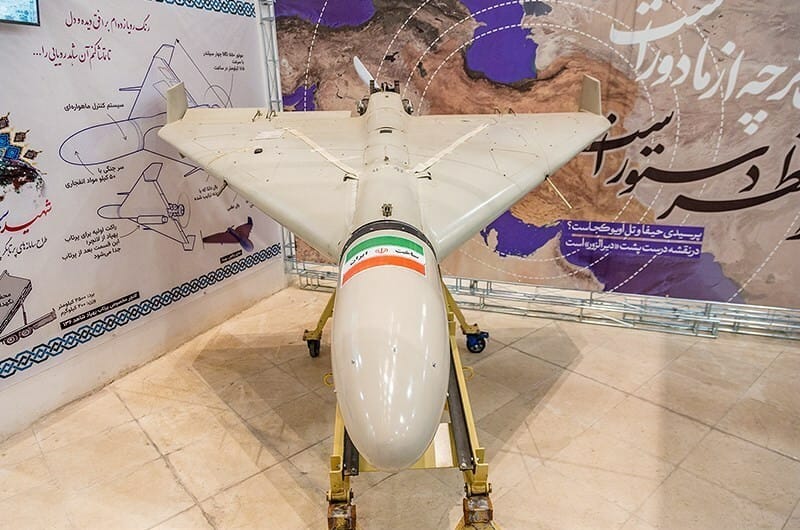
Target: Russian Shahed-type one-way attack drone
Date: April 19, 2026
Location: Black Sea, maritime zone off Ukraine’s coast
How It Worked
The engagement followed a pattern that will likely become doctrine. A Ukrainian unmanned surface vessel — the same class of drone boat that has been terrorising Russia’s Black Sea Fleet for two years — was loitering in the maritime zone when sensors detected an inbound Shahed drone heading toward the Ukrainian coast.
Instead of attempting to engage with a surface weapon, the vessel launched a Sting interceptor — a small, fast drone designed specifically for air-to-air engagements against slow, low-flying targets like the Shahed. The Sting climbed to intercept altitude, closed on the Shahed, and destroyed it. The entire sequence was autonomous at the platform level, with operators overseeing from shore.
The Sting drone is purpose-built for this mission. The Shahed flies at roughly 180 km/h at low altitude — fast enough to be dangerous, slow enough to be catchable by a lightweight interceptor drone. The Sting exploits this vulnerability by closing at higher speed and detonating in proximity to the target or physically colliding with it.
Why This Changes the Game
Ukraine’s coastal cities — Odesa, Mykolaiv, Izmail — have endured hundreds of Shahed attacks since Russia began using Iranian-designed drones in 2022. Traditional air defence systems like the Gepard, IRIS-T, and Patriot have been effective but expensive. A Patriot interceptor costs millions. A Sting drone costs a fraction.
By deploying interceptor drones from unmanned boats, Ukraine creates a floating, distributed air defence screen that can be repositioned at will. The drone boats are cheap, expendable, and nearly impossible to target with conventional weapons. They don’t need ports. They don’t need fuel trucks. They just need a GPS waypoint and an uplink.
Unmanned systems expert Sam Bendett noted that this capability adds another protection layer for Ukrainians against incoming Russian long-range drones, making Shaheds even more vulnerable when integrated with other defensive systems.
The Nemesis Brigade’s Expanding Toolkit
The 412th “Nemesis” Brigade has become one of the most innovative military units in the world. Originally formed to operate maritime strike drones — the same explosive boats that sank the Moskva’s escorts and drove the Black Sea Fleet from Sevastopol — the brigade has expanded into aerial interception, electronic warfare, and reconnaissance.
The sea-launched Sting intercept is the latest in a pattern of firsts. Ukraine has already demonstrated drone-on-drone combat over land. Extending that capability to the maritime domain opens new possibilities: drone boats could patrol shipping lanes, protect grain convoys, or provide air defence for coastal infrastructure without risking a single life.
A Glimpse of Future Warfare
What happened on April 19 was a preview of what naval warfare will look like in 2030. Unmanned vessels that can defend themselves against air threats, operate autonomously for days, and strike both surface and aerial targets are no longer theoretical. Ukraine is building this future in real time, under combat conditions, with off-the-shelf components and battlefield ingenuity.
Every major navy in the world is watching. The question is no longer whether unmanned surface vessels will carry air defence systems — it is how quickly they can be scaled.
Sources: Military Times, Breaking Defense, Kyiv Post, Euromaidan Press, Militarnyi



 English
0 Comments