
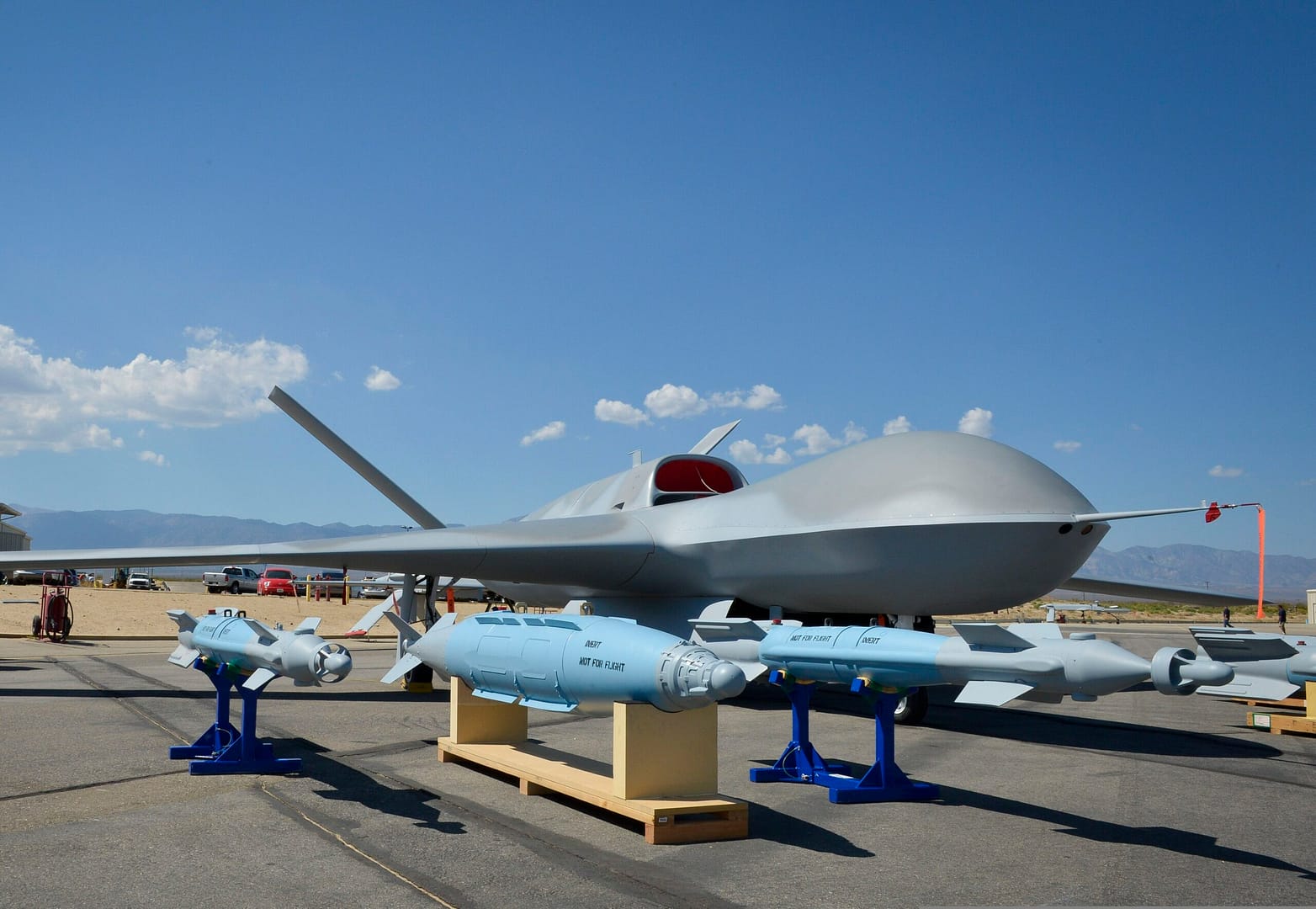
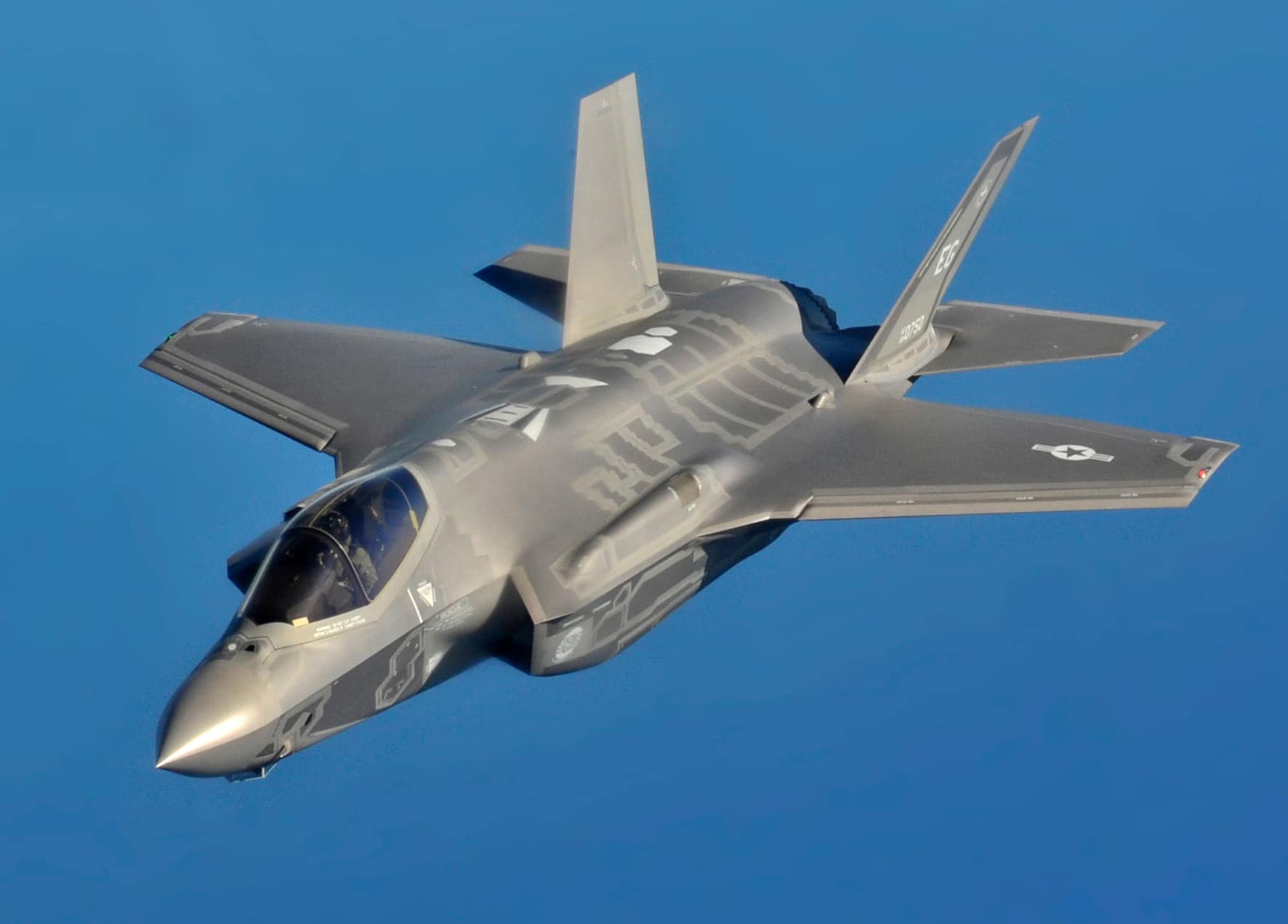
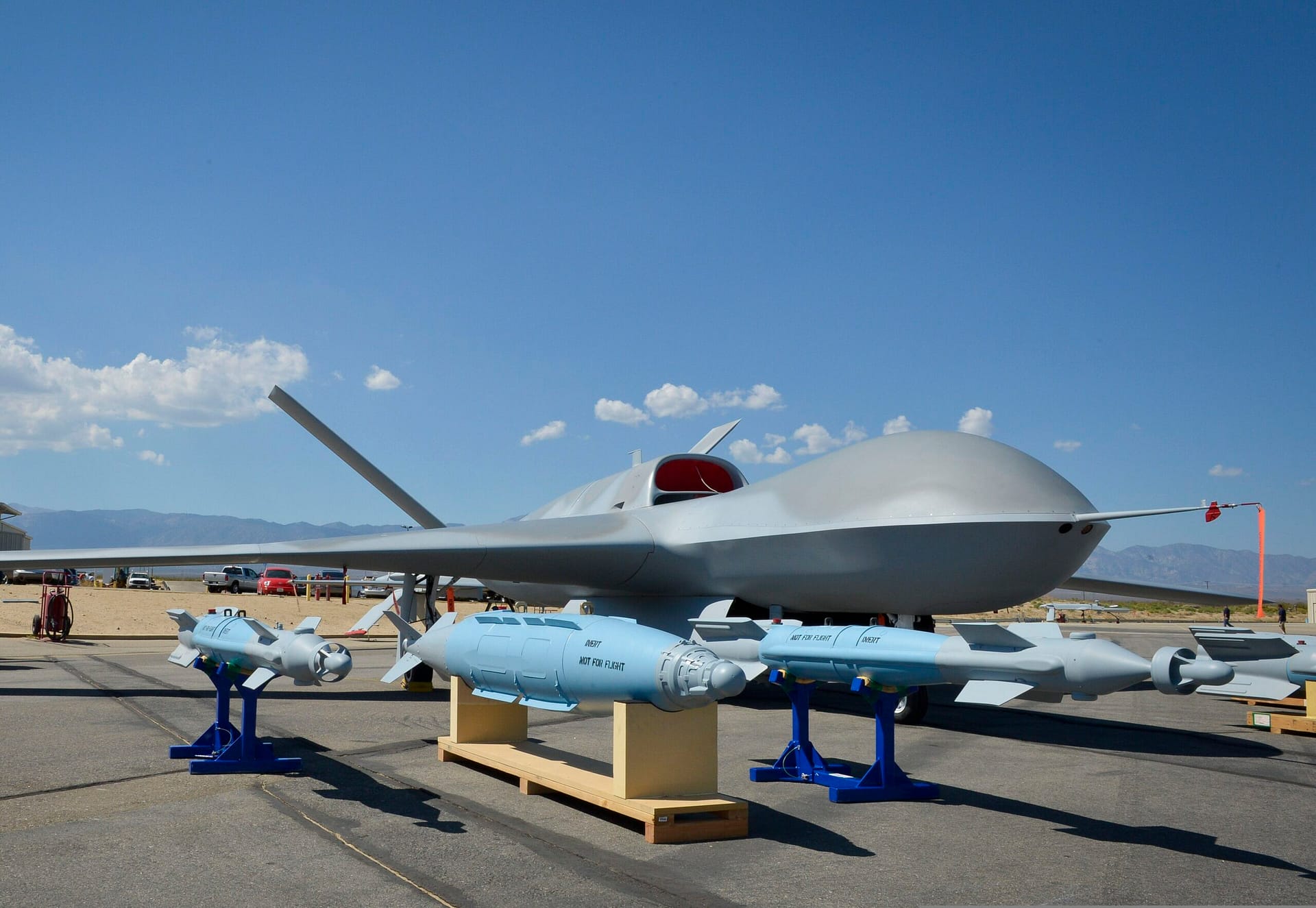
The F-35 pilot never left the ground. He sat in a parked cockpit, tablet in hand, while a General Atomics MQ-20 Avenger turned racetracks in the sky overhead. The connection between them was not a fibre cable, not a microwave dish, not even a direct datalink. It was a low Earth orbit satellite — a beyond-line-of-sight relay routing tactical commands from a fifth-generation fighter’s mission computer to a 44-foot stealth-shaped drone in flight.
The pilot tapped a maneuver. The Avenger executed it. The drone called back with its location, altitude and velocity.
That, in three plain sentences, is what General Atomics announced on 27 May 2026 — and it is the moment the US Air Force’s Collaborative Combat Aircraft program crossed a line that loyal-wingman concepts have been chasing for a decade.
Quick Facts
Announced: 27 May 2026 by General Atomics Aeronautical Systems
Test aircraft: F-35 Joint Strike Fighter (on ground) + MQ-20 Avenger (in flight)
Link type: Beyond-line-of-sight via low Earth orbit satellite
Software: General Atomics TacACE (Tactical Autonomy Ecosystem)
Partners: Lockheed Martin, F-35 JPO, Autonodyne, 309th SWEG, 461st FLTS, 370th FLTS
Next step: First operational CCA purchase planned in USAF FY2027 budget
A tablet, a satellite, a 1,800-mile-an-hour partnership
For five years General Atomics has used the MQ-20 — itself a derivative of the older Predator C Avenger — as a surrogate testbed for the YFQ-42A, the company’s actual contender in the Air Force CCA Increment 1 contest. The MQ-20 has been the cheap, repeatable, well-instrumented stand-in while the YFQ-42A goes through its hardware first-flight schedule. October 2025 saw an F-22 pilot fly the same demonstration at the Nevada Test and Training Range. February 2026 brought the F-22+MQ-20 pair back together at Edwards.
The F-35 demo is a different beast. The F-35 is the export-anchor jet for half of NATO and the Indo-Pacific allies — Australia, Japan, Korea, Italy, the UK, the Netherlands all fly it. Wiring CCA control into that cockpit makes Collaborative Combat Aircraft not just an Air Force concept but a coalition concept.
And the link itself matters. Beyond-line-of-sight via low-Earth orbit means the F-35 and its drone wingman do not need to be in physical visual or RF contact. The drone can be hundreds of miles ahead, ingressing a contested airspace, while the pilot — who is increasingly the limiting human in any high-end engagement — stays back where his stealth, his sensor fusion and his survival probability are best.
The Tactical Autonomy Ecosystem
The drone is not flown — it is tasked. General Atomics’ Tactical Autonomy Ecosystem software, built to the US government’s most recent autonomy standard, accepts mission-level commands (“intercept this track”, “screen this corridor”, “loiter behind that ridge”) and translates them into the thousands of stick-and-rudder inputs a human would otherwise have to make. Autonodyne provided the autonomy stack alongside GA-ASI. The 309th Software Engineering Group, the 461st Flight Test Squadron and the 370th Flight Test Squadron handled the integration on the Air Force side.
This is not a Hollywood swarm-AI scene. It is mission-level autonomy built to the government’s Autonomy Government Reference Architecture (A-GRA), with a pilot still firmly in the loop, making the decisions about what should be killed and what should be left alone. TacACE handles the how.
The fiscal 2027 finish line
The political timing is no accident. The House Armed Services Committee dropped its draft 2027 National Defense Authorization Act on 26 May, one day before the GA-ASI announcement. Inside that bill are new CCA-related provisions — including a directive for the Secretaries of the Air Force and Navy to file a January 2027 report on cost-cutting steps and off-the-shelf technologies that could keep the price of each drone wingman low enough to actually buy them in numbers.
Lawmakers also flagged a worry that is changing CCA design: range. Notes attached to the bill argue that Chinese long-range missiles may make it too risky to base CCAs on the “first island chain” airfields — Okinawa, Guam, Philippines — leaving them needing the legs to launch from continental US soil. That is a very different aircraft from a short-range loyal wingman pacing an F-22 at Mach cruise.
The Air Force expects to buy its first operational CCAs in the FY2027 budget. The first two variants — General Atomics’ YFQ-42A and Anduril’s YFQ-44A — finished flight demonstrations in 18 months, which Congress called “faster than any other major tactical fighter-like aircraft program in recent history.” After this demonstration, the question is no longer whether the wingmen can fly. It is how many of them get bought.
Sources: Aviation A2Z, Air & Space Forces Magazine, General Atomics Aeronautical Systems.


 English
0 Comments