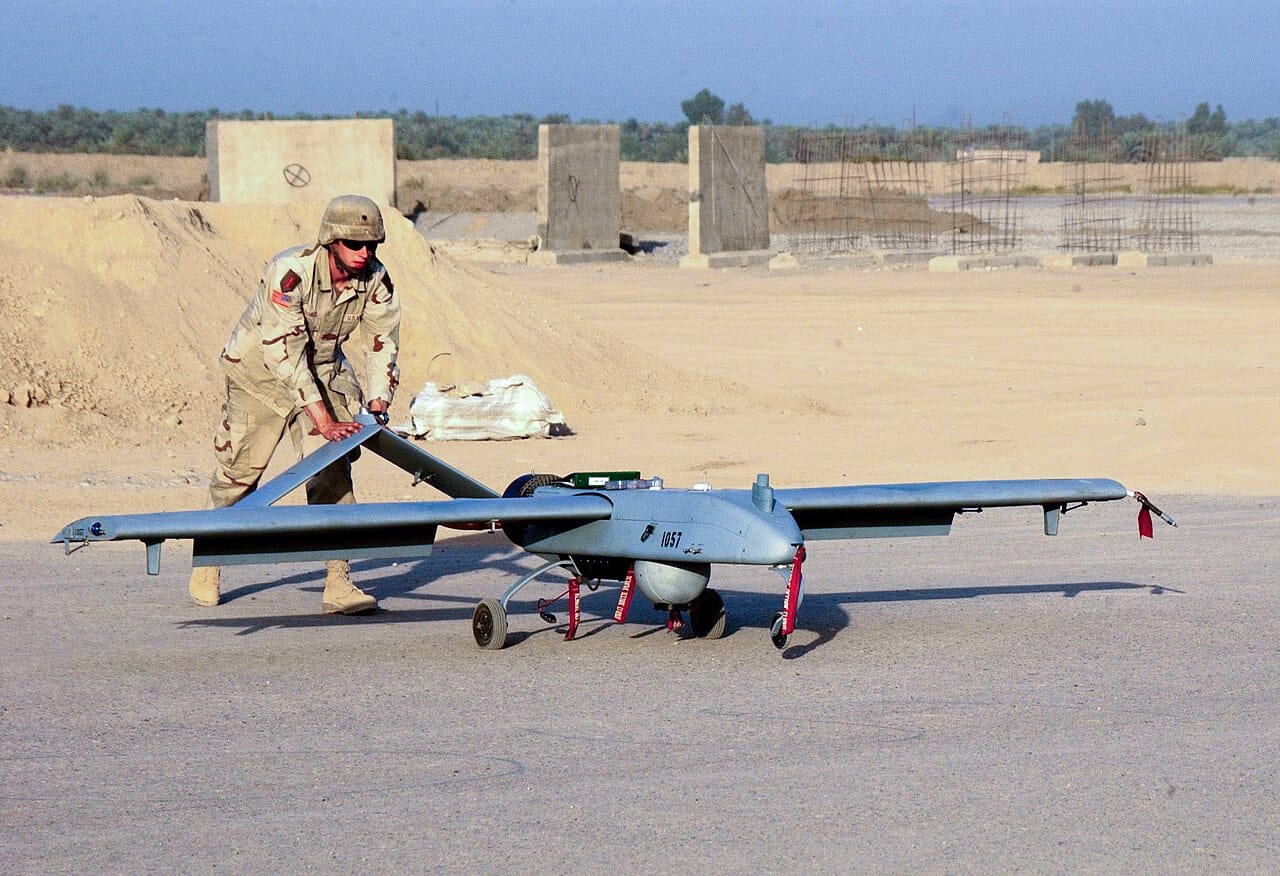
Lawnmower Engines vs. Stealth Fighters
“I think it’s fair to say that F-35s and F-22s are overkill when it comes to shooting down a drone that has an engine you might find in a lawn mower,” said John Waters, a former U.S. Air Force F-16 pilot. “However, we’ve had to utilize our high-end fighters to counter these threats because they’re new and emerging.” In the opening phase of Epic Fury, F-35s and F-22s were firing AIM-120 AMRAAM and AIM-9 Sidewinder missiles at incoming Shaheds. Each missile costs between $1 and $4 million. Each drone it killed was worth a fraction of that. And the drones kept coming — in waves, at all hours, from dispersed launch points across Iran and proxy territory. The problem is not just financial. Every sortie burns flight hours against airframe limits. Every missile fired is one fewer in the magazine. Every pilot flying drone patrol is not flying strike missions, combat air patrol, or close air support. The opportunity cost compounds with every engagement.Adapting on the Fly
The Pentagon has not stood still. According to Admiral Brad Cooper, CENTCOM Commander: “If I just walk back a couple of years, do you remember what you used to always hear? ‘We’re shooting down a $50,000 drone with a $2 million missile.’ These days we’re spending a lot of time shooting down hundred-thousand-dollar drones with $10,000 weapons.” The weapon driving that shift is the AGR-20 Advanced Precision Kill Weapon System II — APKWS for short. Originally designed as a laser-guided 70mm rocket, the APKWS costs between $25,000 and $40,000 per round. It can be fired from F-15Es, F-16s, and a range of other platforms without requiring the radar and sensor suites of fifth-generation fighters. The introduction of APKWS has pulled the cost curve dramatically. “When we first saw fighters being utilized to take down drones, we saw them using AIM-120s and AIM-9s,” Waters noted. “Now, with the introduction of the AGR-20, we’re able to see the U.S. respond to these drones with a relatively low-cost weapon versus an advanced missile.”The Human Cost of the Numbers Game
But cheaper weapons do not eliminate the danger. Six U.S. soldiers were killed at Port Shuaiba, Kuwait, when a drone penetrated defenses and struck their position. Three F-15E Strike Eagles were lost over Kuwait — brought down not by Iranian air defenses but by friendly fire in the chaos of a mass drone engagement. The fog of drone war is thick and lethal. General Dan Caine, Chairman of the Joint Chiefs, reported an 83% reduction in Iranian drone attacks over the course of the campaign — a figure that reflects both improved defenses and offensive strikes against Shahed launch sites. Dave Deptula, a former fighter pilot and Dean of the Mitchell Institute for Aerospace Power Studies, emphasized the offensive approach: “The best way to conduct defense is through an offense. I’m going to go out and blow up all of those Shahed launchers.” The U.S. has also, belatedly, turned to Ukraine for help. After four years of battling Shahed drones over its own cities, Ukraine has developed counter-drone tactics, electronic warfare techniques, and operational doctrine that the U.S. military is now studying — and, reportedly, beginning to adopt.“No plan survives first contact with the enemy.”
— Helmuth von Moltke the Elder
 English
0 Comments