
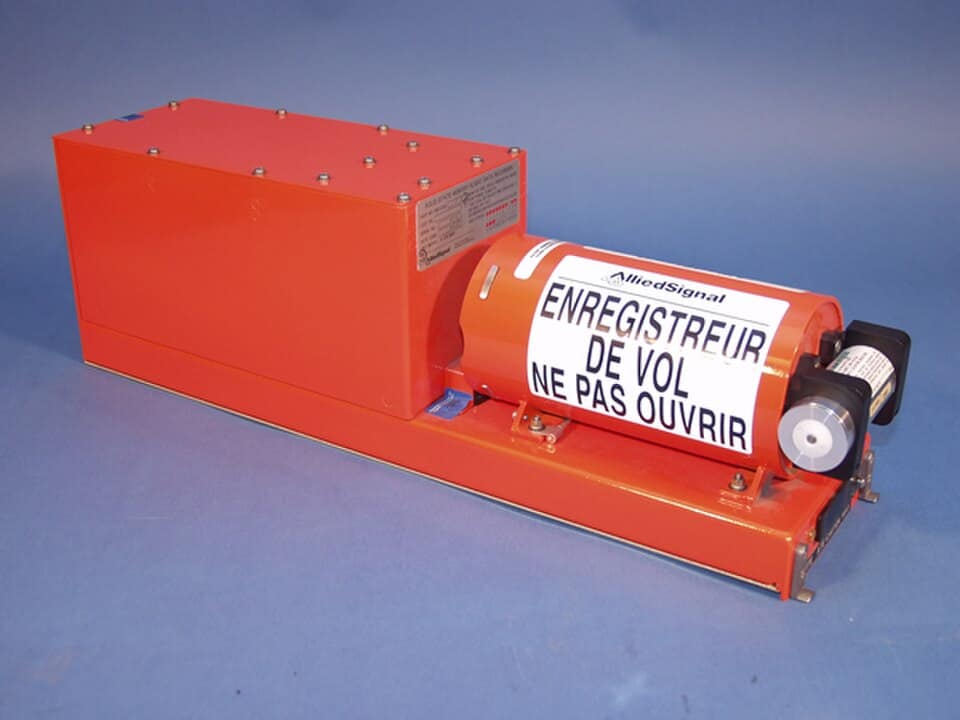
Every time an aircraft crashes, the first question investigators ask is: where are the black boxes? These devices — which are actually bright orange — are the single most important tools in aviation accident investigation. They record what the aircraft was doing and what the pilots were saying in the moments before disaster. But how exactly do they work, and how do they survive impacts that destroy everything else?
Two Boxes, Two Jobs
What most people call “the black box” is actually two separate devices. The Flight Data Recorder (FDR) captures technical parameters — at least 88 different measurements including altitude, airspeed, heading, engine power settings, control surface positions, and dozens of other variables. Modern FDRs sample some parameters multiple times per second, building a precise digital picture of the aircraft state throughout the flight.
The Cockpit Voice Recorder (CVR) captures audio from the flight deck. It records from four sources simultaneously: individual microphones for the captain and first officer, a microphone at the observer or jump seat position, and an area microphone mounted in the cockpit ceiling that captures ambient sounds — engine noise, warning horns, clicks, thuds, and the sound of switches being thrown. This ambient channel often provides critical clues, as investigators can identify specific sounds and match them to aircraft systems.
Both recorders continuously overwrite their oldest data in a loop. The FDR retains the last 25 hours of flight data. The CVR keeps the last two hours of cockpit audio. This means investigators always have the final moments of a flight, but older data is lost — a deliberate design choice that balances investigative needs with crew privacy concerns.
The Man Who Invented It
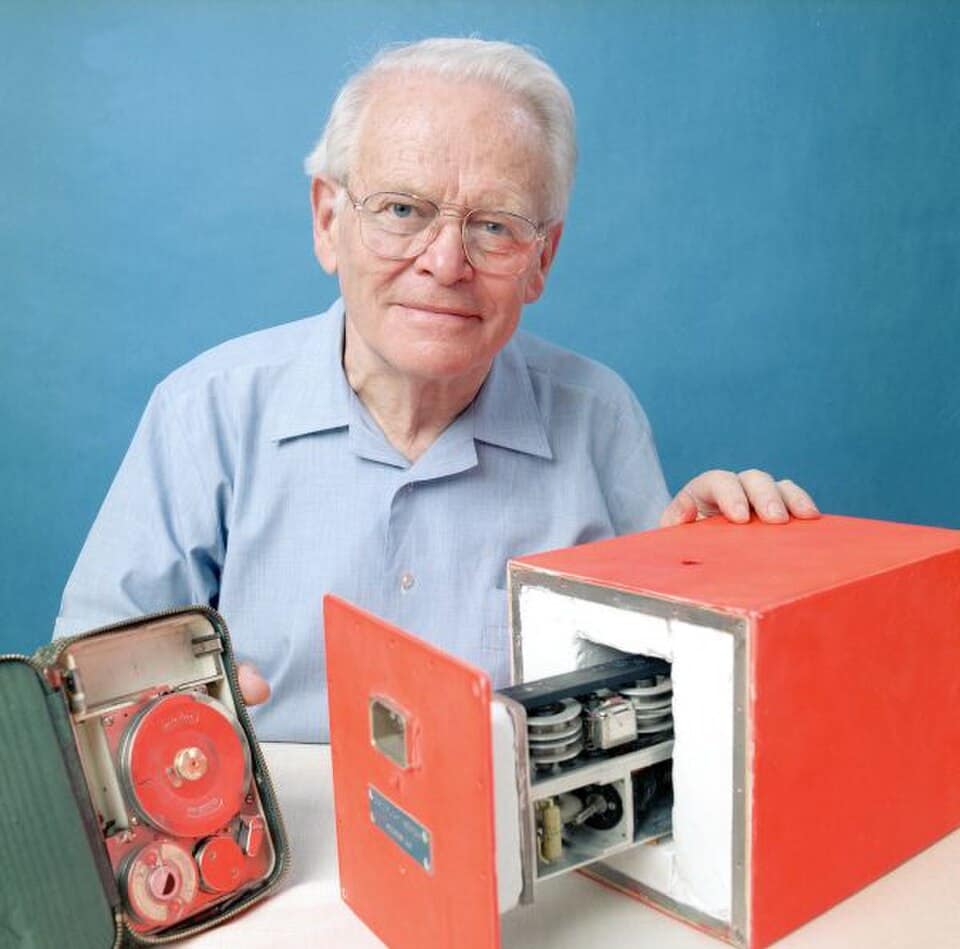
The flight recorder concept was pioneered by David Warren, an Australian research scientist at the Aeronautical Research Laboratories in Melbourne. In 1953, Warren was part of a panel investigating the crashes of the de Havilland Comet — the world first jet airliner, which suffered a series of mysterious in-flight breakups. Frustrated by the lack of evidence, Warren began developing a device that could record both flight data and cockpit conversation.
His prototype, completed in 1957 and dubbed the “ARL Flight Memory Unit,” was initially rejected by Australian aviation authorities. British officials showed more interest, and after a demonstration at the Royal Aircraft Establishment at Farnborough, the concept gained international attention. By the mid-1960s, flight recorders were becoming mandatory on commercial aircraft worldwide.
Built to Survive
The engineering challenge of a flight recorder is not the recording technology — that is straightforward. The challenge is making the recording survive a catastrophic crash. Modern flight recorders are built to withstand conditions that would destroy virtually any other manufactured object.
The crash-survivable memory unit at the heart of each recorder is encased in multiple layers of protection. The innermost layer is a stack of stainless steel armor. Surrounding that is a layer of thermal insulation designed to protect the memory chips from fire. The entire assembly is mounted in a bright orange housing equipped with an underwater locator beacon.
The specifications are remarkable. A modern flight recorder must survive an impact force of 3,400 g — equivalent to hitting a concrete wall at several hundred miles per hour. It must survive a fire of 1,100 degrees Celsius for 60 minutes, and a lower-temperature fire of 260 degrees for 10 hours. It must withstand immersion in salt water at a depth of 6,000 meters. And the underwater locator beacon must transmit a ping at 37.5 kHz for at least 90 days, allowing search teams to locate the recorder on the ocean floor.
Quick Facts
- Inventor,David Warren (Australia, 1957)
- Recording duration,2 hours (CVR), 25 hours (FDR)
- Parameters recorded (FDR),88+ including altitude, airspeed, heading, control inputs
- CVR channels,4 (pilot, copilot, observer, cockpit area microphone)
- Survivability,Withstands 3,400g impact, 1,100C fire for 60 min, 6,000m depth
- Color,Bright orange (despite being called black box)
- Underwater locator,Pings at 37.5 kHz for 90 days
Reading the Data
When investigators recover a flight recorder, it is taken to a specialized laboratory — in the United States, the NTSB facility in Washington, D.C. The memory unit is carefully extracted and the data is downloaded. For the FDR, this produces a detailed timeline of every recorded parameter, which can be visualized as graphs and used to reconstruct the aircraft trajectory and state with remarkable precision.
The CVR audio is typically more challenging. Investigators must transcribe every utterance, identify every speaker, and catalog every ambient sound. A click might be a switch being thrown. A thud might be a bird strike or a mechanical failure. A change in engine tone might indicate a power change or a malfunction. CVR transcripts are painstakingly detailed documents, and their preparation can take weeks.
Together, the FDR and CVR data allow investigators to reconstruct not just what happened, but why. The FDR shows what the aircraft was doing. The CVR reveals what the crew knew, what they discussed, and how they responded. The combination has been instrumental in identifying the causes of nearly every major aviation accident in the past half-century.
Why Orange?
The name “black box” has nothing to do with the color. Flight recorders are painted bright orange — officially known as “international orange” — specifically to make them easier to find in wreckage. The origin of the name “black box” is debated, but the most likely explanation is that early electronic devices were often housed in black-painted enclosures, and the term became generic for any mysterious device whose internal workings are opaque to the user.
The orange paint job is no mere cosmetic choice. In a crash site scattered with charred, twisted metal, a bright orange box stands out. Reflective tape is also applied to increase visibility. Every design decision on a flight recorder — from its mounting location in the tail (the section most likely to survive impact) to its bright color to its underwater beacon — is oriented toward a single goal: being found.

 English
0 Comments