
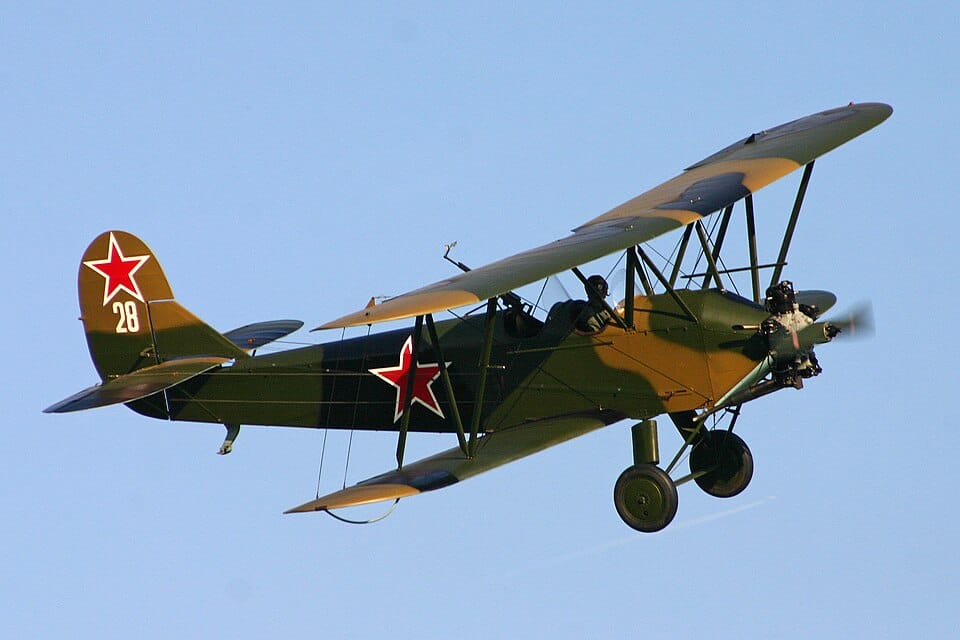
It sounds like the setup for a joke: what happens when a biplane from the 1920s fights jet fighters from the 1950s? The answer, it turns out, is that the biplane wins more often than anyone would like to admit. During the Korean War, North Korean pilots flying Polikarpov Po-2 biplanes — fabric-covered, open-cockpit trainers designed in 1928 — conducted a campaign of nocturnal harassment that drove the United States Air Force to distraction. They destroyed aircraft worth millions of dollars, killed personnel, wrecked equipment, and even claimed the only biplane-versus-jet kill in aviation history.
The Ghost of 1928
The Polikarpov Po-2 was not designed for combat. Created by Nikolai Polikarpov in 1928, it was a simple, rugged biplane trainer intended to teach basic flying skills. Built of plywood, fabric, and steel tubing, it had a top speed of about 94 miles per hour — slower than a modern automobile on a highway. Its range, payload, and instrumentation were minimal. Production estimates range from 20,000 to more than 30,000, making it one of the most produced aircraft in history.
The Po-2 had seen combat before Korea. During World War II, the Soviet Union famously used them as night bombers against the Germans, most notably in the all-female 588th Night Bomber Regiment — the legendary "Night Witches." The Germans called the Po-2 the "Sewing Machine" for the distinctive sound of its five-cylinder Shvetsov M-11 engine. The tactic was always the same: fly low and slow in darkness, drop small bombs on enemy positions, and disappear before anyone could respond.
Bedcheck Charlie Arrives
In the spring of 1951, as United Nations forces pushed north and the air war over Korea intensified, North Korean Po-2s began appearing over UN airfields after dark. The raids followed a maddening pattern. Around midnight — just as exhausted ground crews and pilots were trying to sleep — the distinctive put-put-put of a Po-2 engine would be heard overhead. Then came the bombs.
The bombs were small — sometimes modified artillery shells or hand grenades dropped by the observer in the rear cockpit. But the effect was devastating out of all proportion to the ordnance involved. Aircraft parked on ramps were exposed and vulnerable. A single well-placed bomb could destroy or damage a jet fighter worth hundreds of thousands of dollars. Radar equipment, fuel dumps, and communications facilities were all targets.
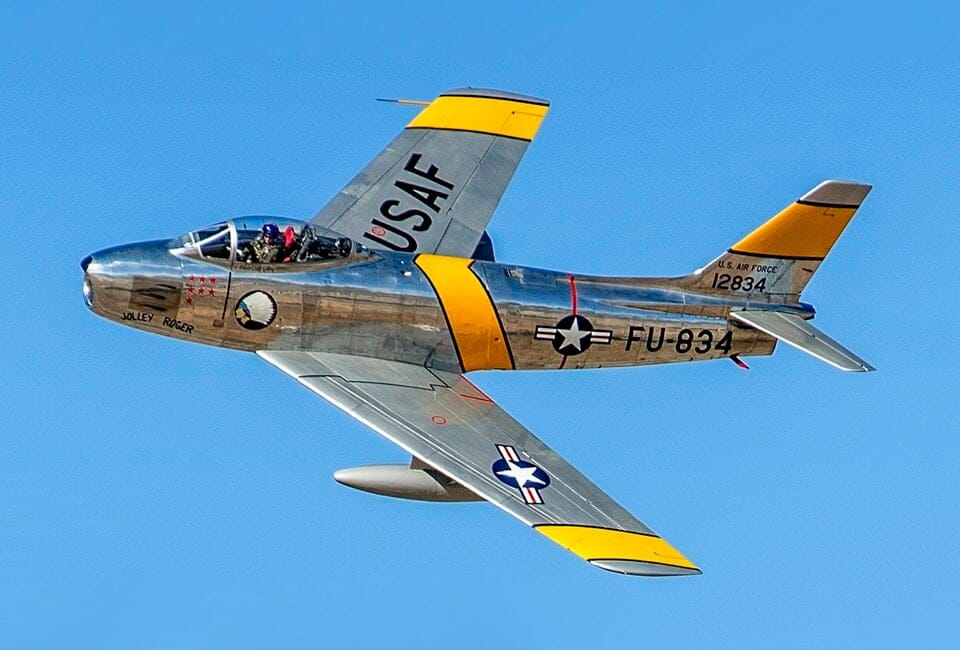
On June 17, 1951, two Po-2s attacked Suwon Air Base — home to F-86 Sabres, the most advanced American fighter in the theater. The biplanes destroyed one F-86 and damaged eight others, four of them seriously. The irony was excruciating: a plane that cost essentially nothing to build had destroyed aircraft that represented the cutting edge of American aerospace technology.
Why Jets Could Not Stop Them
The USAF response to Bedcheck Charlie was initially confident. They had jet fighters, radar, and overwhelming technical superiority. Surely stopping a 94-mph biplane would be trivial. It was not.
The problems were fundamental. First, the Po-2 was nearly invisible to radar. Its wood-and-fabric construction produced an almost negligible radar return. Ground-based radar could sometimes detect it, but airborne intercept radar — the kind carried by night fighters — struggled to distinguish it from ground clutter at low altitude.
Second, and more critically, the speed differential between the Po-2 and its pursuers was absurd. An F-86 Sabre had a top speed of 687 mph. The Po-2 flew at under 100 mph. A jet interceptor attempting to match the biplane had to slow to the ragged edge of its stall speed — and beyond. In February 1952, an F-94 Starfire night fighter was directed toward a Po-2 by ground radar. The pilot found the biplane and made three unsuccessful passes, unable to slow down enough to line up a shot without stalling his own aircraft.
Quick Facts
- Po-2 first flight,1928
- Po-2 top speed,152 km/h (94 mph)
- F-86 Sabre top speed,1,106 km/h (687 mph)
- Speed ratio,Jets were 7-10x faster than the Po-2
- Po-2 construction,Wood and fabric
- Radar signature,Virtually undetectable
- Jet kill credit,1 F-94 Starfire lost during intercept (stall)
- Ground kills,Multiple F-86s and other aircraft destroyed at airfields
On another occasion, an F-94 Starfire pilot slowed to 100 mph — well below the jet stall speed of approximately 120 mph — in an attempt to engage a Po-2. The Starfire stalled and crashed. The Po-2 was officially credited with the kill, making it the only biplane ever to claim a jet aircraft in combat. The jet, in effect, shot itself down trying to engage a target that was too slow to intercept.
Adapting to the Threat
The USAF eventually adapted, though never completely solved the problem. Propeller-driven aircraft — including F4U Corsairs flown by Marine night fighter pilots — proved more effective against the Po-2s because they could slow down enough to engage. Ground-based anti-aircraft defenses were improved. Blackout procedures were tightened. Aircraft dispersal and revetments were enhanced.
But the harassment never completely stopped. The Po-2s continued their raids throughout the war, exploiting the fact that the most technologically advanced air force in the world had no simple answer to the oldest and simplest tactical problem in aviation: how do you catch something that flies slower than you can go without falling out of the sky?
The Lesson
The Bedcheck Charlie campaign is one of the great asymmetric warfare stories in military aviation. A fleet of obsolete trainers costing practically nothing to build or operate forced the United States to divert significant resources — night fighters, radar stations, anti-aircraft batteries, alertness procedures — to counter a threat that should have been beneath notice. The Po-2 could not win the war. But it could ensure that the other side never had a quiet night, and in war, that counts for something.
The story also serves as a reminder that technological superiority does not automatically translate to tactical dominance. The same lesson would be relearned decades later with IEDs, drones, and other low-tech weapons that proved devastatingly effective against far more sophisticated adversaries. The 1928 Polikarpov Po-2, puttering through the Korean night sky at 94 miles per hour, was one of the earliest demonstrations of a principle that military planners still struggle with today.
Related Questions
What was 'Bedcheck Charlie' in the Korean War?
'Bedcheck Charlie' was the nickname for North Korean pilots who flew Polikarpov Po-2 biplanes on nocturnal harassment raids against UN airfields during the Korean War. Appearing around midnight, they dropped small bombs to destroy aircraft and equipment and to deprive exhausted crews of sleep.
What was the Polikarpov Po-2?
The Polikarpov Po-2 was a simple, rugged biplane trainer designed by Nikolai Polikarpov in 1928, built of plywood, fabric, and steel tubing with a top speed of about 94 mph. With production estimated at 20,000 to over 30,000, it is one of the most-produced aircraft in history.
Why were slow Po-2 biplanes so effective against jets in Korea?
Their fabric construction and low, slow night flying made them very hard for fast jets and radar to engage. Flying low in darkness, they dropped small bombs on exposed parked aircraft and facilities, causing damage far out of proportion to their tiny ordnance, then vanished before defenders could respond.
Were Po-2 biplanes used before the Korean War?
Yes. During World War II the Soviet Union used Po-2s as night bombers against the Germans, most famously in the all-female 588th Night Bomber Regiment known as the 'Night Witches.' The Germans called the Po-2 the 'Sewing Machine' for the sound of its engine.
Did a biplane ever shoot down a jet?
The Po-2 is credited with the only documented biplane-versus-jet kill in aviation history, achieved during the Korean War, an extraordinary feat for a 1928 fabric-covered trainer pitted against modern jet fighters.
What damage did Po-2 raids cause at Suwon Air Base?
On the night of 17 June 1951, two Po-2s attacked Suwon Air Base, home to F-86 Sabres. They destroyed one F-86 and damaged eight others, four seriously, aircraft worth far more than the nearly cost-free biplanes that attacked them.
Who were the 'Night Witches'?
The Night Witches were the Soviet all-female 588th Night Bomber Regiment, who flew Polikarpov Po-2 biplanes on night bombing raids against German forces in World War II, flying low and slow in darkness before disappearing.
0 Comments