
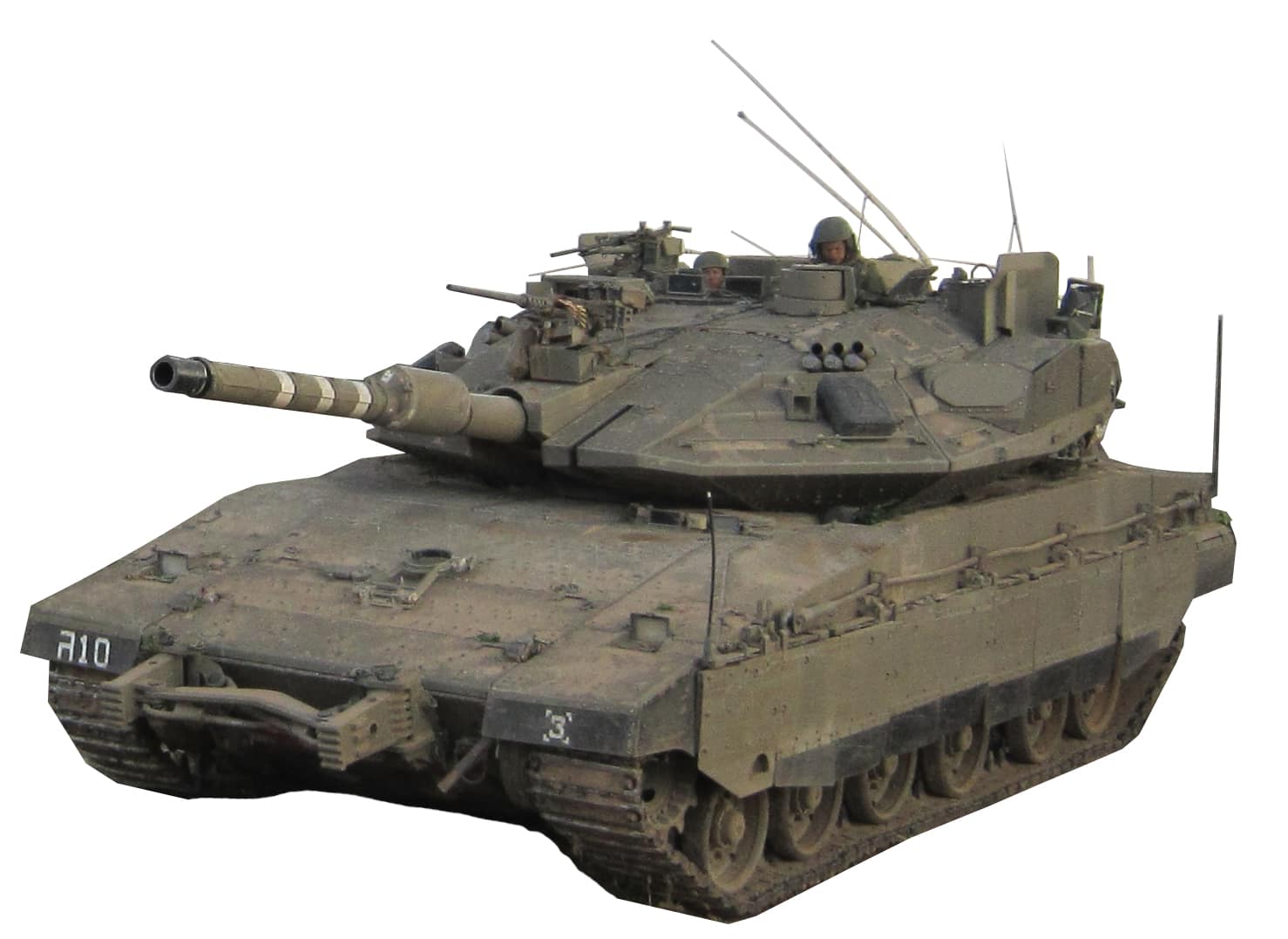
Fishing nets have been a feature of the Sea of Galilee since the time of the apostles. Now they are draped over Israeli Merkava tanks, Humvees and forward observation posts in southern Lebanon — and they are stopping Hezbollah FPV drones from finding the kill spot on a multi-million-dollar armoured vehicle.
The improvisation, photographed by both Israeli and Hezbollah media operators in the last week of May 2026, is one more sign that the most expensive armies on earth are now being adapted to the cheapest weapons. A commercial first-person-view quadcopter, carrying a small shaped charge, costs a few hundred dollars. The fishing net costs a fraction of that. The tank it is protecting costs millions.
Quick Facts
Where: Northern Israel and southern Lebanon front line, May 2026
What: Fishing nets and cope cages used to defeat Hezbollah FPV drones
Protecting: Merkava Mk4 tanks, Namer APCs, Humvees, observation posts
Cost ratio: a drone of a few hundred dollars vs a multi-million-dollar tank
Origin: Russo-Ukrainian war; IDF says ~158,000 m² of netting already issued, with more on order
A war Ukraine already taught
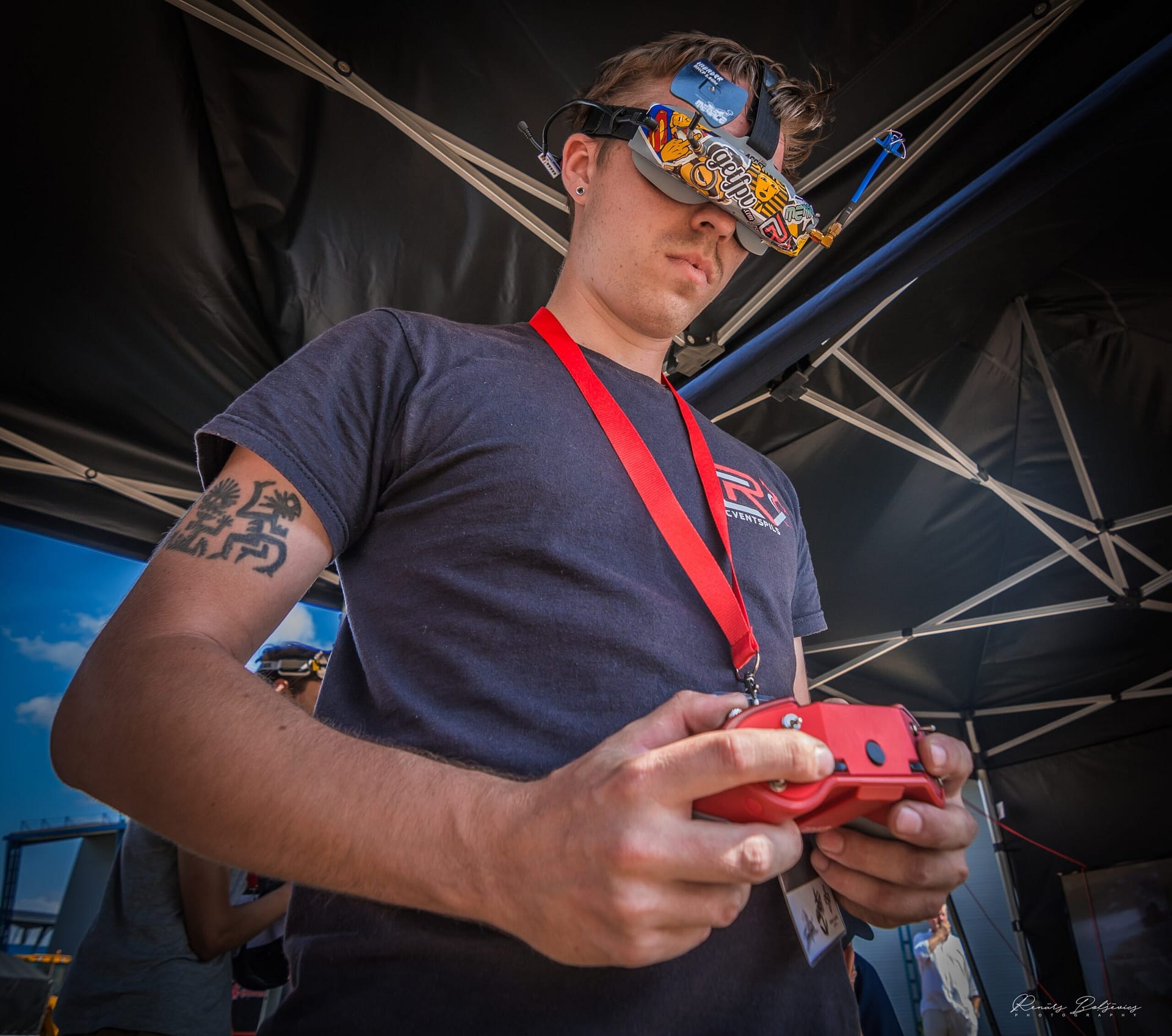
This is not an Israeli invention. Russian and Ukrainian troops spent the war with Russia bolting mesh screens and “cope cages” over the turrets of their T-72s and Bradleys as FPV drones became the conflict’s defining weapon. The principle is brutally simple: an FPV drone is aimed by a pilot wearing goggles, watching a video feed. If the drone’s view is suddenly obscured at the last second, or if it detonates a few centimetres above the armour rather than against it, the shaped-charge jet loses most of its penetration. Tactically inelegant, mathematically very effective.
Israel learned the same lesson in October 2023, when Hamas fighters used commercial DJI drones to drop grenades on Merkava turrets at the start of the war in Gaza. The IDF moved fast, with kit-bashed steel cope cages appearing on Merkava turrets. The Trophy active protection system the tanks already carried, as effective as it is against ATGMs and RPGs, is not optimised for slow, small, low-altitude quadcopters.
Galilee fishermen as defence contractors
The fishing-net layer is the simplest, cheapest add-on to that stack. Israeli soldiers have been buying nets on their own initiative — mostly in Tiberias on the shores of the Sea of Galilee, and from fishermen at Akko and Haifa on the Mediterranean — to plug the gaps in the roughly 158,000 square metres of netting the IDF itself has issued so far. The nets are draped over the vehicle, around the turret, across the gunner’s open hatch. They snag the drone’s propellers, tilt its aim, or simply detonate the warhead high enough to be a near-miss rather than a kill.
What it tells us about the new front
The northern Israeli border has been one of the most active drone-warfare environments outside Ukraine since late 2023. Hezbollah’s drone unit — operating from the Bekaa Valley and southern Lebanon — has fielded Iranian-supplied Shahed-class loitering munitions, locally built FPV racers, and a steady stream of camera-equipped quadcopters that simply spot for artillery. The IDF responds with Iron Dome and its anti-drone updates, with interceptor-drone projects, and with the new Iron Beam directed-energy system. None of it is cheap enough to be the answer.
The fishing nets are a tell. They are what every front-line army is doing — in Ukraine, in Israel, in Yemen, increasingly in the South China Sea — when the official kit cannot keep up with the threat. The Pentagon’s Replicator programme, the Bundeswehr’s Stark drone-swarm contracts, the Royal Navy’s DragonFire laser trials all aim to solve the same problem at a different price point. But until those work in numbers, the fastest defence against a few-hundred-dollar quadcopter is, still, a net bought from a Galilee fisherman whose family has been casting them for two thousand years.
Sources: The War Zone, IDF Northern Command, open-source social media.


 English
0 Comments