
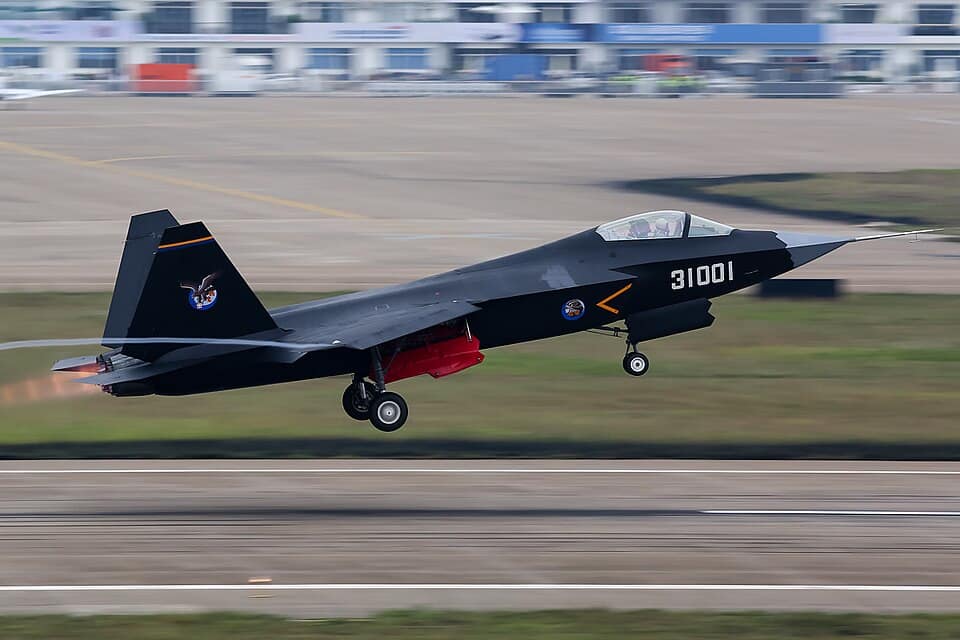
For the entire history of fifth-generation fighters, you have had exactly one option as a foreign customer: the Lockheed Martin F-35. Russia’s Su-57 has been on the market in theory for years, but in practice has produced exactly zero export deliveries. Everyone else — Britain, France, Germany, Korea, Turkey — is still building a fighter that has not yet flown.
That ends now. China has just confirmed that an export-configured derivative of its J-35 carrier-stealth fighter, designated J-35AE, will be sold to Pakistan as the launch customer. It is the first non-American fifth-generation fighter ever to find a paying foreign buyer with a real signed contract behind it. And by sheer coincidence — or possibly not — the customer is the country that maintains the most adversarial relationship with India, which itself flies the Russian-built Su-30 and is in the early stages of standing up its own Rafale fleet.
The geopolitics are loud. The aviation story is, if anything, even louder.
Quick Facts
Aircraft: Shenyang J-35AE
Generation: Fifth-generation, twin-engine, low-observable
Lineage: Derived from FC-31 / J-31 prototype, navalised as J-35
First export customer: Pakistan
Reported deal size: 30-40 aircraft (initial)
Status: Export contract signed; deliveries expected from 2027
Where the J-35AE actually comes from
To understand the J-35AE you have to understand the strange evolutionary path of the airframe. The aircraft began life around 2012 as the Shenyang FC-31, a private-venture demonstrator the company built without a Chinese government order — almost unheard of for a Chinese state-owned enterprise. The FC-31 spent a decade flying as a paper aircraft in search of a customer.
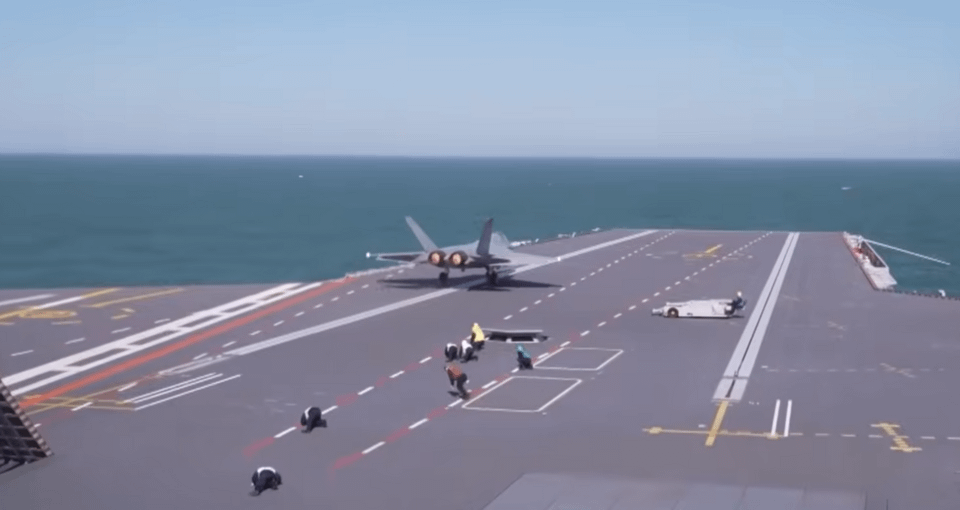
The customer, when it eventually arrived, turned out to be the People’s Liberation Army Navy. China was building an aircraft carrier with catapults — the Type 003 Fujian — and needed a fifth-generation jet to fly off it. The FC-31 was reworked into the J-35, with the structure beefed up for catapult launches and arrested landings, the wings folded for carrier storage, and the entire avionics package redesigned for naval operations. The J-35 first flew in its naval form in 2021. It is now in low-rate production and conducting trials aboard the Fujian.
The J-35AE is what happens when Shenyang takes that same airframe, removes the carrier-specific gear (the catapult bar, the tail hook, the folding wings), tunes the avionics to whatever an export customer can be allowed to have, and offers it on the open market. Think of it as the J-35 minus the heavy steel-and-arrestor-cable hardware, plus an export downgrade on the radar and the data-link.
What Pakistan gets
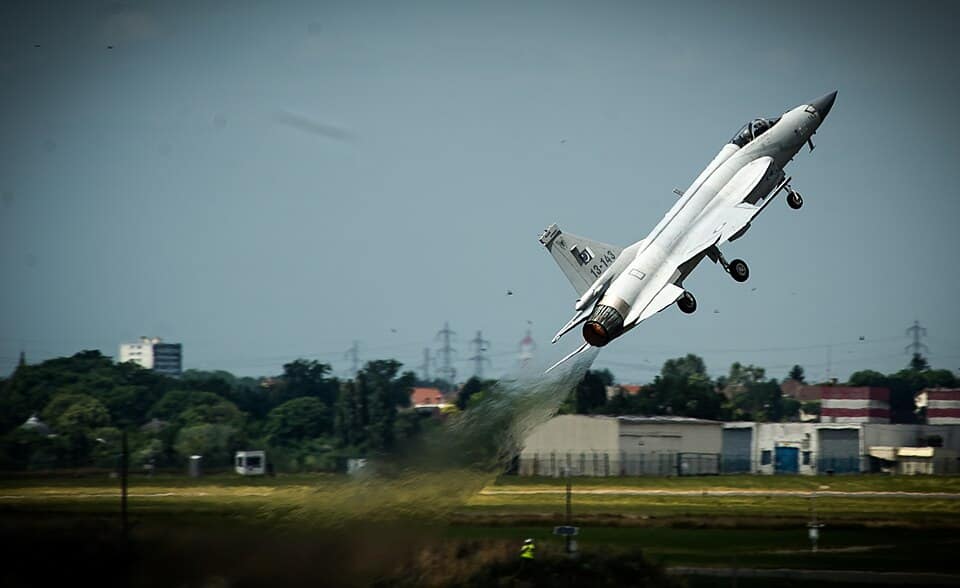
The Pakistan Air Force is, on paper, an operator of three different generations of fighter aircraft: the locally-assembled JF-17 Thunder (4th-gen), a small fleet of F-16s with a long history, and a growing inventory of J-10C from China. The F-16s are increasingly hard to maintain because of restrictions on U.S. spares and software. The JF-17 is solid but unambiguously fourth-generation. The J-10C is excellent for its category but lacks stealth.
The J-35AE jumps Pakistan straight into the fifth generation. It will sit at the top of the air-defence stack, with low observability, an active electronically scanned array radar, internal weapons carriage, and modern data links. For Islamabad, this is the most important fighter procurement in a generation.
For Beijing, it is the moment Chinese stealth went global.
The strategic shockwave
Until this contract, the F-35 was the only fifth-generation fighter any non-aligned country could realistically buy. That gave Washington a strong card to play in regional power politics: countries that wanted F-35 capability had to be in good standing with the United States, and they had to accept American conditions on use, basing, and technology security. Saudi Arabia recently joined the F-35 club. The UAE was kicked out, then quietly let back in. Turkey is still locked out over the S-400 dispute.
The J-35AE breaks that monopoly. For any country whose F-35 path is closed — Turkey is the obvious example — Beijing now offers a credible alternative. India will need to think about how it counters a stealth fighter on its western border. Saudi Arabia and Egypt, both J-10 customers, will be watching the export terms closely.
And in Fort Worth, Texas, the people who build the F-35 just learned they have, for the first time, a real competitor.
Sources: The Aviation Geek Club, Aviation Week, Janes Defence Weekly, public PLAN imagery.


 English
0 Comments