
Quick Facts
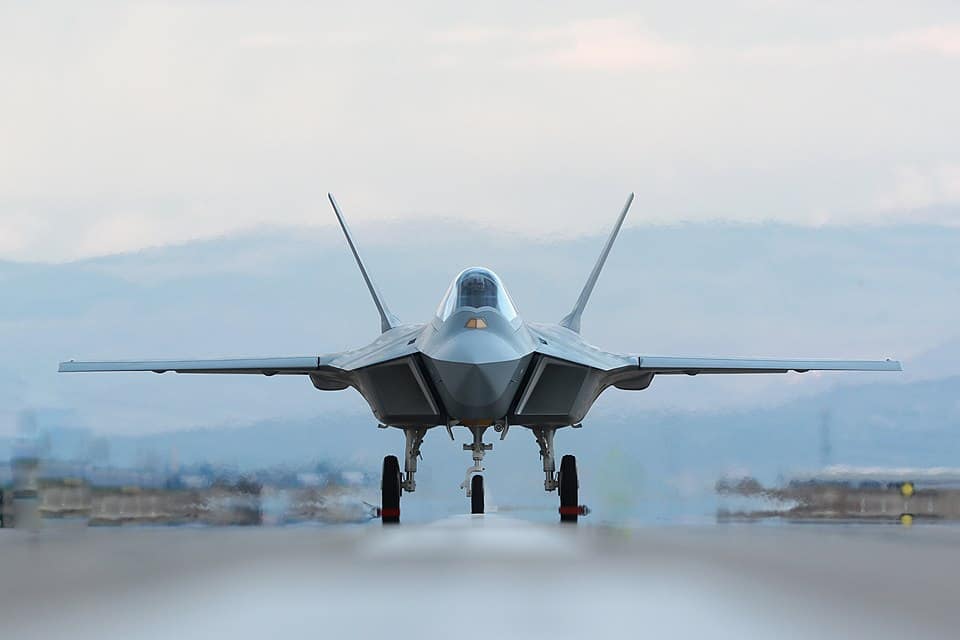
- Aircraft: TAI TF KAAN — Turkey’s indigenous fifth-generation fighter
- Milestone: First true flight prototype expected May/June 2026
- Three prototypes: Second by end of 2026, third by early 2027
- Serial production: Targeted for 2029 delivery
- Mission: Replace Turkey’s aging F-16 fleet
From Demonstrator to Fighter
The KAAN programme has moved fast by fifth-generation standards. The concept demonstrator took its first flight on 21 February 2024 — a symbolic moment that put Turkey in an exclusive club of nations capable of flying indigenous stealth fighters. But TAI General Manager Mehmet Demiroglu made clear that the real work was just beginning. The evolved prototypes entering flight testing now carry refined low-observable shaping, updated sensor apertures, and structural changes informed by wind-tunnel and computational analysis conducted since the 2024 flight. TAI has described the leap from demonstrator to prototype as comparable to the difference between a concept car and a production vehicle.
Three Prototypes, One Goal
TAI is running three dedicated flight-test airframes in parallel — an aggressive tempo designed to compress the envelope-expansion campaign. The first prototype was initially slated for an April takeoff, but final system integration checks pushed the date into May or June. The second prototype follows by the end of 2026, and the third is expected to enter testing late this year or early 2027. Each prototype will explore different corners of the flight envelope, from high-altitude supersonic performance to low-speed handling qualities and weapons integration. The parallel approach mirrors programmes like the F-35, which used multiple test jets to accelerate certification.Why It Matters
Turkey operates roughly 240 F-16s — the backbone of its air force for three decades. The country was kicked out of the F-35 programme in 2019 after purchasing Russian S-400 air defence systems, forcing Ankara to accelerate its indigenous fighter ambitions. The KAAN is the answer: a twin-engine, single-seat stealth aircraft designed for air superiority and precision strike. Beyond national defence, the KAAN is already generating export interest. TAI has discussed potential cooperation with Pakistan and Azerbaijan, and the programme’s relatively open architecture is designed to attract international partners who want fifth-gen capability without depending on Washington.The Engine Question
The current prototypes fly with General Electric F110 engines — the same powerplant used in Turkey’s F-16s. A long-term goal remains the development of an indigenous Turkish engine, though that timeline stretches well beyond 2030. For now, the GE engines provide proven, reliable thrust that allows TAI to focus on airframe and avionics development without waiting for unproven propulsion. The KAAN’s first true test flight will be one of the most significant moments in Turkish defence history. If the programme stays on track, Turkey will join the United States, Russia, and China as nations that have independently developed and produced a fifth-generation combat aircraft. The next few weeks will determine whether that milestone arrives on schedule.Sources: Army Recognition, Anadolu Agency, The Defense Post, TAI official communications


 English
0 Comments