

Quick Facts
- The offer: France proposed buying Greece’s Mirage 2000 fleet for transfer to Ukraine, with discounted Rafales in return
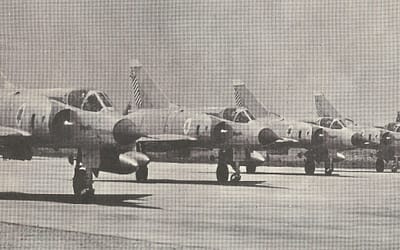
- Greek Mirage fleet: 24 Mirage 2000-5 Mk II interceptors + up to 19 older Mirage 2000 EGM/BGM variants
- Greece’s response: Categorical rejection — “This is not true, nor could such a thing happen”
- Context: Macron visited Athens April 24–25; the deal was reportedly pre-negotiated but collapsed
- Strategic concern: Aegean defence — Greece needs every interceptor while tensions with Turkey persist
- Greece already operates: 24 Rafale F3Rs purchased from France in 2021–2024
Un calcul stratégique
The logic of Macron’s proposal was sound from a French industrial perspective. Dassault’s Rafale production line is running at full capacity, with orders from India, Indonesia, the UAE, Serbia, and Greece itself. Moving Greek Mirages to Ukraine would create demand for additional Rafales, keeping the line busy and deepening Greece’s dependency on French military hardware. For Ukraine, the Mirage 2000-5 Mk II would represent a significant capability injection. The aircraft carries the MICA air-to-air missile, has a capable RDY-2 radar, and would give the Ukrainian Air Force a proven BVR platform to complement its F-16s. France has already committed a squadron of older Mirage 2000-5F fighters from its own inventory — the Greek machines would double that contribution. But Athens does not view its Mirages as surplus. Greece operates in one of NATO’s most contested airspaces. Turkish Air Force incursions over the Aegean — daily occurrences that rarely make international headlines — require a constant quick-reaction alert posture. The Hellenic Air Force maintains armed interceptors on strip alert at multiple bases across the Aegean islands. Every airframe matters.The Aegean Calculation
Greece’s fighter fleet is structured around a specific threat. Turkey operates over 240 F-16s and is developing its own fifth-generation fighter, the TAI Kaan. The Aegean’s geography — thousands of islands, many within visual range of the Turkish coast — demands a fighter force large enough to sustain continuous air policing while retaining a credible warfighting reserve. Greece currently fields 24 Rafales, roughly 150 F-16s of various blocks, and the 43-strong Mirage fleet. Removing the Mirages would cut the Hellenic Air Force’s fast-jet inventory by approximately 20% at a stroke. Even with replacement Rafales promised, there would be a capability gap — new aircraft take years to deliver, crew, and integrate into an existing force structure. Greek defence officials have privately indicated that the Mirage fleet will not be released until sufficient Rafale deliveries are in hand to replace it squadron-for-squadron. That timeline does not align with Ukraine’s immediate needs.Macron’s Dilemma
The rejection puts Macron in an awkward position. He has positioned France as Europe’s most muscular supporter of Ukraine’s air power — the Mirage 2000-5F commitment, SCALP cruise missile deliveries, and training programmes are all French initiatives. The Greek swap deal would have been a signature achievement, demonstrating that European solidarity can produce real fighter aircraft for Kyiv. Instead, Macron arrives in Athens with a rejected headline proposal and must pivot to other agenda items — defence cooperation, Mediterranean security, energy policy — while the Greek press reports his Mirage offer as overreach. The episode illustrates a recurring tension in European defence. Every NATO nation supports Ukraine in principle. But when support requires surrendering operational aircraft that defend sovereign airspace against a different set of threats, principle collides with geography. Greece’s Mirages patrol the Aegean, not the Donbas. And Athens intends to keep it that way.Sources: Defense Express, Athens Times, Proto Thema, Eurasian Times, Aerospace Global News


 English
0 Comments