
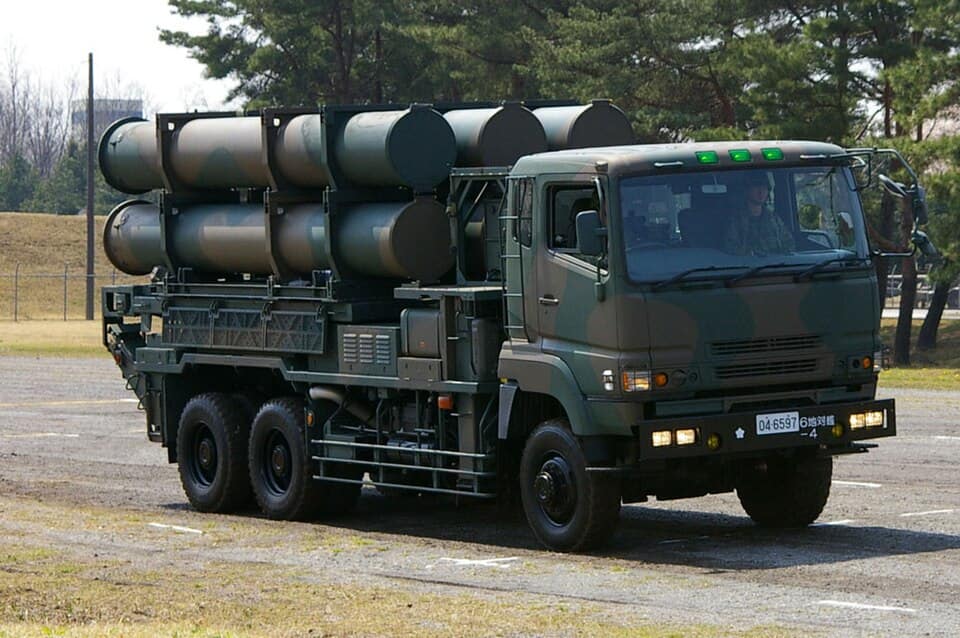
In a moment laden with historical irony and strategic significance, Japanese troops fired two Type-88 surface-to-ship missiles from the shores of the Philippines on May 6, 2026, sinking BRP Quezon (PS-70), an 82-year-old decommissioned Philippine Navy corvette that once fought against Japan during the Pacific War of World War II. The live-fire exercise, the centrepiece of Exercise Balikatan 2026, sent the aged warship to the bottom of the South China Sea approximately 50 miles offshore from Culili Point in Paoay, Ilocos Norte, on the northwestern coast of Luzon. The annual multinational drill, which brought together roughly 17,000 troops from seven nations, ran from April 20 through May 8.
Quick Facts
- Exercise: Balikatan 2026 (annual multinational drill in the Philippines)
- Date: May 6, 2026
- Weapon: Two Type-88 surface-to-ship missiles (Japan Ground Self-Defense Force)
- Launch site: Culili Point, Paoay, Ilocos Norte, northwestern Luzon, Philippines
- Target: BRP Quezon (PS-70), decommissioned Philippine Navy corvette
- Target history: 82-year-old warship; served in WWII Pacific War against Japan
- Sinking location: ~50 miles offshore in the South China Sea
- Exercise duration: Through May 8, 2026
A Warship’s Final Voyage: From WWII Combatant to 21st-Century Target
BRP Quezon (PS-70) led an extraordinary life. Built during the Second World War, the corvette served in the vast Pacific theatre, fighting against the Imperial Japanese Navy in some of the most brutal naval engagements in history. For decades after the war, she served the Philippine Navy in various capacities before being decommissioned and slated for disposal. That her final chapter would come at the hands of Japanese missiles fired from Philippine soil speaks volumes about how profoundly the geopolitical landscape of the Indo-Pacific has transformed.

The symbolism was not lost on the thousands of military personnel gathered for Balikatan 2026. Eighty years ago, Japan and the Philippines were mortal enemies locked in a devastating conflict that left hundreds of thousands dead and entire cities in ruins. Today, they stand shoulder to shoulder as allies, united by shared concerns about an increasingly assertive China and the imperative to maintain freedom of navigation in the South China Sea. The sinking of BRP Quezon was not merely a weapons test; it was a declaration of partnership forged from the ashes of the past.
Type-88 Missiles: Japan’s Anti-Ship Punch
The Type-88 surface-to-ship missile, known in Japanese as the SSM-1, is a truck-mounted anti-ship weapon developed by Mitsubishi Heavy Industries for the Japan Ground Self-Defense Force. With a range exceeding 150 kilometres and a sea-skimming flight profile designed to evade radar detection, the Type-88 is optimised for coastal defence and area denial. Each missile carries a high-explosive warhead capable of crippling or sinking warships up to destroyer size.
Firing the Type-88 from Philippine territory was a significant operational milestone. It demonstrated Japan’s willingness and capability to deploy its land-based anti-ship assets forward, beyond its home islands, in coordination with allied forces. For military planners studying how to defend the labyrinth of islands, straits, and sea lanes that define the Western Pacific, the message was clear: anti-ship missile batteries positioned on key Philippine islands can threaten hostile naval forces transiting the South China Sea, creating a web of overlapping kill zones that would complicate any adversary’s operational calculus.

Balikatan 2026: Bigger, Bolder, More Consequential
Exercise Balikatan, which translates to “shoulder to shoulder” in Filipino, has evolved dramatically from its origins as a modest bilateral training event between the United States and the Philippines. The 2026 edition was the largest and most complex yet, involving roughly 17,000 troops from seven nations and featuring live-fire exercises across land, sea, and air domains.
The exercise scenario was thinly veiled in its focus. Participants practised island seizure and defence, anti-ship operations, amphibious landings, combined air patrols, and humanitarian assistance and disaster relief. The geographic setting, the northern Philippines overlooking the South China Sea and within striking distance of Taiwan, left little doubt about the contingencies being rehearsed.
Beyond the live-fire spectacle, Balikatan 2026 featured extensive command-post exercises designed to test the ability of the three nations to share intelligence, coordinate fires, and make decisions under the pressure of a simulated high-intensity conflict. Secure communication links, interoperable data systems, and joint targeting procedures were all exercised and refined, building the kind of institutional muscle memory that proves invaluable when seconds matter in a real crisis.
Strategic Calculus: Defending the South China Sea
The sinking of BRP Quezon sent ripples far beyond the waters off Luzon. Beijing has watched the steady deepening of the US-Japan-Philippines military relationship with growing unease. China claims virtually the entire South China Sea as its sovereign territory, a position rejected by an international tribunal in 2016 but enforced by the growing presence of Chinese coast guard vessels, maritime militia, and naval warships.
For the Philippines, the partnership with Japan and the United States represents a vital counterweight to Chinese pressure on its maritime claims. Filipino fishermen and naval personnel have faced increasingly aggressive encounters with Chinese vessels in disputed waters, and Manila has leaned heavily on its alliances to push back. The spectacle of Japanese missiles sinking a target ship in waters claimed by Beijing is a pointed reminder that the Philippines does not stand alone.
For Japan, forward-deploying anti-ship missiles to the Philippines is part of a broader strategic shift that has seen Tokyo embrace a more muscular defence posture. Japan’s new National Security Strategy explicitly identifies China as a strategic challenge and commits to developing counterstrike capabilities and strengthening alliance frameworks across the region. The Type-88 firing at Balikatan is the tangible expression of that policy on the world stage.
As BRP Quezon slipped beneath the waves of the South China Sea, she carried with her eight decades of history, from wartime combatant to peacetime patrol vessel to her final role as a symbol of transformed alliances. Her sinking marked not an ending but a beginning: the opening chapter of a new era in Indo-Pacific security cooperation, written in the contrails of anti-ship missiles fired by former enemies standing shoulder to shoulder.
Sources: Philippine Armed Forces Balikatan 2026 press releases, Japan Ministry of Defense announcements, US Indo-Pacific Command public affairs, defence media reporting.

 English
0 Comments