
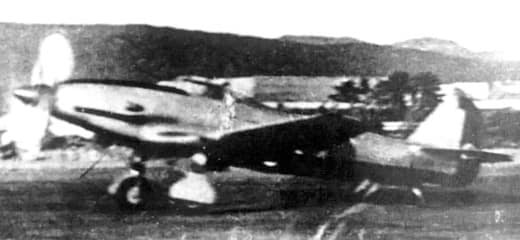
Japan’s Kawasaki Ki-64 tried to solve a basic problem of fighter design — how to get the power of two engines without the drag of two engines — with an answer of beautiful, doomed complexity. It hid one engine in the nose and a second one behind the cockpit.
The two engines drove a pair of contra-rotating propellers through a shared gearbox, giving the single-seat fighter the muscle of a twin while keeping the slim frontal area of a single. It was ingenious. It was also a maintenance nightmare, and only one was ever built.
Quick Facts
- Aircraft: Kawasaki Ki-64 (experimental heavy fighter)
- Engines: two Kawasaki Ha-40s in tandem, coupled as the Ha-201
- Power: roughly 2,350 hp driving contra-rotating propellers
- Cooling: evaporative radiators built into the wing surface
- First flight: December 1943 — one prototype built
- Fate: rear engine fire on the fifth flight; cancelled in 1944
Two Engines, One Nose
The layout was the clever part. One Ha-40 sat in the nose; the other sat behind the pilot, connected by a drive shaft running beneath the cockpit floor. Together they spun two three-bladed propellers turning in opposite directions, cancelling out the vicious torque that made powerful single-engine fighters a handful on takeoff.
Cooled by Its Own Wings
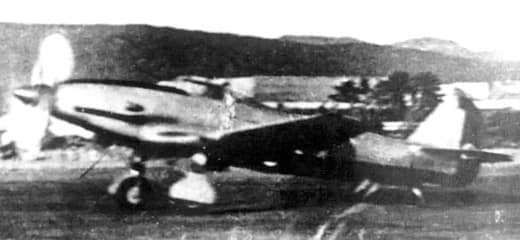
The second bold idea was the cooling system. Instead of a bulky radiator hanging in the airflow, the Ki-64 used the surface of its wings as an evaporative cooler, circulating engine coolant through the skin. It cut drag dramatically — but it was fragile, and a single hit in combat could have crippled it. On the fifth test flight the rear engine caught fire, forcing an emergency landing. The engines and airframe were separated for repair and never reunited, and the project died with the worsening war. The Ki-64 remains one of aviation’s most fascinating “what ifs.”
Sources: Old Machine Press; Japanese Aircraft of WWII references; Kawasaki historical records.
 English
0 Comments