
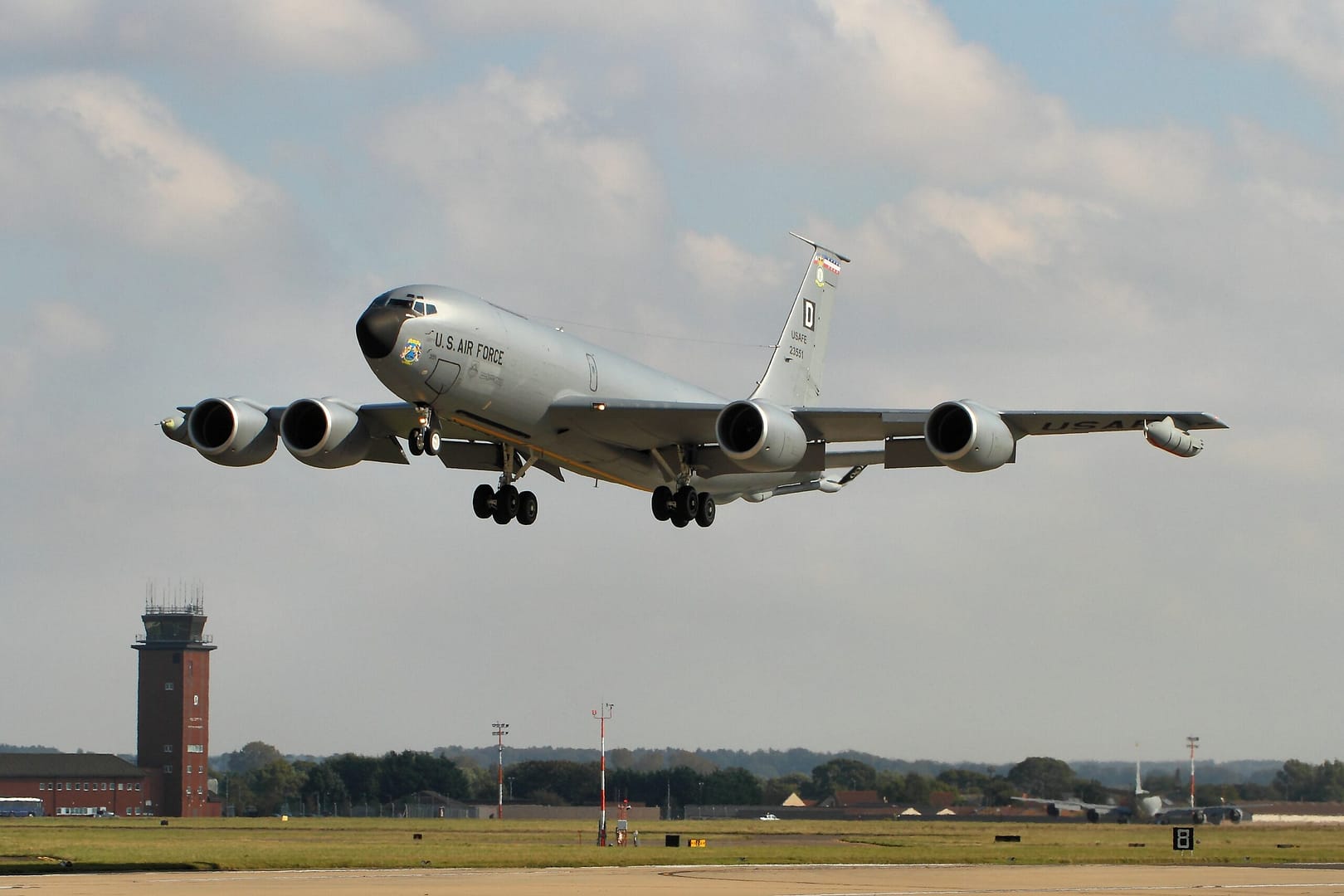
Plane spotters at RAF Mildenhall pulled out their long lenses last week and got a picture nobody at Air Mobility Command was hoping to see twice. A US Air Force KC-135R Stratotanker, peppered with what aviation analysts identified as shrapnel impacts down the fuselage and along the underside of one wing, was photographed on the parallel taxiway. It was not even the first: another patched-up Stratotanker had already transited Mildenhall in April. Same scars.
The tankers are flying home from Operation Epic Fury — the roughly six-week US air campaign against Iranian nuclear infrastructure that is now paused. And what their fuselages quietly show is something the Air Force has not yet wanted to say out loud: Iranian strikes hit aircraft that the public side of the war has so far been kept silent about.
Quick Facts
Where: RAF Mildenhall, Suffolk, UK
Aircraft: Boeing KC-135R Stratotanker (call signs not released)
Damage: Shrapnel impacts on fuselage and wing underside
Source of damage: Shrapnel from Iranian missile strikes during Operation Epic Fury (spring 2026)
Total US aircraft losses, Epic Fury: 40+ damaged or destroyed (TWZ tally)
A tanker is supposed to be invulnerable
That is not strictly true. But the doctrine of operational air war has always been that high-value air assets — tankers, AEW, ISR — operate inside a friendly umbrella, hundreds of miles back from the contested airspace, where the shooter fighters can reach them and the SAMs cannot. The visible damage to these KC-135s points to a different problem: Iran’s long-range missiles reached the tankers on the ground, at bases doctrine assumed were safely behind the lines.
Iranian air defences during Epic Fury included several systems the US had not seen in significant numbers in earlier engagements: Bavar-373 long-range SAMs, the upgraded Sayyad-4B interceptor, and the Khordad-15 mobile system. Several of these have advertised engagement ranges well over 200 km. A KC-135 with a refuelling boom out is, by any radar’s standards, a slow, predictable, very large target.
What the photos actually show
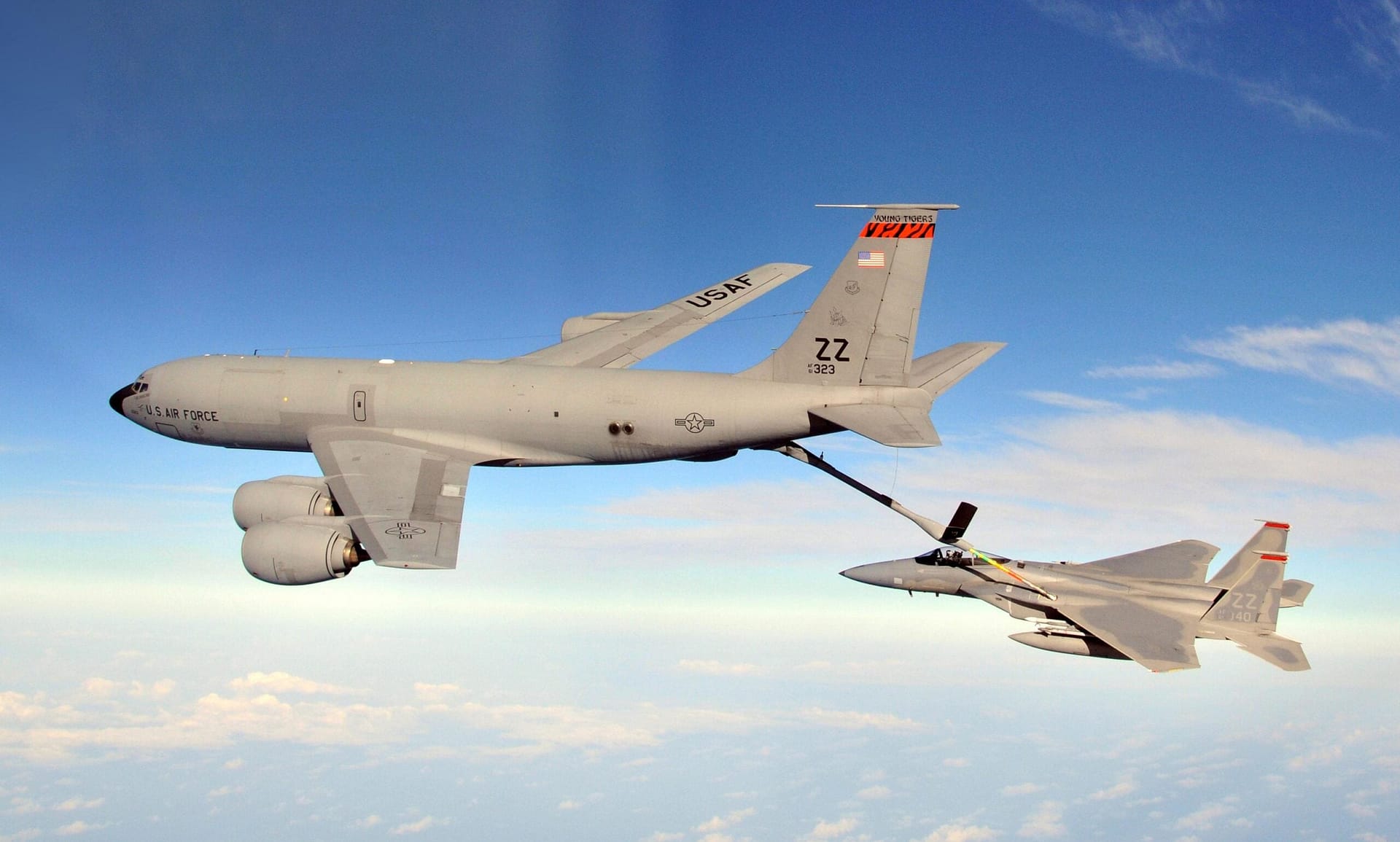
The latest set of images, taken by aviation photographer Andrew McKelvey and published by The War Zone, shows the jet — KC-135R 63-8028 of the Alaska Air National Guard’s 168th Wing — peppered with patched-over shrapnel holes across its tail, flaps and vertical stabiliser, and missing its refuelling boom entirely. The maintainers at Mildenhall — which is home to the 100th Air Refueling Wing, the USAF’s only permanent forward-based tanker wing in Europe — have been working through the airframes since they arrived.
The Air Force has not officially said where either jet was hit. The most likely explanation is the Iranian long-range missile strike on Prince Sultan Air Base in Saudi Arabia on 14 March, which reportedly damaged five tankers on the ground — though The War Zone notes flight-tracking data for 63-8028 muddies the picture, and the jet could have been hit somewhere else. Either way, the tankers were patched up in the field and flown home — which is, in itself, a quiet endorsement of the Stratotanker’s airframe robustness.
More than 40 aircraft, and counting
The War Zone’s running tally of known Epic Fury losses puts the figure at more than 40 American aircraft damaged or destroyed — among them dozens of MQ-9 Reapers, an E-3 Sentry destroyed on the ground, and two KC-135s involved in a fatal mid-air collision over Iraq in March. Battle damage that did not result in a write-off is a separate, much larger, less-publicised number.
The KC-135 fleet is 68 years old as a type. The youngest airframe in service was delivered in 1965. The Air Force is in the middle of replacing them with the KC-46A Pegasus, but the Pegasus has its own well-documented vision-system problems, and Epic Fury was fought overwhelmingly by Stratotankers. That those tankers are now coming back to England with scars on their wings is the quiet end-of-war report nobody in the Pentagon press room has called a briefing about.
Sources: The War Zone, US Air Force.


 English
0 Comments