
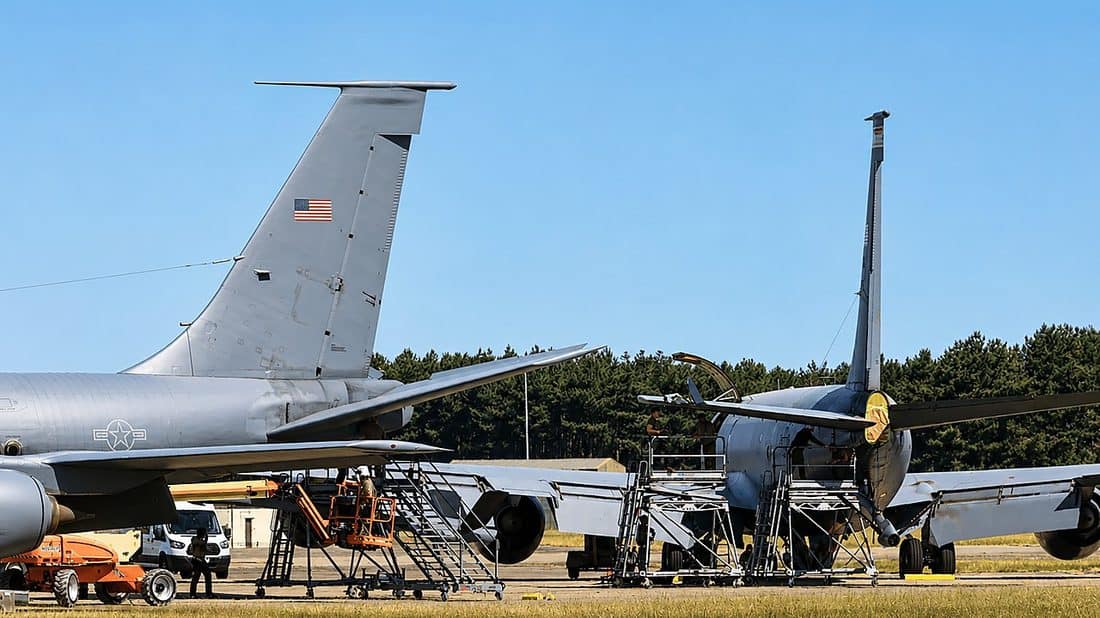
The U.S. Air Force tanker fleet flew through Iranian missile barrages and one-way drone attacks during Operation Epic Fury — and brought most of its battered KC-135s home. The latest two casualties at RAF Mildenhall, though, never left the ground. They were parked.
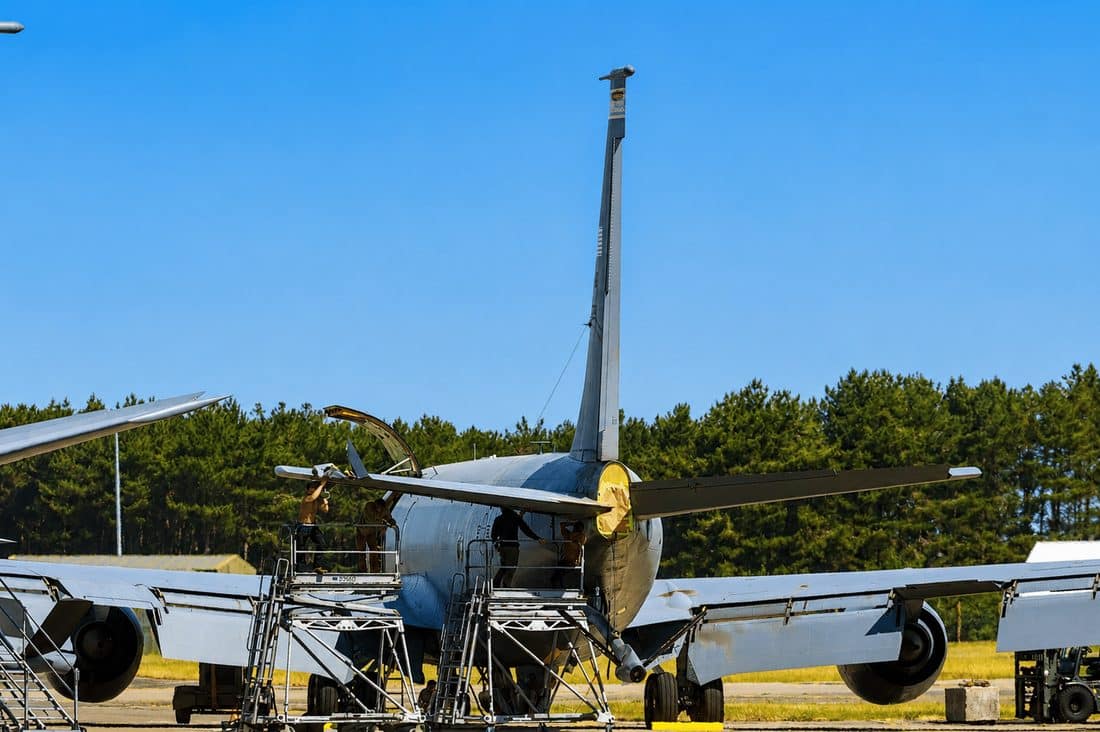
According to images taken by photographer Bob Archer and reported on June 3, a towing operation at the Suffolk base went wrong between May 28 and 29. While a tow vehicle backed KC-135R serial 59-1509 of the Tennessee Air National Guard’s 151st Air Refueling Squadron into a parking spot, its port-side horizontal stabilizer struck the starboard stabilizer of the adjacent aircraft — an unmarked KC-135R(T), serial 60-0362, of the 22nd Air Refueling Wing.
The result: visible tearing and deformation on both tails, two grounded tankers, and ramp-side repairs at a base that has spent the past weeks processing far more dramatic damage.
Quick Facts
- What: ground collision during a towing operation at RAF Mildenhall, UK
- When: between May 28 and 29, 2026
- Aircraft 1: KC-135R 59-1509, 151st ARS, Tennessee Air National Guard
- Aircraft 2: KC-135R(T) 60-0362, 22nd Air Refueling Wing (unmarked)
- Damage: torn and deformed horizontal stabilizers on both jets
- Status: ramp repairs began May 30; both aircraft still in place as of June 2
A Stabilizer Meets a Stabilizer
Towing accidents are among the least glamorous ways to damage an aircraft, and among the most common. A KC-135 is over 41 metres long with a wingspan nearly as wide, and manoeuvring one backwards into a tight parking spot leaves little margin. This time the geometry didn’t work out: the left tailplane of the Tennessee jet sliced into the right tailplane of its neighbour.
The photographs — taken from outside the base perimeter — show the torn skin on 59-1509’s stabilizer clearly enough to suggest both aircraft will need sheet-metal work before they fly again. Repairs were under way on the ramp by May 30, and as of June 2 neither jet had moved from its parking position.
A Fleet That Cannot Catch a Break
The timing gives this minor mishap an edge. The KC-135 force — still more than 350 strong and carrying the bulk of America’s aerial refueling mission alongside roughly a hundred newer KC-46s — has had a brutal few months. During Operation Epic Fury, the war with Iran, a Stratotanker was lost in a fatal mid-air incident over Iraq that killed six crew members. An unspecified number of additional KC-135s, and at least one KC-46, were damaged in Iranian missile and one-way drone attacks on Prince Sultan Air Base and other installations across the region.
Mildenhall has been the stage for the aftermath. In late May, a KC-135 covered in battle-damage-repair patches — rough metal plates riveted over shrapnel holes — transited the base on its way home from the Middle East, a flying testament to what the fleet absorbed and survived.
Which is what makes the towing accident sting. Aircraft that operated through missile barrages over the Gulf ended up with torn tails from a tug and a misjudged parking spot in Suffolk. No enemy action required — just physics, fatigue and very large aeroplanes in close proximity.
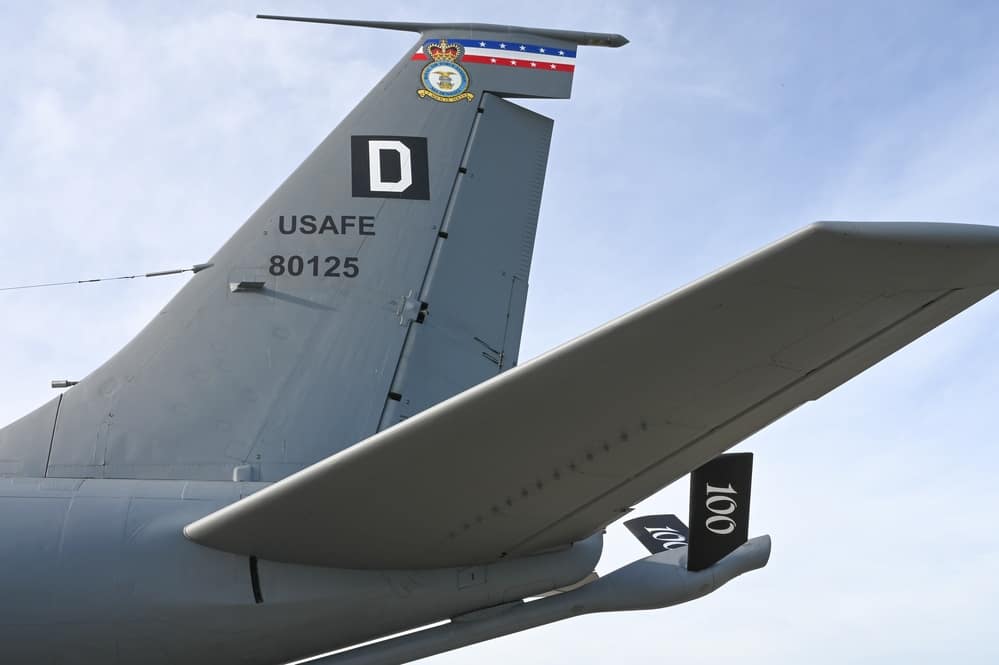
Why Every Tanker Counts
Sixty-plus years after entering service, the KC-135 remains the connective tissue of American air power — nothing crosses an ocean, holds a combat air patrol or surges to a crisis without it. With the fleet stretched by post-war repairs, sustained operational tempo and a slow KC-46 ramp-up, even two tankers sidelined for days of stabilizer repairs is capacity the Air Force would rather not lose.
Both jets should be flying again soon; tailplane skin damage is well within the routine repair playbook. But the episode is a reminder that for a fleet this old and this busy, the threats aren’t only at the sharp end of the map. Sometimes they’re in the next parking spot.
Sources: reporting and images by Bob Archer; The War Zone; Air Force fact sheets
 English
0 Comments