

KLM Royal Dutch Airlines is flying its most ambitious ultra-long-haul schedule in years: ten routes from Amsterdam Schiphol with block times of around 14 hours or more in the June 2026 to March 2027 season. The longest of them — Manila back to Amsterdam via Taipei — is scheduled at up to 18 hours 35 minutes gate-to-gate, the longest service in KLM’s current timetable.
The list, drawn from KLM’s schedule submissions to OAG, is not about distance alone. It reflects the aircraft KLM has available, the markets its Air France-KLM Group parent wants covered, and the way the airline’s competitive position in the East shifted after years of closed Russian airspace.
Quick Facts
- Airline: KLM Royal Dutch Airlines
- Routes counted: KLM’s 10 longest scheduled services, nonstop and one-stop combined
- Hub: Amsterdam Schiphol
- Longest: Manila ↔ AMS via Taipei, up to 18h 35m block time
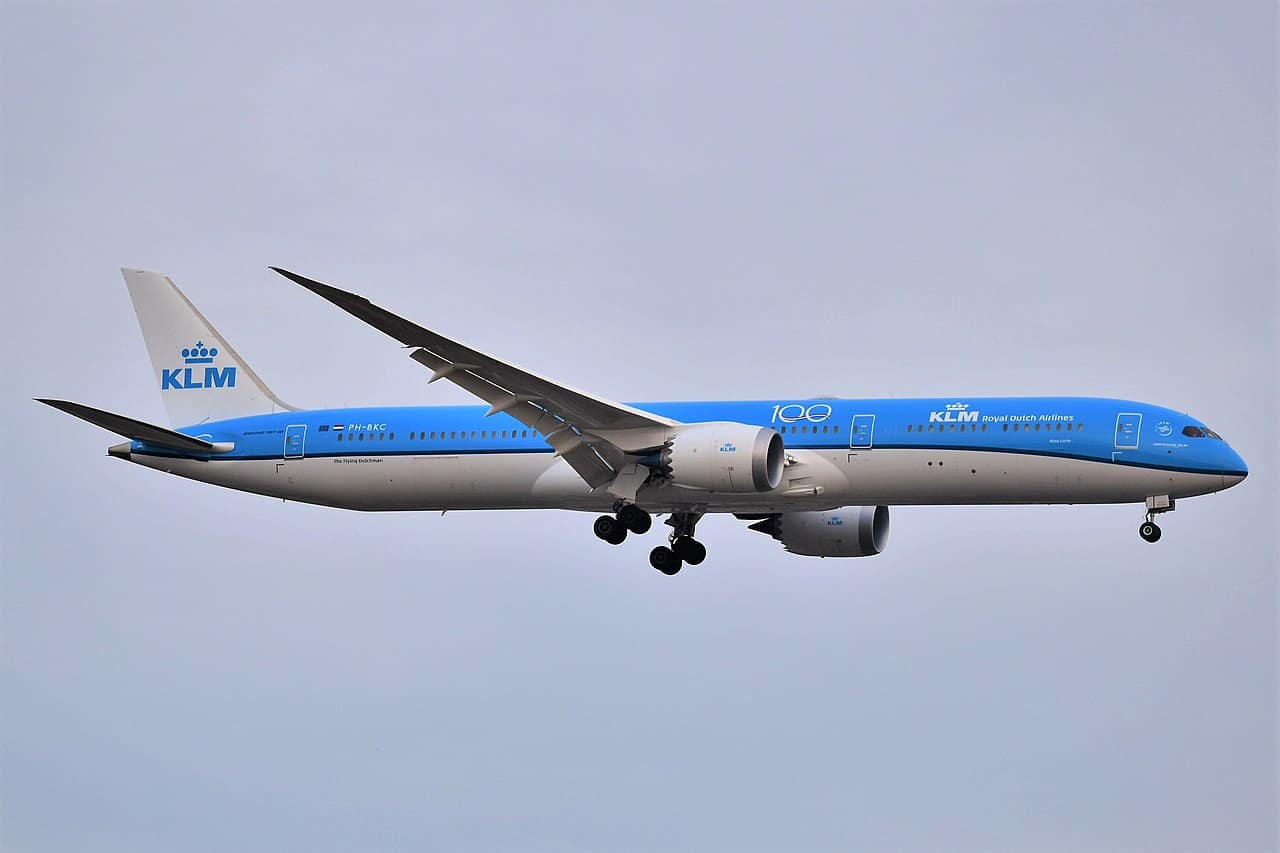
- Aircraft used: Boeing 777-200ER, 777-300ER, 787-9 and 787-10 Dreamliner
- Season: June 2026 – March 2027 schedules, per OAG data
The headline number: 18 hours, 35 minutes
Manila is the route that pulls the headlines. The maximum block time of 18 hours 35 minutes — measured chocks-off to chocks-on, including taxi time at both ends — covers the one-stop routing from Manila back to Amsterdam via Taipei, where fifth-freedom rights are not available. KLM serves the route four times a week with the 288-seat Boeing 777-200ER and the 275-seat 787-9.
Second place is a classic. Bali back to Amsterdam via Singapore is scheduled at up to 17 hours 55 minutes, flown daily with the 381-seat 777-300ER — KLM’s highest-capacity aircraft — with fifth-freedom rights available on the Singapore–Bali leg. KLM has served Bali since 2009, and Amsterdam was Europe’s second-largest local market to the island last year with some 173,000 round-trip passengers.
The other nine
The full list, by maximum scheduled block time:
- 1. Manila ↔ AMS via Taipei — up to 18h 35m (4x weekly, 777-200ER/787-9)
- 2. Bali ↔ AMS via Singapore — up to 17h 55m (daily, 777-300ER)
- 3. AMS ↔ Santiago via Buenos Aires — up to 17h 50m (daily, 777-200ER)
- 4. Jakarta ↔ AMS via Kuala Lumpur — up to 16h 55m (5-6x weekly, 787-9)
- 5. Shanghai Pudong ↔ AMS — up to 14h 20m (777-200ER/777-300ER/787-9)
- 6. Osaka ↔ AMS — up to 14h 15m (3x weekly, 787-9)
- 7. Seoul ↔ AMS — up to 14h 10m (up to daily, 787-9)
- 8. AMS ↔ Guayaquil via Quito — up to 14h 10m (up to 6x weekly, 787-9)
- 9. Tokyo Narita ↔ AMS — up to 14h 05m (daily, 777-200ER/777-300ER/787-9)
- 10. AMS ↔ Cartagena via Bogotá — up to 14h 00m (daily, 787-9/787-10)
Why now
Three things shape the list. First, fleet: KLM’s long-haul flying rests on the 777-200ER, 777-300ER, 787-9 and 787-10, and the widebodies are worked hard — long-haul still makes up only around 16 percent of KLM’s services, a smaller share than at many European rivals. Second, geography: with Russian airspace closed to European carriers, eastbound routes such as Shanghai run far longer than they used to. Third, history: the one-stop services to Manila, Bali and Jakarta are the modern descendants of the Netherlands’ oldest intercontinental air links.
For European travellers, the practical effect is that Amsterdam Schiphol remains one of the densest long-haul hubs in Europe: KLM plans to serve 169 destinations between June 2026 and March 2027. And the league table is a moving target — block times shift with winds, seasons and airspace politics.
For the rest of the industry, the trend is clear: ultra-long-haul flying is back in fashion across Europe, and KLM is squeezing every hour it can out of its widebody fleet.
Sources: Simple Flying (KLM schedule data via OAG), KLM.



 English
0 Comments