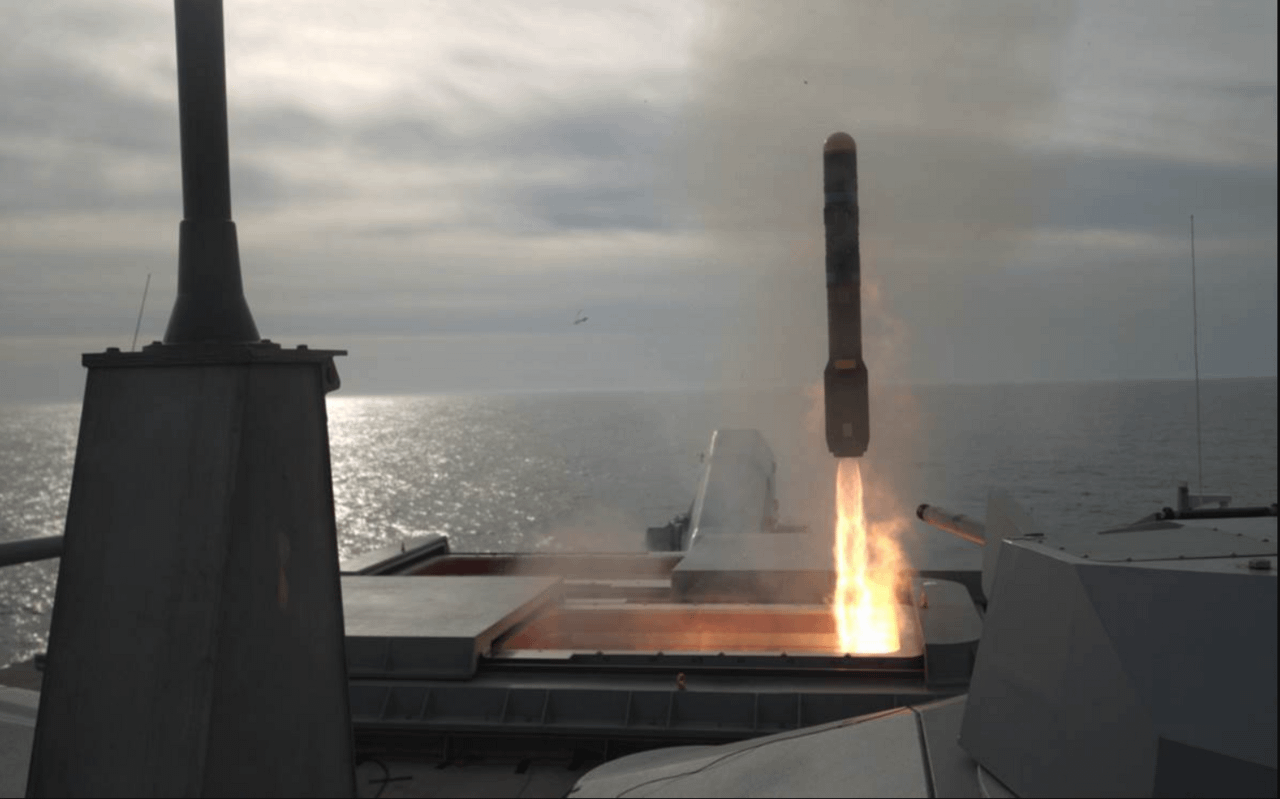
Six Months From Sketch to Strike
The speed of development is the first thing that stands out. Most defense programs measure timelines in years, often decades. The F-35 took 23 years from contract award to full-rate production. GRIZZLY went from concept to live fire in half a year, funded entirely through internal Lockheed Martin investment rather than a government contract. “This is an example of how our team is leading innovation for our customers’ needs,” said Randy Crites, Vice President of Lockheed Martin Advanced Programs. “Our first live fire tests come just six months after the program began, demonstrating our focus on quickly delivering a mobile and versatile launcher capability to defeat evolving threats.” The system is built on the proven M299 weapon and launcher architecture — the same platform that has been firing Hellfires from Apache helicopters and Predator drones for decades. By using existing, battle-tested components and commercial off-the-shelf materials, Lockheed bypassed the long development cycles that plague clean-sheet military programs.The Container as Camouflage
The genius of GRIZZLY is not the missile. It is the box. There are approximately 17 million shipping containers circulating globally at any given time. They move by ship, rail, and truck. They sit in ports, on bases, in parking lots. They are so ubiquitous that they are effectively invisible — the background noise of modern logistics. Now imagine that any one of them might contain a missile launcher. The container does not need to be opened to fire. The launcher deploys vertically through the roof, launches its Hellfire or JAGM missile, and the container can be resealed and moved. A truck driver who has never touched a weapon in his life can deliver it. A forklift operator can position it. The actual firing can be commanded remotely. “GRIZZLY provides the customer versatility and flexibility for their needs, as well as an element of mobility and discreteness for offensive and defensive fires,” Crites said.Distributed Warfare in a Box
The strategic logic behind GRIZZLY reflects a Pentagon obsession of the last five years: distributed operations. The era of concentrating expensive assets on a handful of large bases is ending. Iran’s missile and drone attacks on Al Udeid, the FPV drone strike on a Black Hawk at Victory Base Complex, and the ongoing Houthi campaign against Red Sea shipping have all demonstrated that fixed, known positions are increasingly untenable. The answer is to spread out. Hide. Move constantly. And put firepower in places the enemy does not expect. A containerized Hellfire launcher can be deployed on a commercial truck at a highway rest stop. It can sit on a dock among thousands of identical containers. It can be pre-positioned in a warehouse, on an island, on a rooftop. It is sensor-agnostic and command-and-control-agnostic — it can receive targeting data from any source and be fired by any service. This is not a hypothetical capability. It is a tested weapon system that Lockheed is actively pitching to the U.S. military and likely to allied nations. The era of hiding in plain sight has a new instrument — and it fits on the back of any truck on any road in the world.Sources: Lockheed Martin, The War Zone“The supreme art of war is to subdue the enemy without fighting.”
— Sun Tzu, The Art of War
 English
0 Comments