
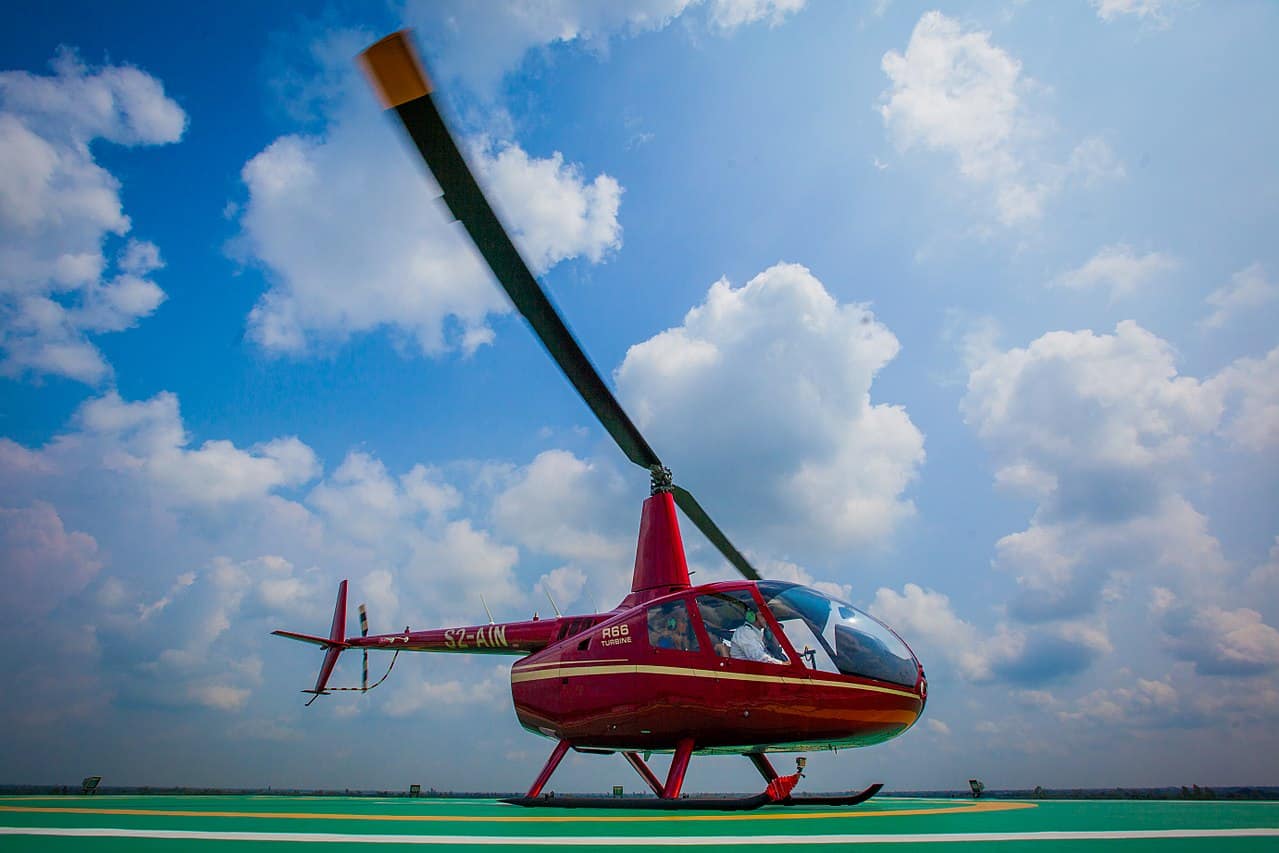
The U.S. Marine Corps just made a quiet but significant decision. For its Medium Aerial Resupply Vehicle – Expeditionary Logistics (MARV-EL) programme — the resupply helicopter that will fly Marines and pallets to forward island positions in a Pacific war — it picked an aircraft that is already in mass production, already certified, and almost laughable in its civility: the Robinson R66 — with a parallel award going to a Bell 505-based rival team led by Near Earth Autonomy.
The catch is that this R66 will be one of the first pilot-optional military helicopters, with autonomy built in by Sikorsky. And it costs about a fifth of what a clean-sheet military design would have run.
Quick Facts
- Programme: USMC Medium Aerial Resupply Vehicle – Expeditionary Logistics (MARV-EL), Increment 2
- Winning bid: Sikorsky + Robinson Unmanned (R66 Turbinetruck); a Bell 505 team was also funded
- Base aircraft: Robinson R66 Turbine — commercial 5-seat utility helicopter
- Contract value: $15.5 million for initial development and demonstration
- Autonomy stack: Sikorsky MATRIX Autonomy Technology (proven on Black Hawk)
- Requirement: 1,300–2,500 lb payload to a 100-nautical-mile combat radius
Why a civilian Robinson, of all things
Most defence contracts for new helicopters go to Bell or Sikorsky for a clean-sheet design. The bill runs to billions. The aircraft arrives a decade late. The Aerial Logistics Connector contract did the opposite: it asked for an aircraft that already exists, already has a supply chain, and can be modified for pilot-optional flight without a fresh airworthiness certification fight.
The Robinson R66 is, in those terms, perfect. It is one of the most widely flown light turbine helicopters in the world. Robinson Helicopter Company in Torrance, California has delivered more than a thousand of them since 2010. The flight envelope is well-characterised. Spare parts are everywhere. And, crucially, it is already type-certified by the FAA, which gives Sikorsky a paperwork shortcut they would never have on a brand-new airframe.
What Sikorsky brings is twenty years of MATRIX Autonomy Technology development. MATRIX is the same software stack that flew a UH-60 Black Hawk fully autonomously in 2022, including obstacle avoidance, route planning and contested-environment navigation. Putting MATRIX on an R66 is exactly the kind of incremental retrofit DoD has stopped asking for new airframes to deliver.
What “pilot-optional” actually means here
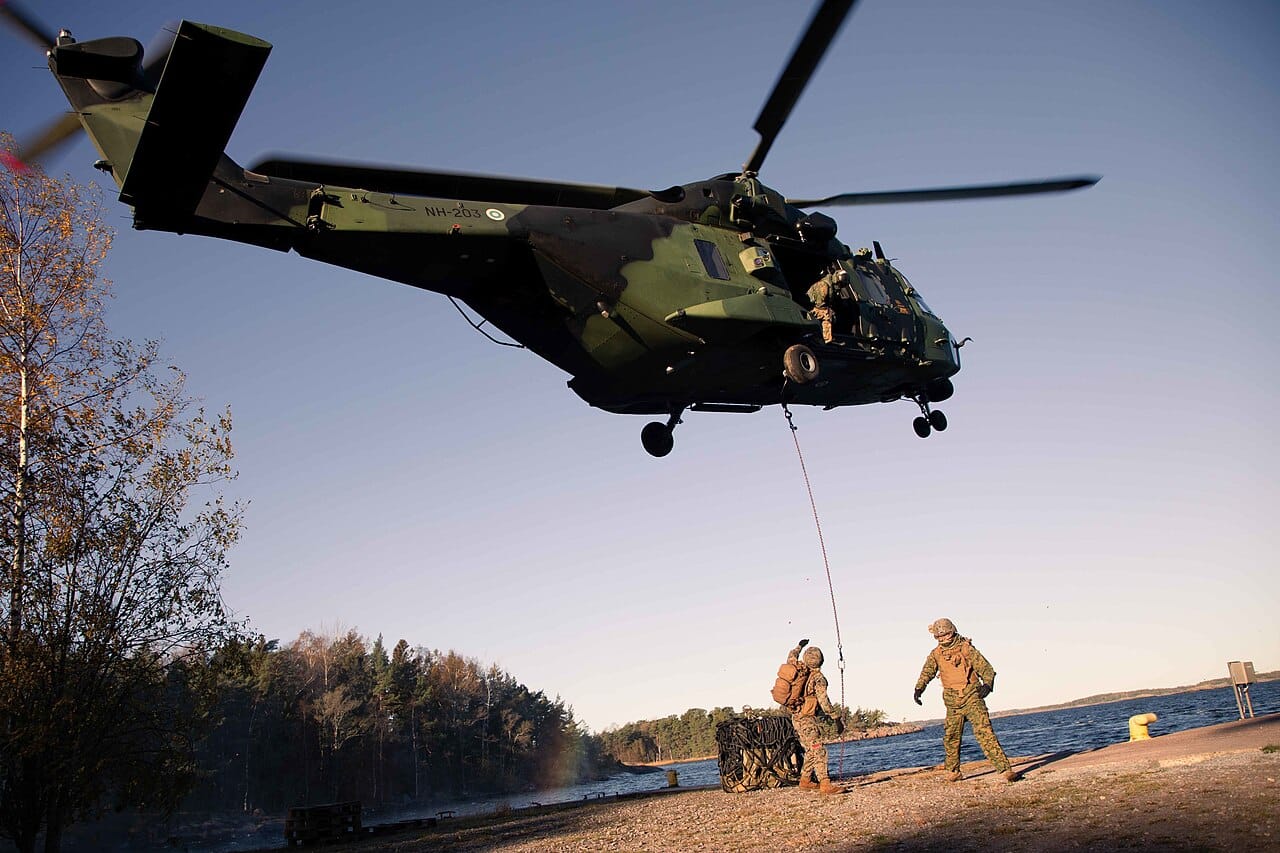
Marines won’t fly the R66 ALC every day with no one in the cockpit. The pilot-optional concept is about giving the operator the choice: fly it manned in contested environments where human judgment matters, fly it uncrewed in routine resupply runs where the risk-to-pilot ratio doesn’t justify the seat.
The requirement calls for a payload of 1,300–2,500 lb (590–1,130 kg) carried to a combat radius of 100 nautical miles. That is not a Black Hawk — it is a runner. But the Indo-Pacific scenarios the Marine Corps has been planning for are short hops between contested islands, not the long-haul missions a CH-53K or Osprey is built for. MARV-EL fills the gap between an FPV drone and a heavy assault helicopter.
Pacific Marines test in 2027
The development effort runs over roughly the next three years, progressing from early flight demonstrations to full mission capability, with the Indo-Pacific as the obvious proving ground. Funding for full-rate production has not yet been authorised, but the Marines have been clear that if the demonstration delivers, the R66 fleet could scale well beyond the demonstrators.
Two things to watch. First: whether MATRIX-on-R66 actually performs in the maritime, EW-saturated Pacific environment, where GPS is jammed and radio links are unreliable. Second: whether the rest of the U.S. military borrows the “buy a commercial aircraft, bolt autonomy on” model. If Marines can field a pilot-optional helicopter for $15 million per development cycle, the Army’s decade-long Future Vertical Lift cost curve will start to look very awkward.
Sources: Alert 5, Sikorsky press release, Defense News, Aviation Week.



 English
0 Comments