
The Netherlands has become the first European nation to formally invest in the United States Air Force’s revolutionary Collaborative Combat Aircraft (CCA) programme, signing an agreement on April 23, 2026, to fund the production of two CCA prototypes that will pioneer the integration of autonomous combat drones alongside manned fighter jets. The deal marks a watershed moment for transatlantic defence cooperation and signals Europe’s growing recognition that the future of air combat will be fundamentally reshaped by artificial intelligence and unmanned teaming concepts.
Quick Facts
- Agreement signed: April 23, 2026
- Partner: The Netherlands — first European CCA participant
- Prototypes funded: 2 aircraft
- Types: YFQ-42A Dark Merlin (General Atomics) and YFQ-44A Fury (Anduril)
- Primary role: Autonomous drone teaming with F-35 Lightning II
- Delivery location: Experimental Operations Unit, Nellis AFB, Nevada
- USAF total CCA goal: 1,000 aircraft
- Initial procurement budget sought: Nearly $1 billion

Dark Merlin and Fury: Europe Meets American Drone Innovation
Under the terms of the agreement, the Netherlands will fund the construction of two distinct CCA prototypes from competing American defence contractors. The first is the YFQ-42A Dark Merlin, designed and built by General Atomics Aeronautical Systems — a company already well known across European air forces for its MQ-9 Reaper family of remotely piloted aircraft. The Dark Merlin represents General Atomics’ leap from traditional remotely piloted systems into the realm of autonomous combat platforms capable of independent tactical decision-making alongside manned wingmen.
The second prototype is the YFQ-44A Fury, developed by Anduril Industries, one of the most prominent new entrants in the American defence industrial base. Anduril, founded by Palmer Luckey, has made a name for itself by applying Silicon Valley technology development practices to defence problems, and the Fury represents one of its most ambitious projects to date. The aircraft is designed from the ground up for high-speed, high-agility autonomous operations in contested airspace, leveraging Anduril’s Lattice software platform for real-time autonomous decision-making.
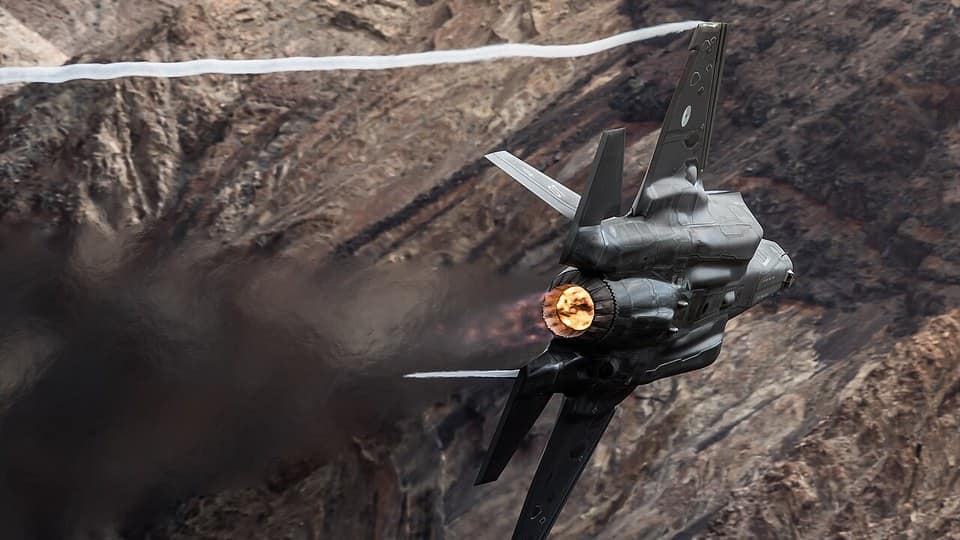
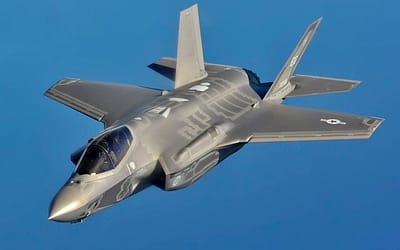
Both prototypes will be delivered to the Experimental Operations Unit at Nellis Air Force Base in Nevada, where they will undergo a rigorous series of flight tests designed to validate the concept of manned-unmanned teaming with the F-35A Lightning II. The Netherlands operates a growing fleet of F-35As, making it a natural partner for the CCA programme and providing a European perspective on how these systems might integrate into NATO operations.

A Thousand Loyal Wingmen: The USAF’s Grand Vision
The Dutch investment arrives at a critical moment for the CCA programme. The United States Air Force has articulated a vision of fielding approximately 1,000 Collaborative Combat Aircraft as part of its Next Generation Air Dominance (NGAD) ecosystem, a sweeping transformation of American air power that pairs advanced manned fighters with swarms of autonomous drones capable of performing a wide range of missions — from electronic warfare and suppression of enemy air defences to reconnaissance and even kinetic strikes.

To fund the initial phase of this ambitious programme, the Air Force has sought nearly one billion dollars in procurement funding, a figure that underscores both the scale of the investment and the urgency with which the Pentagon views the autonomous combat aviation revolution. In an era of great power competition, the ability to multiply the combat mass of manned fighter squadrons with affordable, attritable autonomous wingmen is seen as potentially decisive.
The CCA concept offers a fundamental shift in the economics of air power. Where a single F-35A costs approximately 80 million dollars, a CCA is expected to cost a fraction of that — potentially in the range of 10 to 25 million dollars per unit. This means that for the cost of a small number of additional manned fighters, an air force can field a significantly larger number of combat-capable platforms, each equipped with sensors, weapons, and the artificial intelligence to operate semi-independently in complex threat environments.
European Implications and the Race for Autonomous Air Power
The Netherlands’ decision to invest in the American CCA programme carries significant implications for the broader European defence landscape. Several European nations, including the United Kingdom, France, and Germany, have been developing their own autonomous combat aircraft concepts, but none have progressed as far or as rapidly as the American programme. By partnering with the USAF, the Netherlands gains early access to the most advanced autonomous combat aviation technology in the world, positioning the Royal Netherlands Air Force as a potential bridge between American innovation and European operational requirements.
The move also sends a clear signal about the future of NATO interoperability. As the alliance grapples with the implications of autonomous warfare, having a European partner deeply integrated into the CCA development process ensures that allied perspectives are represented from the earliest stages of design and testing. This could prove invaluable as NATO develops common standards and protocols for manned-unmanned teaming across allied air forces.
For the European defence industry, the Dutch decision represents both a challenge and an opportunity. While some may view it as a vote of no confidence in European autonomous combat aircraft programmes, others argue that it provides a benchmark against which European efforts can be measured and a potential pathway for technology transfer that could benefit the continent’s own drone development ambitions.
As the first CCA prototypes take shape in the factories of General Atomics and Anduril, the Netherlands’ early bet on America’s autonomous combat future may well define the trajectory of European air power for a generation. The age of the loyal wingman has arrived, and the Dutch are determined to be in the cockpit — even if that cockpit is now a server room.
Sources: U.S. Department of Defense, Netherlands Ministry of Defence, General Atomics, Anduril Industries, USAF budget documents.
 English
0 Comments