
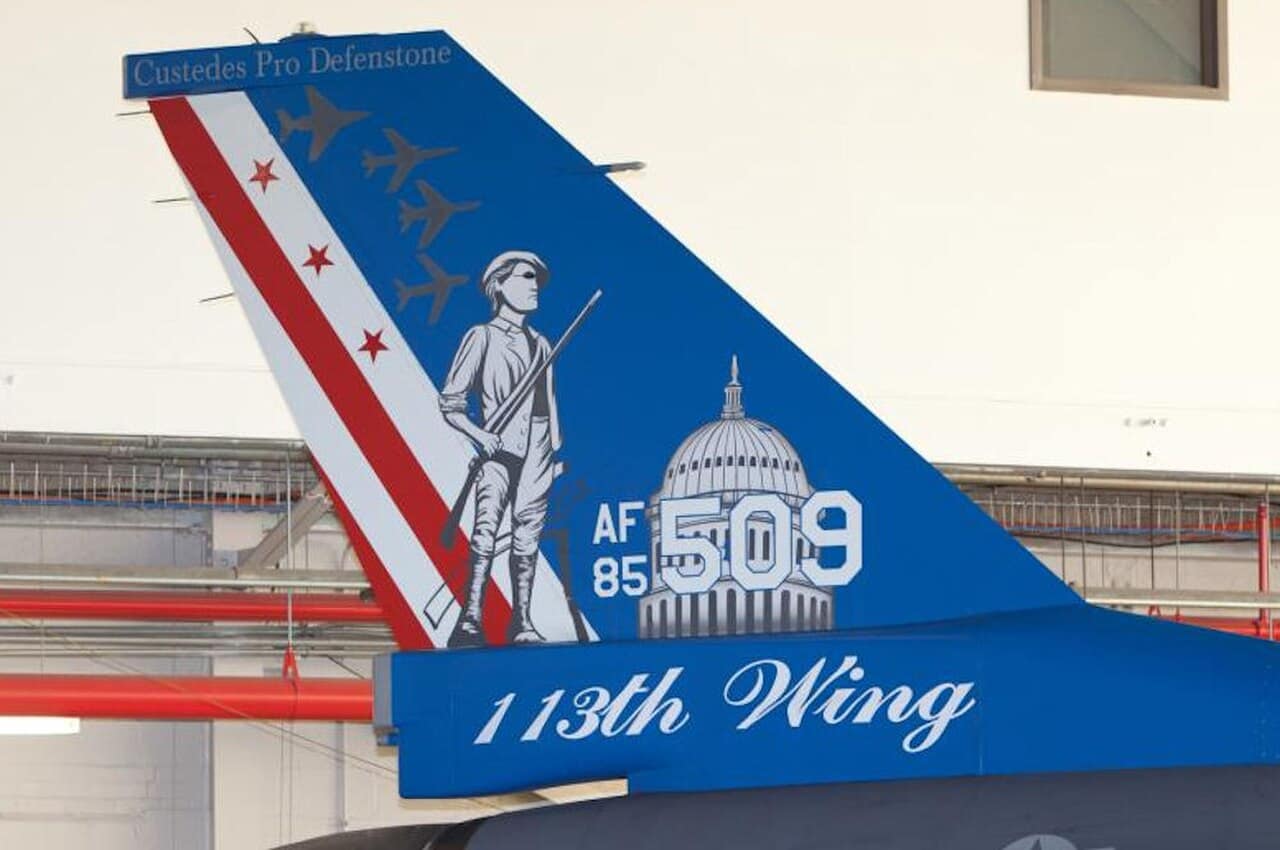
On 12 February 2023, a week after a Chinese spy balloon had been shot down over the Atlantic, two days after an object had been downed over Alaska, and one day after a similar object had been destroyed over the Yukon, a third unidentified aerial phenomenon was tracked at 20,000 feet over Lake Huron. A U.S. Air National Guard F-16C of the Duluth-based 148th Fighter Wing, operating out of Madison, Wisconsin, locked the object up on its targeting pod and fired an AIM-9X Sidewinder. The first missile missed and fell into the lake; a second AIM-9X destroyed the object. The wreckage sank, and the official search was suspended within days — though documents released in 2024 revealed that debris was later recovered and traced to a company selling weather-monitoring equipment.
For three years, the Pentagon refused to release any footage of the engagement. The object was variously described in official briefings as “octagonal,” “metallic,” and “unable to be definitively characterised.” On 22 May 2026, under the Presidential Unsealing and Reporting System for UAP Encounters (PURSUE) Act, the Pentagon finally declassified the 46-second infrared cockpit-tape recording. What it shows is — depending on whom you ask — either confirmation of the longest-held UFO theory in popular culture, or the most expensive way to pop a balloon in American military history.
Quick Facts
| Event date | 12 February 2023, approximately 14:42 EST |
| Location | Over Lake Huron, near Drummond Island, Michigan |
| Engaging aircraft | F-16C, 148th Fighter Wing, Minnesota ANG (callsign redacted) |
| Weapon | AIM-9X Sidewinder, infrared-homing air-to-air missile |
| Target altitude | Approximately 20,000 ft |
| Footage release | 22 May 2026, via PURSUE Act declassification |
| Official assessment | Most likely a high-altitude balloon (per AARO former director Sean Kirkpatrick) |
The 46-second tape
The declassified footage is grainy, monochrome infrared, and surprisingly short. Eleven seconds in, the F-16’s targeting pod focuses on an area of thermal contrast in the centre of the frame — a small bright object against a dark sky. The shape is hard to determine; it appears roughly oval but the pod is tracking from an oblique angle and the resolution is poor. At the twenty-second mark, a second bright contrast enters the frame from the lower-right and converges on the first object. That is the AIM-9X.
What follows is, in the words of the Pentagon’s own declassification notes, “a high-energy kinetic interaction” — the missile and the object meet, and the original target fragments outwards in a radial spray that lasts about 1.5 seconds. The fragments cool rapidly on the infrared sensor, indicating low residual thermal mass — consistent with mylar balloon material, paper, foil, or thin plastic.
“Most likely a balloon”
Dr Sean Kirkpatrick, the former head of the Pentagon’s All-domain Anomaly Resolution Office (AARO), has consistently said in public talks since 2024 that the three objects shot down between 10 and 12 February 2023 — over Alaska, the Yukon, and Lake Huron — were almost certainly all balloons. His view is based on the radar signatures (small, slow, no detectable propulsion), the altitude profile (drift consistent with high-altitude wind currents), and the post-impact thermal signature now visible in the declassified footage.
This explanation has not satisfied the UAP-disclosure community, which points to two things: first, the eyewitness reports from the F-16 pilots themselves, who described the Lake Huron object as having an “octagonal shape with strings attached” — a description that does not naturally fit a conventional weather or research balloon; and second, the fact that the object was tracked by NORAD radar systems for several hours before interception and apparently changed altitude in a manner that confused the controllers.
A $400,000 missile, a $200 balloon
The financial asymmetry is one of the more uncomfortable aspects of the engagement. An AIM-9X Sidewinder costs the US government approximately $400,000 per missile, before delivery costs and life-cycle maintenance. A high-altitude weather balloon with a small instrument package costs, at most, a few hundred dollars to make. The Lake Huron engagement traded $400,000 of guided missile for, almost certainly, a piece of mylar foil and a transmitter. The first Sidewinder fired at the Lake Huron object actually missed and fell harmlessly into the lake — that was another $400,000. A second AIM-9X was required to complete the engagement.
The political context of the moment — days after the Chinese spy balloon flap, with the US public watching very closely, and three more unidentified objects appearing in less than 72 hours — explains why standing orders for the North American Aerospace Defense Command were to engage anything that could not be positively identified. The cost arithmetic was, in retrospect, not the dominant concern. The political need to demonstrate that the US could see and engage anything overflying its airspace, after the embarrassment of the Chinese balloon, was.
What the PURSUE Act actually does
The Presidential Unsealing and Reporting System for UAP Encounters was passed in 2024 and signed by President Trump in early 2025. It requires the Department of Defense to declassify, within 24 months of any UAP intercept event, the cockpit footage, radar tracks, and pilot debrief documentation associated with the incident — unless an active national security exemption is granted by the Secretary of Defense. The Lake Huron footage was the second batch of material released under the act; the first batch, in November 2025, included three navy F/A-18 incidents over the Pacific.
More batches are expected. The PURSUE office at the Pentagon has acknowledged that approximately forty individual UAP intercepts dating back to 2004 are currently being processed for declassification. Some, including the famous 2004 Tic Tac engagement off the USS Nimitz, have already been partially declassified through earlier non-statutory releases. The remainder — including the Lake Huron Sidewinder — are now law-mandated to follow.
The newly declassified Pentagon footage of the F-16 engagement over Lake Huron — the full 46-second targeting-pod recording, made public for the first time on 22 May 2026.
Sources: TWZ; The Aviationist; FOX 2 Detroit; The Defense News; Hollywood Reporter; AARO public statements (Kirkpatrick); PURSUE Act declassification documents.


 English
0 Comments