
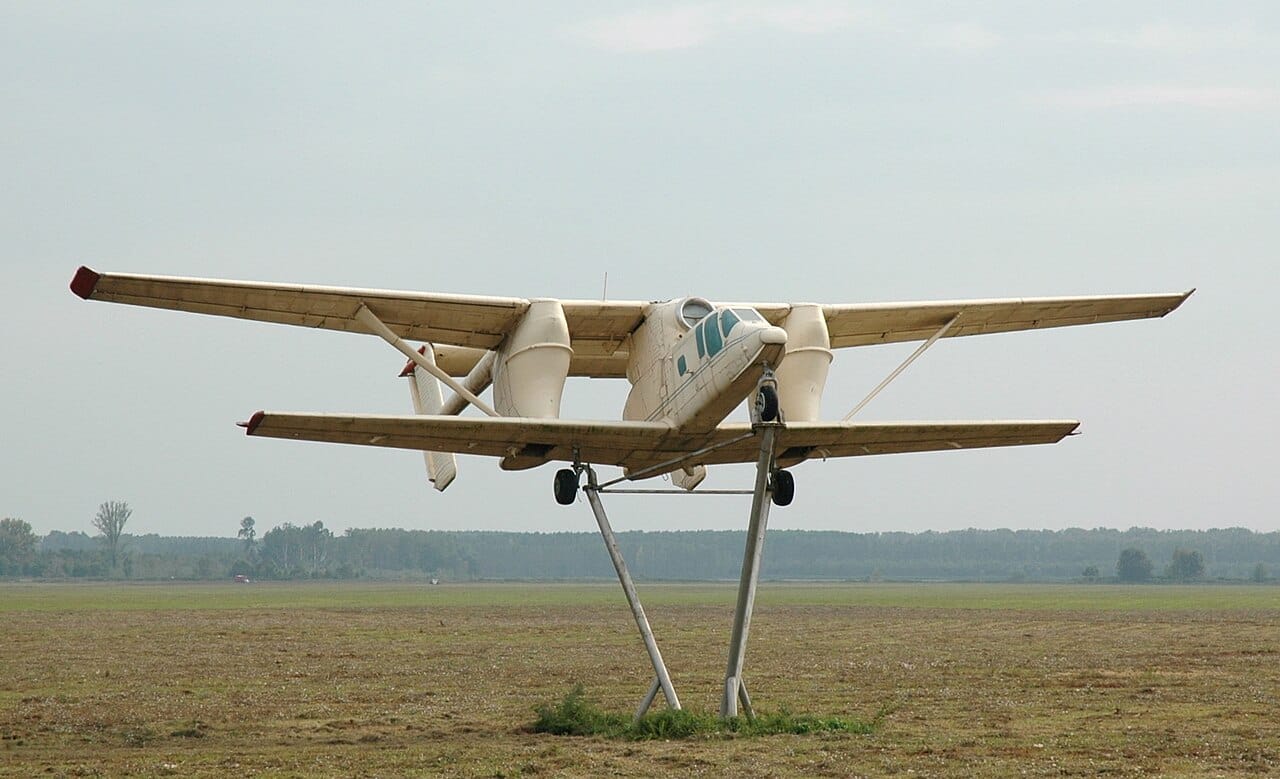
In 1973, a Polish state-owned aircraft factory rolled out one of the strangest production aircraft ever built. Two wings, stacked biplane-style. A 3,300-pound-thrust turbofan on the back. Two enormous pesticide tanks slung between the wings like a chemical airliner’s underwing fuel pylons. A double-tail boom. A control surface arrangement that defied easy explanation. And in the cockpit, a single pilot wondering — quite possibly out loud — whether his career had taken a wrong turn somewhere.
The aircraft was the PZL M-15. Its name in factory documentation was simply “M-15.” The pilots who flew it called it the Belphegor — after the demon of laziness and sloth from medieval Christian demonology. They meant it as an insult. The aircraft was loud, slow, dangerous, expensive, and uniquely unsuited to the agricultural mission it was built for. And yet — somehow — Soviet planners ordered 175 of them and put them into production.
Quick Facts
Aircraft: PZL M-15 Belphegor
Configuration: Single-engine, single-pilot, jet-powered, twin-tail-boom biplane agricultural aircraft
Engine: Ivchenko AI-25 turbofan, 14.7 kN (3,300 lbf) (the same engine used on the L-39 Albatros and Yak-40 airliner)
First flight: 20 May 1973
Designer: WSK PZL-Mielec, Poland (with Soviet design bureau input)
Total built: 175 aircraft, including prototypes
Pesticide capacity: 2,200 kg in two underwing tanks
Cruise speed: 200 km/h maximum, with a normal working speed of 140–165 km/h — slower than the biplane crop duster it was meant to replace
In service: Soviet Union (Aeroflot agricultural division)
Why it failed: Wrong engine choice, wrong configuration, wrong economics — produced one aircraft for every 25 the older An-2 biplane it was meant to replace did better
Holds the record for: Only jet-powered biplane ever to enter mass production
Why the Soviet Union wanted a jet crop duster
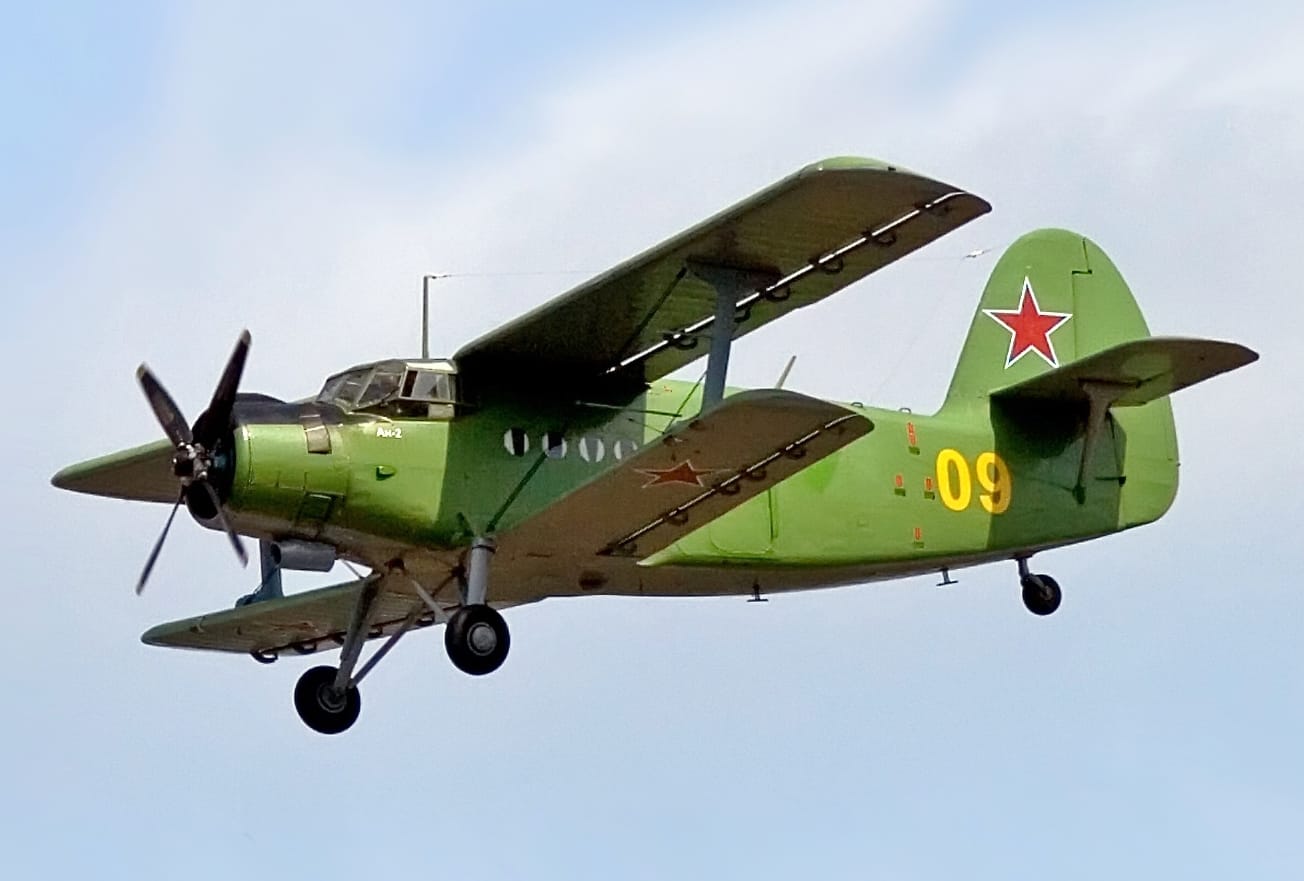
To understand the PZL M-15, you have to understand the Antonov An-2. The An-2 — affectionately nicknamed the Kukuruznik (“corn-duster”) — was an enormous single-engine biplane the Soviet Union and its satellites had been mass-producing since 1947. It was an extraordinary aircraft: it could carry 12 passengers or a tonne of cargo, take off from a 200-metre dirt strip, land at 50 km/h, and operate in temperatures from -50°C Siberian winter to +50°C Central Asian summer. More than 18,000 An-2s would eventually be built. The Soviet agricultural fleet alone had several thousand.
The problem was that the An-2 was a biplane with a piston engine, and the Soviet aviation industry of the 1970s was supposed to be modernising. The strategic decision was made — at high political level — that the An-2’s agricultural successor would be a jet. The reasoning sounded plausible on paper: a jet would cruise faster, climb higher, cover more fields per day, carry a heavier pesticide load, and demonstrate the Soviet bloc’s industrial sophistication to the world.
Why it became a biplane
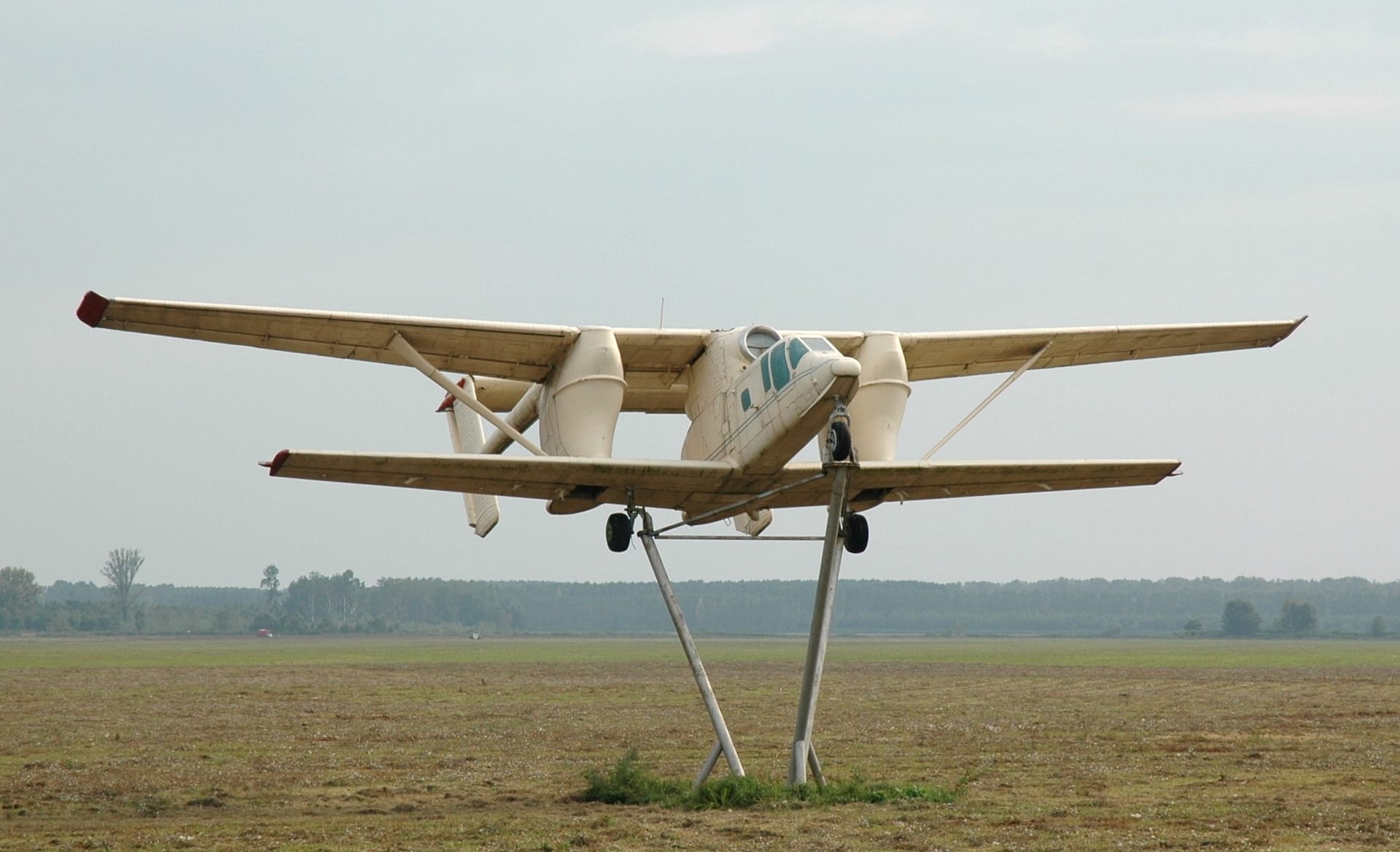
The biplane configuration was not whimsy. It came from a careful engineering calculation that turned out to be wrong. Soviet agronomists wanted a wide spray pattern, which meant a large wing area. They also wanted slow flight speed — typical crop dusting happens at 130-160 km/h, where the pesticide cloud has time to settle on the crop instead of blowing past it. Combine large wing area with low speed and you get a wing loading the engineers thought could not be achieved with a single monoplane wing big enough for the AI-25 jet exhaust.
So WSK PZL-Mielec designed a biplane. The lower wing carried the pesticide tanks. The upper wing carried the fuel. The fuselage was a pod between the two wings, with twin tail booms extending behind the upper wing to clear the jet exhaust. The single AI-25 turbofan mounted above the fuselage, behind the cockpit, exhausting between the booms.
It worked, technically. It also created an aircraft that was draggier than the An-2 it replaced, no faster than the An-2, much louder than the An-2, much thirstier than the An-2 (jets burn fuel rapidly at low speed), more expensive to maintain than the An-2, and — crucially — less able to operate from short rural strips than the An-2.
Why the pilots called it Belphegor
The nickname came from the M-15’s appearance and its behaviour. From certain angles, the twin tail booms, the high-mounted engine, and the underwing tanks gave the aircraft a vaguely demonic silhouette — wings spread, talons extended, head crouched. The howling whine of the AI-25 turbofan at low altitude added a literal demonic soundtrack. And the aircraft’s sluggish handling — heavy on the controls, sluggish in roll, prone to dropping a wing in a tight pesticide-spraying turn — earned it the Belphegor name from pilots who associated the demon of sloth with anything that responded reluctantly to control inputs.
Soviet agricultural aviation history is full of pilots who refused to fly the M-15 unless ordered. By 1980, the Soviet farm aviation administration had quietly stopped expanding the fleet and was using existing M-15s only on routes where the aircraft’s nominal speed advantage actually mattered (long ferry flights between fields, mostly). Production at WSK PZL-Mielec ended in 1981 after 175 aircraft were built. The line was supposed to make 3,000.
The economics that should have killed it sooner
Here is the figure that should have ended the M-15 programme before it started: an An-2 cost roughly 65,000 roubles in 1975. An M-15 cost roughly 250,000 roubles — about four times as much. The M-15 carried about 2.2 tonnes of pesticide. The An-2 carried about 1.4 tonnes. So an M-15 cost 4× more and carried 1.5× more. The Soviet agricultural ministry could have bought four An-2s for the price of one M-15 and treated four times as much farmland per day. The maths was always going to lose.
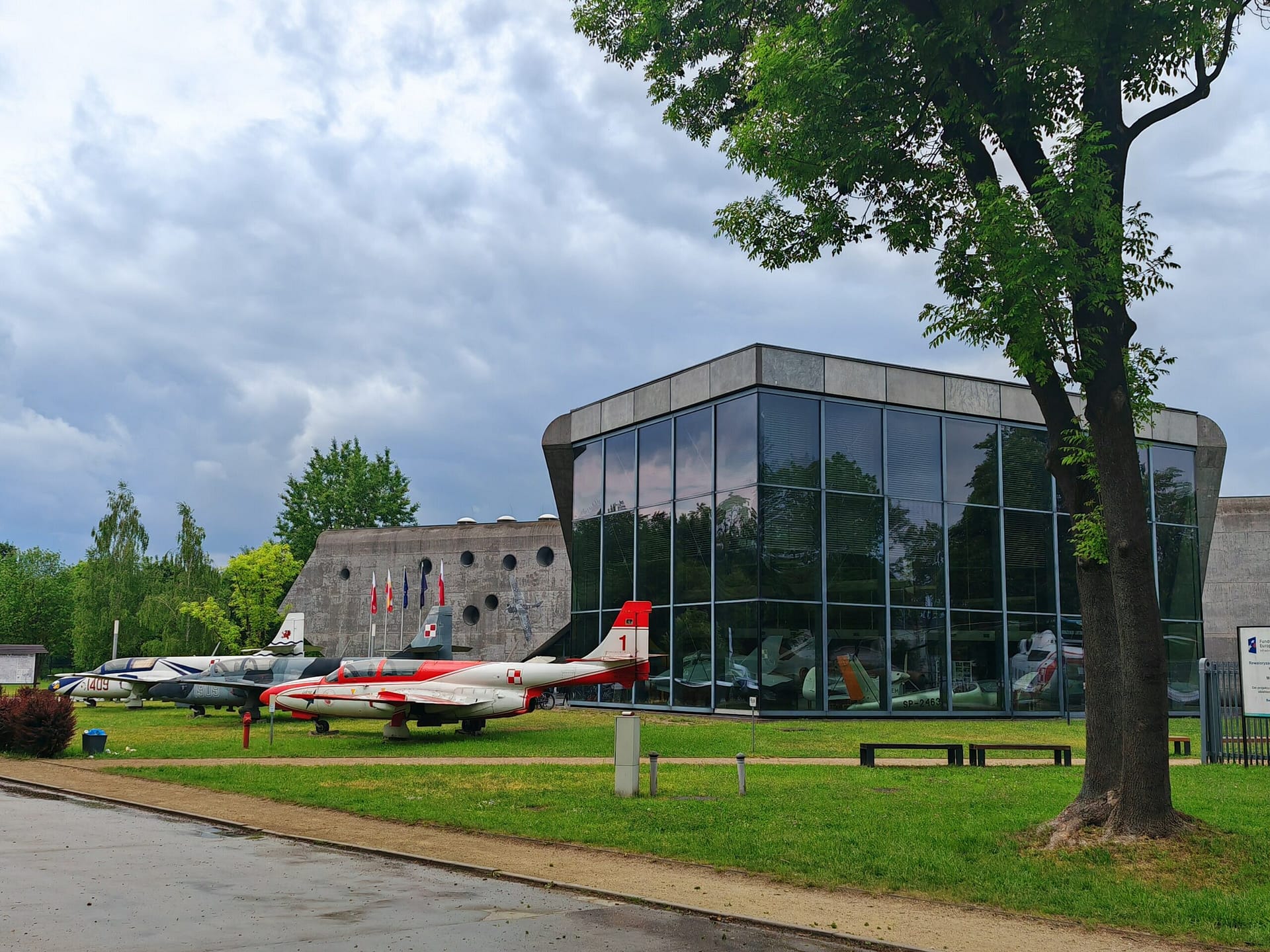
The 175 M-15s built were operated inside the Soviet Union by Aeroflot’s agricultural division, and very few remained in use by the mid-1990s. The end of the Warsaw Pact and the collapse of state-run collective agriculture finally finished the type off. Most were scrapped. A number survive in museums across Eastern Europe, including at the Polish Aviation Museum in Kraków and at Mielec.
The world’s only jet biplane in production
The PZL M-15 remains the only jet-powered biplane ever to enter mass production anywhere in the world. There have been jet biplane prototypes (the Soviet Bartini Beriev VVA-14 came close in a different configuration; various experimental and homebuilt jet biplanes have flown briefly). None of them reached production. The M-15 is, technically, a record holder.
It is also a perfect case study in what happens when political prestige overrides aerodynamic and economic common sense. The Soviet aviation industry of the 1970s wanted to demonstrate it could build a modern jet agricultural aircraft because the West could not (and did not want to). It got exactly that — and an aircraft that nobody loved, nobody chose to fly twice, and nobody could afford to operate properly. The An-2 it was meant to replace is still flying in 2026. The M-15 has been dead for thirty years.
If you ever find yourself at the Polish Aviation Museum in Kraków, look for it. It sits outside, in the rain, painted blue and white in late Aeroflot agricultural livery. It looks exactly as wrong as you would expect from the only jet biplane ever made. And up close, you can almost hear it whining.
Sources: WSK PZL-Mielec company history; Polish Aviation Museum archives; Soviet Aeroflot agricultural division records; Air International magazine retrospective (1995).

 English
0 Comments