
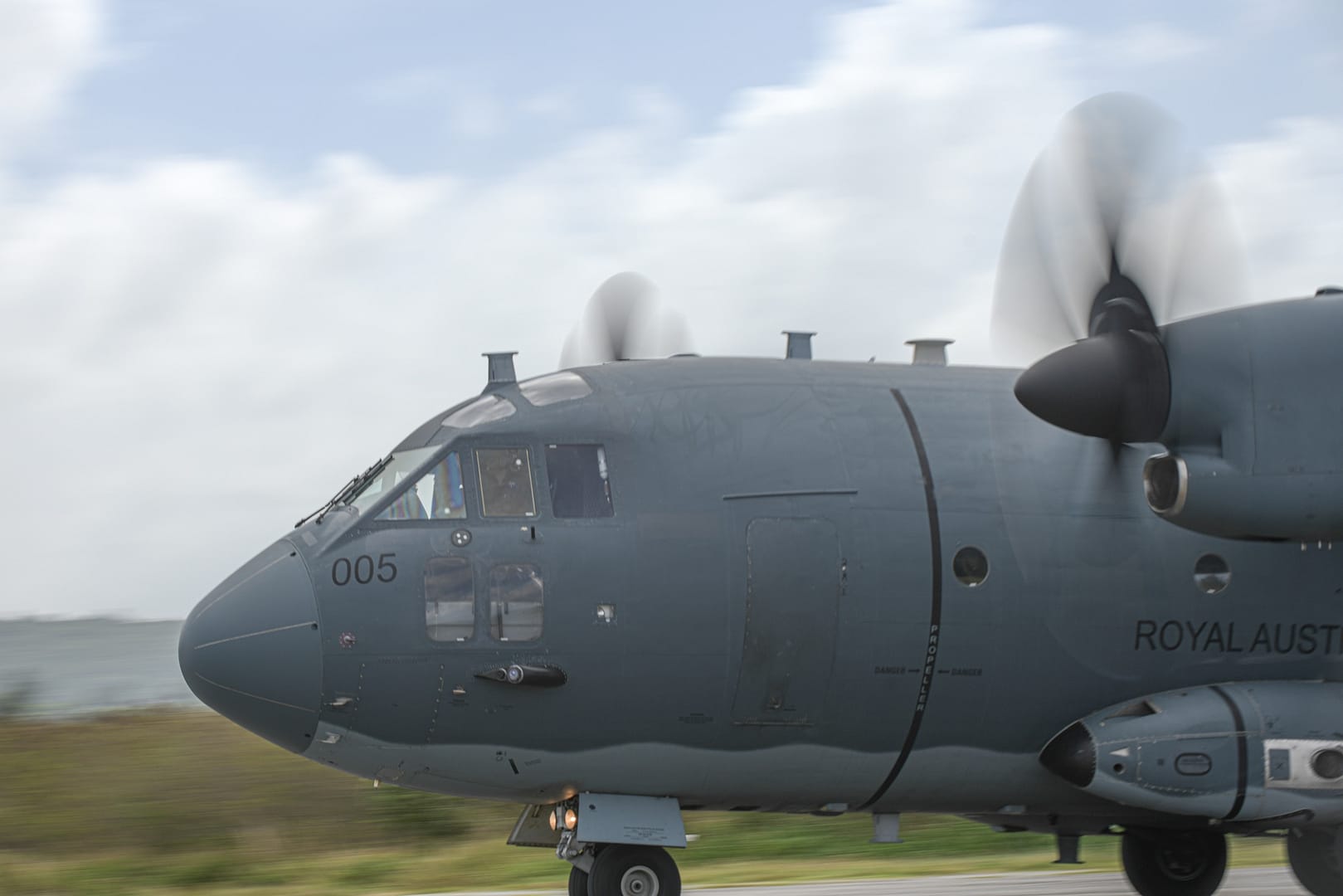
At 1pm on a Sunday in early May, the radio at Longreach Airport carried a message no regional aerodrome wants to hear: a military transport, fumes onboard, requesting an immediate landing. Within twenty minutes a Royal Australian Air Force C-27J Spartan was rolling out on the runway of the small Central West Queensland town, fire trucks and an ambulance fanned out across the apron.
Nobody was hurt. Firefighters who climbed aboard found smoke but no flames, nothing to extinguish. Yet the episode lands with a particular sting, because the aircraft involved is one Australia has already decided to send to an early grave.
The Spartan had only just come home from a multinational exercise in Southeast Asia. Days later it was sitting on the tarmac at Longreach, its onboard microwave oven the prime suspect in an electrical fault that filled the cargo bay with fumes.
Quick Facts
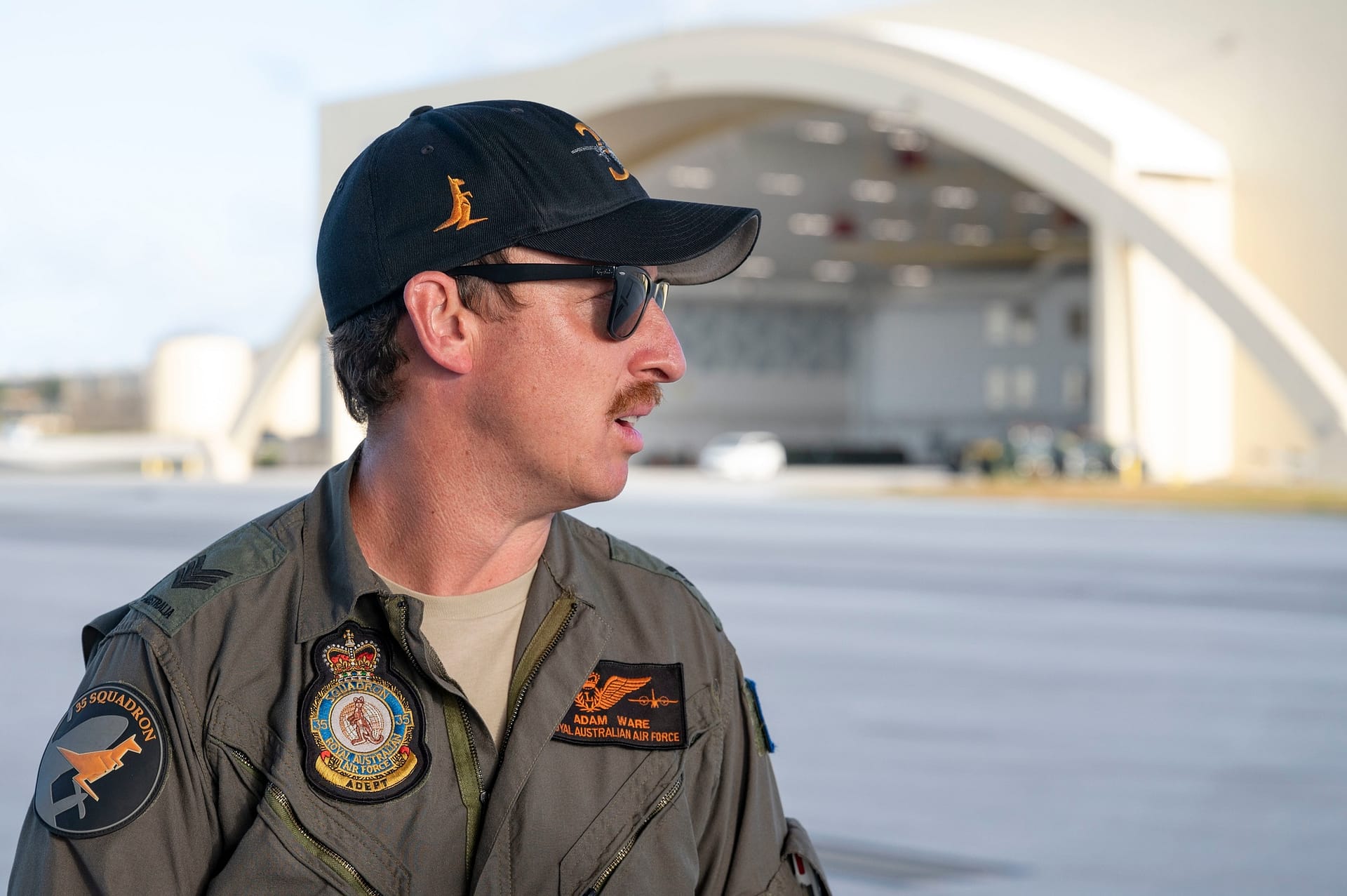
- Aircraft: RAAF Alenia/Leonardo C-27J Spartan, tail number A34-002, No. 35 Squadron
- Date: Sunday, 3 May 2026, around 1:00pm local time
- Route: Darwin to Brisbane, diverted to Longreach Airport, Queensland
- Cause: smoke/fumes in the cargo area, likely electrical fault traced to the onboard microwave oven
- Outcome: safe landing at ~1:20pm, no fire, no injuries; suspect unit isolated and tested
- Context: aircraft had just returned from FPDA Exercise Bersama Shield 2026 via RMAF Butterworth
Twenty Minutes Over the Outback
The Spartan had departed Darwin bound for Brisbane, a long transit across the breadth of the continent. Somewhere over Queensland’s interior, crew members noticed the unmistakable signs of smoke. There is no margin for debate in that situation; a transport aircraft carries its own fuel, its own electrical load, and a cabin full of people far from anywhere.
Longreach — a town better known as the birthplace of Qantas than as an emergency divert field — happened to be within reach. The incident was reported to emergency services shortly after 1pm, and multiple Queensland Fire Department crews and an ambulance were dispatched to the regional airport. The aircraft touched down safely at around 1:20pm.
Firefighters confirmed smoke was present but found no visible fire and nothing requiring extinguishment. An Australian Defence Force spokesperson said the aircraft had been diverted after fumes were detected in the cargo area. The Queensland Fire Department indicated the likely cause was an electrical fault, potentially traced to the aircraft’s onboard microwave oven, since isolated and tested.
Why Smoke Is the Word Every Aircrew Dreads
In aviation, fire and smoke sit at the very top of the emergency hierarchy. The reason is brutal arithmetic: historical studies of in-flight smoke and fire events suggest that once a fire cannot be confirmed extinguished, a crew may have only a handful of minutes before the situation becomes unsurvivable. The standing wisdom, drilled into transport crews, is to get the aircraft on the ground without delay.
Smoke is also insidious. Fumes in a cargo bay can be electrical, hydraulic, or environmental; they can clear and then return; they can blind a cockpit or incapacitate a crew long before any flame appears. The procedure is unforgiving in its simplicity — don oxygen, isolate the suspected source, and divert to the nearest suitable runway.
That is precisely the script the Longreach crew followed. They did not press on to Brisbane. They put the aircraft down at the first viable field, let the professionals on the ground confirm there was no fire, and walked away. It is, in the cold language of safety reporting, a textbook outcome.
A RAAF C-27J Spartan flying display at the Richmond Air Show, September 2025 — the tactical airlifter showing the short-field agility that defines the type. (Video via YouTube)
A Tactical Airlifter Australia Never Quite Loved
The C-27J entered RAAF service in 2015 to replace the Vietnam-era DHC-4 Caribou under the Project AIR 8000 Phase 2 “Battlefield Airlifter” requirement. Ten airframes were ordered through a US Foreign Military Sales deal in 2012, built by what was then Alenia Aermacchi, now part of Leonardo. The last of the fleet arrived in 2018.
The Italian twin-turboprop was meant to bridge the gap between Army helicopters and the RAAF’s larger C-130J Hercules and C-17A Globemaster III, slipping into short, soft, unprepared strips that bigger jets cannot touch. On paper it was the right tool. In practice, the relationship was rocky from the start.
Sustainment was the persistent thorn. Reports pointed to poor availability driven by supply-chain problems, likely compounded by the FMS procurement route, which channelled spares and support through US intermediaries rather than Leonardo’s own network used by most other operators. There were delays getting parts and difficulty integrating a missile approach warning system.
From Battlefield to Bushfire
By 2021 the Australian Defence Force had quietly redrawn the Spartan’s job description. Rather than supporting overseas combat operations as first intended, the type was formally refocused toward humanitarian assistance and disaster relief. It was a pragmatic pivot, and in that role the aircraft genuinely earned its keep.
The Spartan proved its worth during Australia’s 2019–20 bushfire crisis and, more recently, during Queensland flood relief, reaching airstrips too short or too soft for larger aircraft. In recent years availability also improved markedly: Defence figures show the fleet flew 5,048 hours in 2024–25 against a budgeted 4,800 — a fleet finally hitting its stride just as the axe fell.
A Fleet Already Living on Borrowed Time
On 16 April 2026, Australia’s National Defence Strategy confirmed what many had suspected: the ten C-27Js will be retired and replaced with a commercial aircraft fleet to support personnel and logistics transport across the Pacific. No firm retirement date or replacement type has been named. Barely a decade in service, the Spartan is on its way out.
The retirement fits a broader Australian pattern of sustainment headaches forcing the early exit of recently acquired types — the NH90 Taipan helicopters and the Tiger armed reconnaissance helicopter both met similar fates. The RAAF, meanwhile, has 20 new C-130J Hercules on order, a net gain of eight airframes, to absorb the more demanding tactical work.
Against that backdrop, a smoke incident at Longreach is more than a footnote. The flight that diverted had just returned from Exercise Bersama Shield 2026, conducted under the Five Power Defence Arrangements across Malaysia, Singapore and the surrounding region.
The Long Goodbye
The C-27J had arrived at Royal Malaysian Air Force Base Butterworth — home of the FPDA’s operational headquarters, the Integrated Area Defence System — on 12 April, part of a contingent of around 130 ADF personnel, before departing for Darwin on 1 May. Within days it was the aircraft sitting on a Longreach apron with fire crews picking through its cargo bay.
No one was endangered, the cause appears mundane, and the crew did everything right. But the timing is hard to ignore. A tactical airlifter Australia struggled to keep flying, then learned to value, then decided to retire, ended its FPDA deployment with one last reminder of how thin the margins can be — and how decisively a well-trained crew can erase them.
Sources: ABC News (via Alert 5); AusLanka TV; Aviation Safety Network; Australian Department of Defence; AeroTime.
 English
0 Comments