
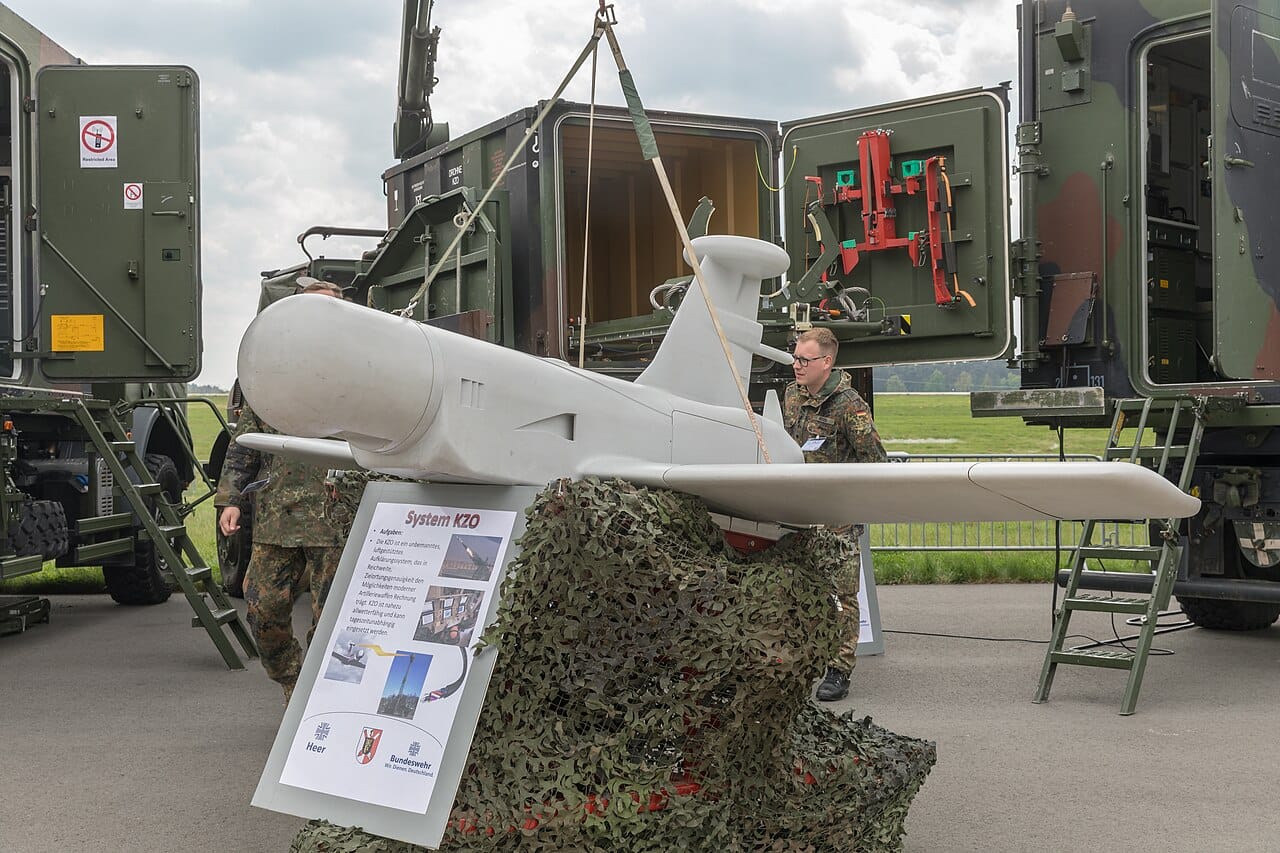
Rheinmetall’s stock peaked at €1,930 in March 2025. It is trading today at €1,180 — a 39 percent fall in fourteen months. BAE Systems is down 22 percent over the same period. Saab is down 18 percent. Leonardo is down 14 percent. Thales is flat.
This is happening while Europe is rearming faster than at any point since 1955. NATO members have committed to combined defence spending increases of more than €600 billion through 2030. Germany has announced a €100 billion special fund. Poland is now spending 4.7 percent of GDP on defence. Every single one of these companies has order books stretching past 2032.
And their stocks are, collectively, getting hammered. The mismatch is one of the most curious puzzles in European finance right now — and the answer says something uncomfortable about how markets actually work.
Quick Facts
Rheinmetall (DAX): €1,930 (Mar 2025) → €1,180 (May 2026) — down 39%
BAE Systems (LSE): Down 22% over 14 months
Saab (Stockholm): Down 18%
Leonardo (Milan): Down 14%
NATO European spending: €600B+ committed through 2030
German Sondervermögen: €100B special defence fund
Industry order book growth: +45% YoY across European primes
The Three Stories Investors Tell Themselves
The first story is “peace dividend reversal.” Markets had spent two years assuming European rearmament was a multi-decade structural shift. Recent ceasefire signals from Ukraine, the slowdown of Iranian air operations, and quiet diplomatic talks involving Saudi Arabia and Russia have made some investors bet that the rearmament boom is closer to its peak than to its base.
The second story is “execution risk.” Rheinmetall’s order book has grown 45 percent year-on-year. But the company cannot actually build to that order rate — its skilled-labour pipeline is constrained, its supplier base for explosives and high-grade steel is constrained, and it is competing with Hungarian, Czech, and Polish factories for the same components. Investors look at €30 billion in orders and see a company that will deliver them across 12 years instead of 7. That depresses the per-year revenue forecast.
Trump, Tariffs, and the Atlantic Question
The third story is the thorny one. The new American administration has signalled it expects European NATO members to spend on European-built equipment, not American — but also that it expects Europe to stop subsidising European primes against American competitors in third markets. Lockheed Martin, which is up 18 percent over the same period, has the political wind at its back. Rheinmetall and BAE do not.
“The market is pricing in a scenario where Europe rearms but the export markets that have always carried European defence companies — the Middle East, Southeast Asia, Latin America — get diverted toward American suppliers,” wrote one Frankfurt-based defence-sector analyst in a note this week. “If that’s wrong, today’s prices are the buying opportunity of the decade. If that’s right, prices have further to fall.”
The Boards Disagree
Rheinmetall’s CEO has called the share price “completely irrational” given the order pipeline. Airbus Defence and Space management has shrugged off the Airbus parent’s stock decline as “macroeconomic noise.” Saab’s chairman bought €4 million of his own company’s shares in March 2026, betting the market is wrong.
The fundamentals do support optimism. European primes have order books at the highest level in modern history. Government commitments to defence spending are now codified in budget law in most major member states, not just verbal pledges. Trained engineers and machine tools are being recruited and built at maximum factory capacity.
Watch the Q3 Earnings
The verdict will come in summer 2026, when European primes report half-year revenue. If the order book is converting into actual deliveries — and revenue, and margin — the stocks should recover. If the conversion lag is longer than the market expects, the slide will continue. Either way, the gap between political rearmament rhetoric and stock-market reality has not been this wide since the early 2000s.
Sources: Reuters, Bloomberg, Frankfurter Allgemeine Zeitung, Financial Times defence-sector coverage.



 English
0 Comments