
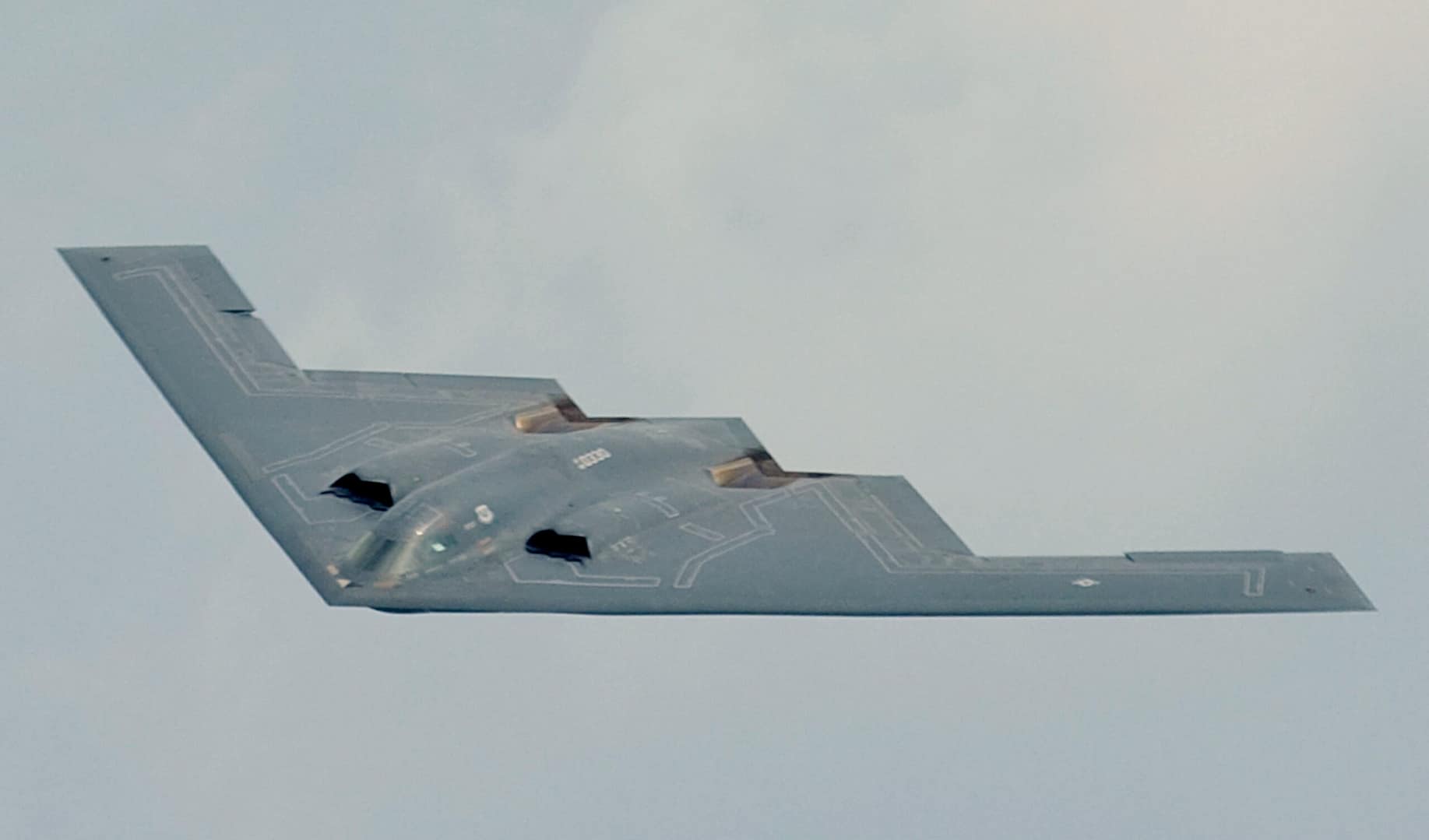
What appears to be the United States’ most secretive unmanned aircraft — the classified Northrop Grumman RQ-180 — was photographed over the city of Larissa, Greece on March 18, 2026, providing what analysts are calling the clearest public imagery of the aircraft’s planform ever captured.
The Sighting
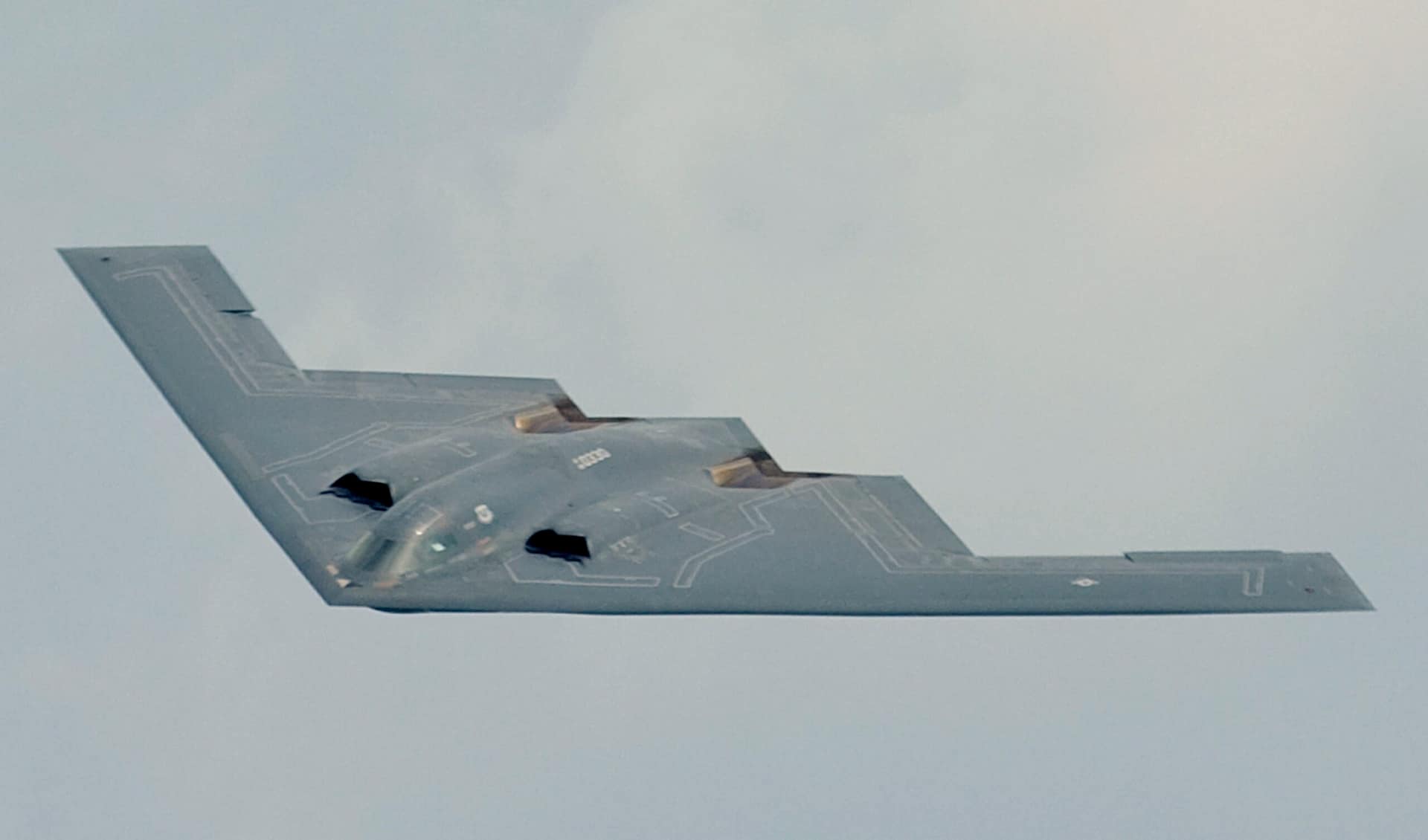
The aircraft was initially reported by Greek news outlet OnLarissa, which incorrectly identified it as a B-2 Spirit bomber experiencing mechanical difficulties. Aviation analysts quickly disputed that identification: the planform did not match a B-2, the undercarriage configuration ruled out the newer B-21 Raider, and the overall shape was inconsistent with the smaller RQ-170 Sentinel drone. A video released the following day gave observers the clearest view yet of its exact planform — a large, tailless flying-wing design in what witnesses described as a near-white colour scheme.
What Is the RQ-180?
The RQ-180 is believed to be a high-altitude, long-endurance unmanned reconnaissance aircraft developed by Northrop Grumman under the Penetrating ISR (Intelligence, Surveillance, and Reconnaissance) programme. The aircraft has been known informally by the nicknames “White Bat” and “Great White Bat” among aviation watchers, owing to its colour and flying-wing silhouette.
Official details remain classified, but open-source reporting since the early 2010s has suggested the aircraft is designed to penetrate sophisticated integrated air defence systems and operate for extended periods over hostile territory — capabilities that conventional aircraft and most existing drones cannot replicate. By 2016, analyst estimates suggested approximately nine pre-production examples were already flying from classified facilities.

Why Greece?
Larissa Air Base hosts established U.S. military detachments, including MQ-9 Reaper operations, and has seen increased American activity in recent months. The appearance of the aircraft over a populated city in daylight — a significant departure from the night operations typically assumed for such a classified platform — prompted two competing theories: either the aircraft was conducting a forward-deployed operational mission, or it had diverted to Larissa due to a technical issue.
The fact that it was observed flying, not parked, and that no recovery operation was reported publicly, leaves both explanations plausible. What is clear is that a flying-wing aircraft of unusual size and configuration was present over Greek airspace on March 18 — and that it does not match any publicly acknowledged aircraft type in operation.
A Pattern of Daylight Appearances
The Greece sighting follows a pattern of apparent RQ-180 observations in recent years, suggesting that the aircraft is now being deployed more broadly. Analysts note that if this is indeed the RQ-180, its appearance in European airspace — in daylight, over a populated area — represents a notable shift from the isolated, remote-base operations assumed of such platforms. Whether intentional or incidental, the Larissa sighting has given the public its most detailed look yet at one of the least-understood aircraft in existence.
Sources: Defense One · Aviation Week & Space Technology