
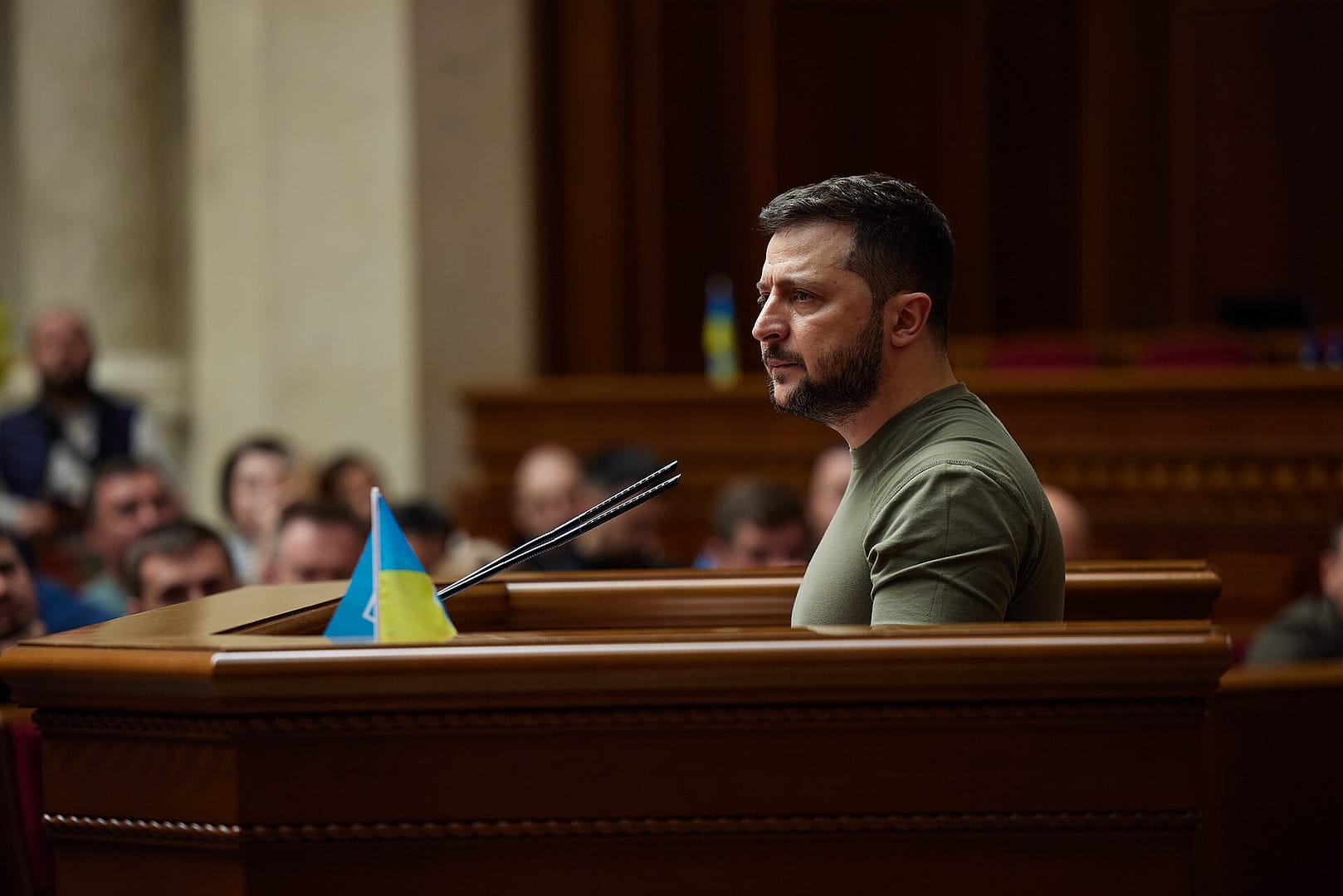
It lasted seventy-two hours. The May 9–11 ceasefire between Russia and Ukraine — agreed for Moscow’s Victory Day parade and a small prisoner-of-war exchange — expired at midnight on Monday. By Tuesday morning, Volodymyr Zelensky was counting the drones.
Two hundred and seven attack drones launched in a single night, by Ukrainian count. Eighty-plus aerial bombs dropped along the front. More than thirty separate air strikes recorded. A kindergarten hit. An apartment block hit. A civilian locomotive hit. At least one person dead, six injured before the morning briefing.
The Ukrainian president did not phrase it diplomatically.
“Russia itself chose to end the partial silence that had lasted for several days. Overnight, more than 200 attack drones were launched against Ukraine. Aerial bombs were used again on the front — more than 80 of them, and over 30 air strikes were recorded.”
President Volodymyr Zelensky — public statement on X, morning of 12 May 2026
Quick Facts
Date: 12 May 2026 (overnight 11/12 May)
Ceasefire window: 9–11 May 2026 (Victory Day weekend, US-brokered)
Russian drone launches: 200+ in a single night
Aerial bombs: 80+ along the front
Air strikes: 30+ recorded
Confirmed targets: Energy facilities, apartment blocks, a kindergarten, a civilian locomotive
Casualties (initial): At least 1 dead, 6 wounded
Zelensky response: “Mirror response” — symmetric retaliation
The Victory Day Pause That Couldn’t Hold
The ceasefire was always fragile. It was a calendar ceasefire — three days carved out around the 9 May Victory Day parade in Moscow, with the explicit understanding that the parade itself, with its (in the event, CGI) flyovers and tanks rolling across Red Square, would not be interrupted by Ukrainian drone strikes. In exchange, Russia would pause its own strike campaign against Ukrainian cities for the same 72 hours.
The pause was negotiated under quiet U.S. pressure as part of the Trump administration’s broader effort to lever both sides toward something more durable. It worked, mostly, while it lasted. ISW’s daily assessments through the weekend recorded continuing limited Russian ground operations but a marked drop in long-range strikes against Ukrainian energy and urban targets.
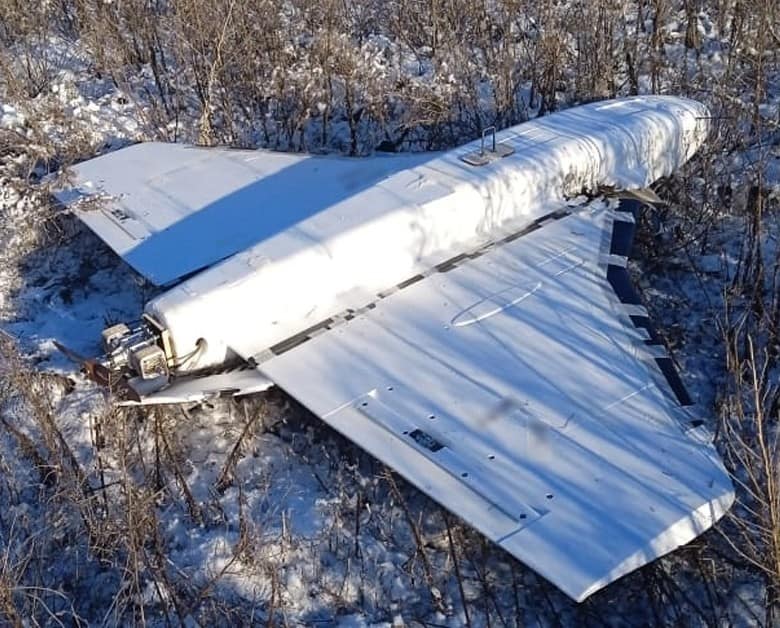
By 11 May, that was already eroding. By the small hours of 12 May, the Shahed-136s — known in Russian service as Geran-2s — were lifting off again. So were their newer variants: Geran-4, which adds higher cruising speed up to 500 km/h, and Geran-5, a jet-powered version that debuted in January.
“Devoid of Any Military Sense”
The targets Zelensky highlighted on Tuesday morning had nothing to do with frontline troops. A kindergarten in eastern Ukraine. An apartment building in Kharkiv. An energy substation. A civilian railway locomotive. The pattern, throughout the war, has been the same: Russian strike campaigns have used drone saturation against urban infrastructure designed to crack civilian morale through cold, dark winters and disrupted services.
“Absolutely cynical, senseless terrorist strikes devoid of any military sense.”
President Volodymyr Zelensky — on the pre-ceasefire wave of strikes that killed 22 civilians on 5 May 2026 — a description that applied equally to the post-ceasefire strikes a week later
The Numbers That Make Tuesday Look Routine
Two hundred drones in a single night is, by 2026 standards, no longer a record. It is closer to a baseline. Between 23 and 24 March 2026, Russia launched 948 Shahed-type UAVs and 35 missiles in a single 24-hour period — the highest daily UAV deployment of the entire war. Over 4,600 Shahed-class drones flew against Ukraine in the first six weeks of 2026 alone.
What changed in 2026 was less the volume than the response. Ukraine’s Commander-in-Chief Oleksandr Syrskyi has confirmed that interceptor drones — small, cheap, FPV-style aircraft purpose-built to ram Shaheds in flight — now account for more than 70 per cent of all Shahed downings. By January 2026, Ukrainian production had reached 1,500 interceptor drones per day. In some sectors the kill rate against Shahed swarms is reportedly running at 95 per cent.
The economics, finally, are running Ukraine’s way. A Shahed-136 costs roughly $35,000 to build. A Ukrainian FPV interceptor costs less than the price of a used car. The defender no longer has to spend a $4-million Patriot missile to kill a $35,000 drone.
A “Mirror Response”
Zelensky’s threatened reply was explicit: Ukraine will respond symmetrically. That means more long-range strikes against Russian airfields, oil refineries, transportation choke-points, and the Geran assembly facilities themselves. Ukraine has been escalating its long-range campaign throughout 2026 — already hitting an air traffic control centre in southern Russia on 8 May, paralysing several airports.
The Russian leadership, for its part, has been visibly nervous about exactly this. The Russian Ministry of Defence quietly appointed Colonel General Alexander Chayko to command the Russian Aerospace Forces (VKS) in early May, after public criticism of Russian air defence failures and the long-range strike vulnerabilities. The Kremlin sees the symmetric exchange Zelensky promised coming.
Whatever the next 72 hours bring, the May 9–11 pause stands now as the answer to a simple question that has been asked since 2022: can these two governments hold a ceasefire when the political pressure to hold one is at its absolute maximum?
The answer, as of Tuesday morning, was for three days.
Sources: President Zelensky on X (12 May 2026), Al Jazeera, Reuters, Kyiv Post, NPR, Institute for the Study of War daily assessments, CSIS “Drone Saturation” (2026), Defense News, Breaking Defense.

 English
0 Comments