
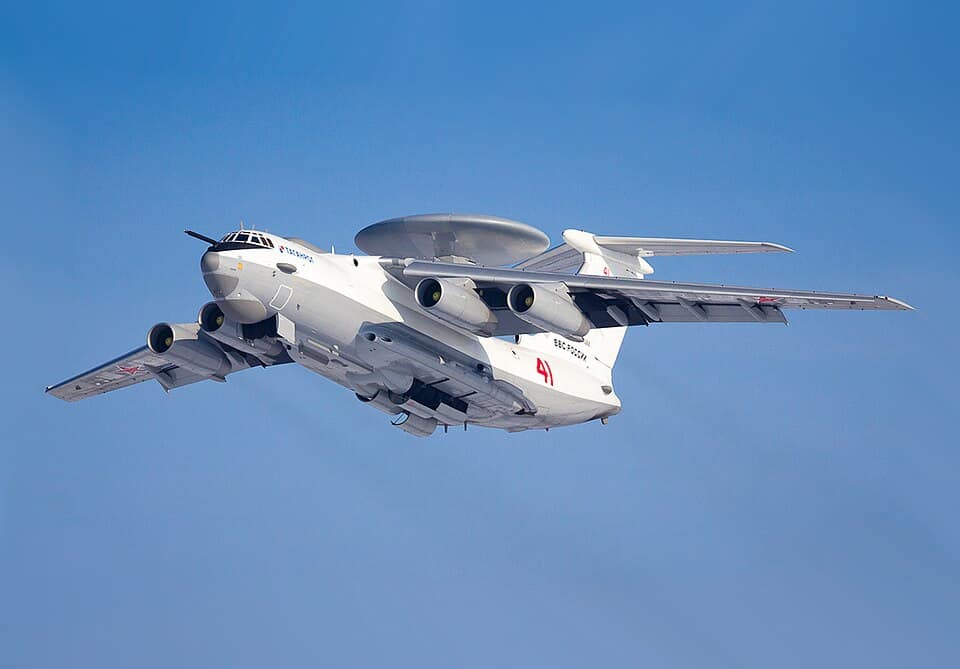
Somewhere on a Russian military airfield, ground crews recently rolled out a freshly painted Beriev A-50U — the fourth modernized airborne early warning aircraft to join the fleet, and a replacement Russia desperately needed. An image first shared on June 1 by the Fighter-Bomber Telegram channel, a source with deep ties to frontline Russian Aerospace Forces (VKS) units, confirmed the handover with a terse caption: “Another upgraded and modernized A-50U has been handed over to the military.”
The delivery carries weight far beyond a single airframe. Over the past two years, Ukraine systematically dismantled Russia’s ability to see deep into the battlespace, destroying three A-50U aircraft through a combination of daring tactics and Western-supplied missile systems. This new jet is Moscow’s attempt to patch one of the most consequential gaps in its war machine.
Quick Facts
- Russia confirmed delivery of a new A-50U AEW&C aircraft on June 1, 2026
- Ukraine destroyed three A-50U aircraft between 2023 and 2024 using Patriot SAM ambush tactics
- The A-50U’s Vega-M radar can track up to 150 targets at ranges of 200-600 km
- Russia’s next-generation A-100 Premier replacement program has effectively collapsed
- Only an estimated 6 A-50U and 3 older A-50 aircraft remain in VKS service
Why the A-50U Matters
The A-50U is Russia’s eyes in the sky — a flying radar station built on the Il-76 transport airframe, topped by a nine-metre rotodome housing the Vega-M surveillance radar. It can detect fighter-sized targets at low altitude against ground clutter at ranges of 200 to 400 km, and track up to 150 contacts simultaneously out to nearly 600 km. For a military prosecuting a massive land war with contested airspace, that capability is not optional — it is existential.
Without functioning AEW&C coverage, Russian strike packages fly partially blind. Air defense coordination suffers. Early warning of Ukrainian drone swarms and cruise missile attacks shrinks from minutes to seconds. The A-50U loss was not merely expensive — each aircraft is valued at roughly $330 million — it was operationally crippling.
The Patriot SAMbush: How Ukraine Killed Russia’s Flying Radars
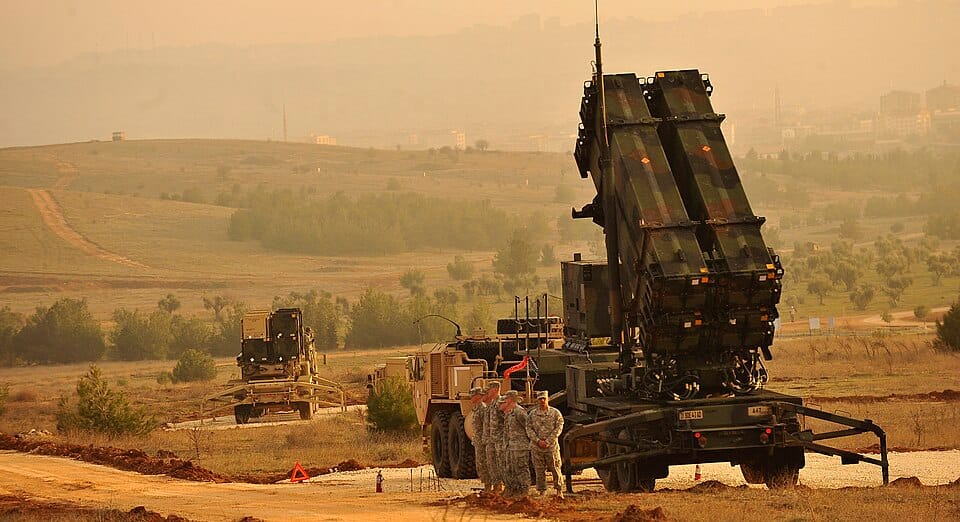
Ukraine’s campaign against the A-50 fleet ranks among the most innovative air defense operations in modern warfare. On January 14, 2024, Ukrainian forces executed what analysts later dubbed a “SAMbush” — rapidly deploying a Patriot battery to an unexpected forward position near the front lines. When an A-50U ventured within range over the Sea of Azov, the Ukrainians fired. The aircraft never made it home.
A second A-50 was downed in February 2024. Then, in a devastating blow to the entire program, Ukraine struck the Beriev aircraft plant in Taganrog, destroying both the A-60 experimental laser aircraft and — critically — the A-100LL, the sole flying testbed for Russia’s next-generation AWACS program. That single raid may have set Russian airborne radar development back by a decade or more.
A Fleet Under Strain
Even with this new delivery, Russia’s AEW&C fleet remains dangerously thin. Analysts estimate roughly nine A-50/A-50U aircraft survive in various states of readiness — six modernized A-50U and three older A-50 variants. Before the war, Russia operated a fleet of approximately 12. Each loss, then, represents not a percentage point but a chasm in coverage.
The VKS has responded by pulling the surviving A-50s further from the front, operating them under heavy fighter escort in the rear. Ukrainian radar operators spotted an A-50 returning to operations in early 2025 after a 12-month absence, but the aircraft kept a conspicuously wide berth from the forward edge of battle.
The A-100 Collapse and What Comes Next
Russia’s Plan B — the A-100 Premier, a next-generation AWACS with an advanced AESA radar — is effectively dead. The program had been struggling for years under the weight of Western sanctions that cut off critical electronic components. The destruction of the A-100LL testbed in Taganrog was the final blow. Without that irreplaceable aircraft, flight testing of the new radar system cannot continue.
In desperation, Beriev has floated an alternative concept: an AEW&C version of the Be-200 amphibian, attempting to combine radar surveillance, reconnaissance, and anti-submarine patrol into a single airframe. Western analysts have greeted the proposal with skepticism bordering on disbelief. Cramming a credible surveillance radar into a turbofan amphibian designed for firefighting is not engineering — it is wishful thinking.
For now, Moscow’s strategy is straightforward: keep refurbishing A-50U airframes for as long as the supply of Il-76 platforms and Vega-M electronics holds out. This latest delivery proves the defense-industrial pipeline has not completely collapsed, but it also underscores the fragility of a fleet that one well-aimed Patriot missile can shrink by double-digit percentages overnight.
Sources: The Aviationist, Militarnyi, Defense Express, Defense Express (SAMbush)

 English
0 Comments