
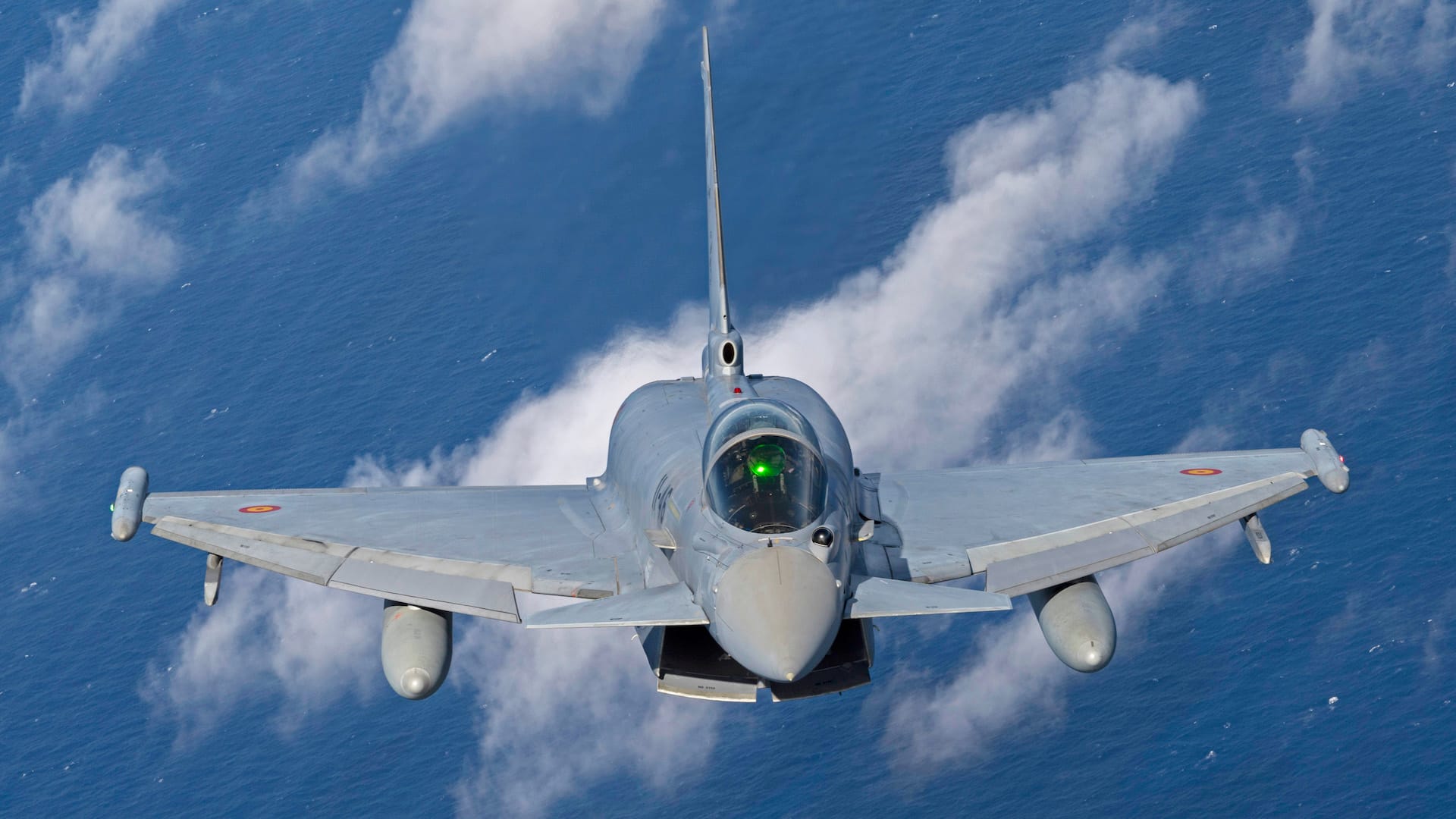
Quick Facts
- Aircraft designation: ST015, twin-seat Tranche 4 Eurofighter Typhoon
- Halcon I programme: 20 aircraft (16 single-seat, 4 twin-seat), signed June 2022
- Halcon II programme: 25 additional aircraft, signed December 2024
- Radar: ECRS Mk1 Active Electronically Scanned Array (AESA)
- First three deliveries expected in 2026; Halcon II deliveries from 2030 to 2035
- Replaces Spain’s aging fleet of EF-18 Hornets
The ECRS Mk1: A Quantum Leap in Radar
What distinguishes the Halcon Eurofighters from their predecessors is not merely incremental improvement but a generational shift in sensor capability. Every one of the 20 Halcon I jets will carry the ECRS Mk1 AESA radar from new, replacing the mechanically scanned Captor-M that equipped earlier Tranche 1 through 3 aircraft. The ECRS Mk1 is an active electronically scanned array, meaning it uses hundreds of individual transmit-receive modules to shape and steer the radar beam electronically, with no moving parts. This architecture enables simultaneous tracking of far more targets, dramatically improved resistance to electronic jamming, and the ability to switch between air-to-air and air-to-ground modes virtually instantaneously. For the Spanish Air and Space Force, which has operated the Typhoon since the mid-2000s with the legacy Captor radar, the ECRS Mk1 represents a transformative upgrade. Combined with full MBDA Meteor beyond-visual-range missile integration, the Halcon fleet will possess a qualitative edge that few fourth-generation fighters anywhere in the world can match.Industrial Significance for Airbus Defence
The Getafe assembly line where ST015 emerged is not merely a national facility; it is a cornerstone of the four-nation Eurofighter industrial consortium. Spain, alongside Germany, Italy, and the United Kingdom, shares in the production of every Typhoon built, with workshare allocated according to procurement volumes. The 45-aircraft Spanish commitment has breathed new life into the production line at a time when the consortium needed it most. Germany has ordered its own batch of Tranche 4 aircraft, and Saudi Arabia remains a significant export customer, but the Spanish orders represent some of the most advanced specifications yet requested by any operator. Airbus Defence and Space has positioned the Halcon programme as a showcase for the Eurofighter’s continued evolution, emphasizing the integration of the new radar, updated avionics, enhanced network connectivity, and expanded weapons compatibility. The message to prospective export customers, particularly Turkey and other nations evaluating European fighters, is clear: the Typhoon is not a legacy platform. It is still advancing.The Hornet’s Successor
Spain’s urgency is driven by operational necessity. The Spanish Air and Space Force has flown EF-18 Hornets since the mid-1980s, and the airframes are nearing the end of their structural lives. The Halcon programme is designed to replace them entirely, ensuring that Spain maintains a credible fast-jet capability well into the 2050s. The first three Halcon I aircraft are scheduled for delivery by the end of 2026 following flight testing and painting at Getafe. The remaining 17 jets will follow on a production cadence that extends through the late 2020s. Halcon II deliveries are planned between 2030 and 2035. For the Eurofighter consortium, the Spanish commitment also serves as a bridge to the next generation. The Future Combat Air System (FCAS), a Franco-German-Spanish programme to develop a sixth-generation fighter and its associated drone wingmen, is not expected to enter service until the 2040s. The Halcon Typhoons will hold the line until that system arrives. The primer-grey aircraft that rolled out of Getafe on June 1 may not yet have carried the roar of its engines into the Iberian sky. But it carries the weight of an entire nation’s defense modernization on its wings. The maiden flight, when it comes, will mark far more than a test. It will signal that Europe’s combat aviation industrial base remains very much alive.Sources: Defence Blog, TURDEF, Scramble.nl, Janes, FlightGlobal, Zona-Militar, Air Data News


 English
0 Comments