
Related: Behind Enemy Lines: The Most Daring Rescue Since Bosnia
Quick Facts
| Event | US forces destroy own aircraft during F-15E crew rescue inside Iran |
| Date | April 4–5, 2026 |
| Aircraft Destroyed | 2 × MC-130J Commando II, 4 × MH-6/AH-6 Little Bird helicopters |
| Estimated Loss | $200+ million in aircraft |
| Location | Improvised airstrip near Isfahan, ~200 miles from coast |
| Outcome | Both F-15E crew members rescued alive; zero US fatalities |
| Historical Parallel | Operation Eagle Claw (1980) — also lost aircraft in Iranian desert |

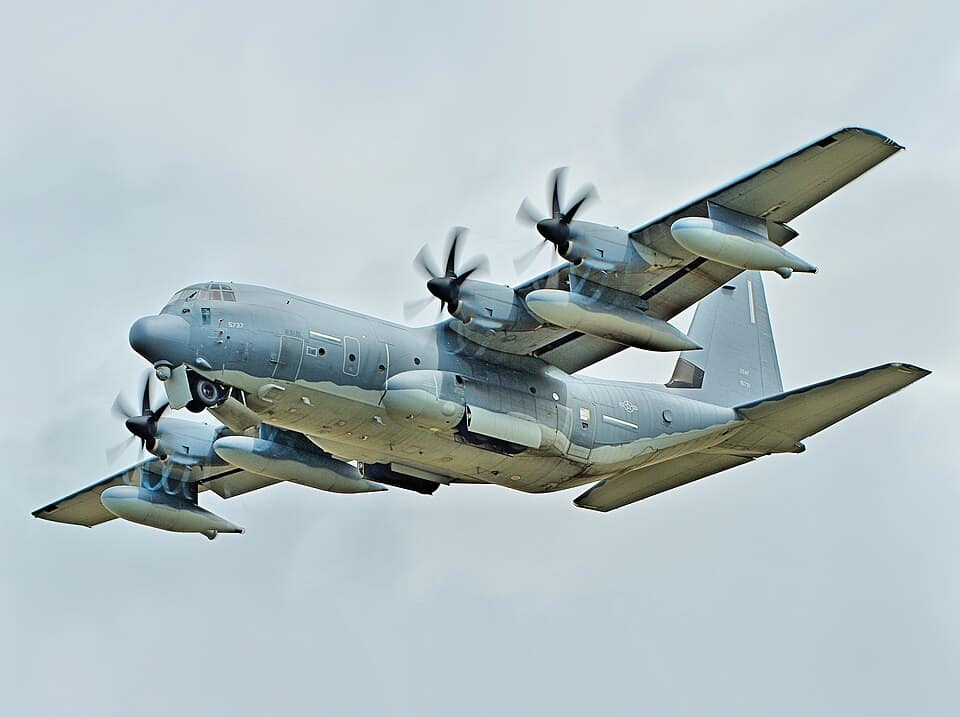
Two MC-130J Commando II transports sit on a makeshift desert strip 200 miles inside Iran. Their engines are cold. Their wheels are buried in sand. And the men who flew them in are rigging charges to blow them apart.
This is how the most expensive rescue mission since Operation Eagle Claw ends — not with a quiet extraction, but with American special operators deliberately destroying more than $200 million worth of their own aircraft to keep them out of enemy hands. The mission succeeded. Both crew members of the downed F-15E Strike Eagle came home alive. But the cost was staggering.
The story begins on April 3, when an F-15E from the 494th Fighter Squadron was shot down during a combat mission over Iran as part of Operation Epic Fury. The pilot was recovered within hours. The Weapons Systems Officer was not.
230 Miles Behind Enemy Lines
The WSO landed in mountainous terrain near Isfahan — roughly 230 miles from the nearest friendly border. He was injured, hiding in a mountain crevice, and Iran was hunting him. Night Stalker helicopters from the 160th Special Operations Aviation Regiment launched MH-6 and AH-6 Little Birds to establish a forward staging point deep inside Iran.
Two MC-130J Commando IIs — the workhorse of Air Force Special Operations Command — landed at an abandoned agricultural airstrip approximately 14 miles north of Shahreza City. The strip measured roughly 200 feet wide and 3,900 feet long. It was austere. It was improvised. And it was sand.
Both aircraft sank. Their landing gear dug into soft ground, and mechanical failures compounded the problem. Neither transport could take off again. The clock was ticking — Iranian forces were closing in on the forward operating site.
Deny, Destroy, Extract
The decision came fast. CENTCOM authorized the destruction of both MC-130Js and the four Little Bird helicopters at the forward site. U.S. forces rigged demolition charges and obliterated all six aircraft where they sat. A third extraction aircraft flew in, picked up every American on the ground, and flew out.
On April 5, the WSO was brought home alive. President Trump confirmed the rescue, describing the airman as “seriously wounded” but “really brave.” CENTCOM’s official statement was terse: “U.S. forces successfully completed the rescues of two American service members from Iran.”
No American personnel were killed during the operation. The aircraft were a write-off. The crews walked away.

Eagle Claw’s Ghost
Iranian media immediately seized on the parallels. On April 25, 1980, Operation Eagle Claw — the attempt to rescue 52 American hostages from the U.S. Embassy in Tehran — ended in catastrophe at a staging site called Desert One. A helicopter collided with a C-130 transport in a sandstorm. Eight Americans died. Charred wreckage was paraded before cameras. The mission became a symbol of American overreach.
Forty-six years later, American aircraft sit destroyed in the Iranian desert again. The imagery is almost identical — burned-out transport hulks on flat, arid ground. Iran’s narrative writes itself.
But there is a critical difference. Eagle Claw was a failure. The hostages remained captive. Eight men died. In 2026, the mission succeeded. Both crew members came home. The aircraft were destroyed deliberately, by American hands, as a denial measure — not by accident or enemy action.
The Price of Getting Everyone Out
The total cost of the rescue operation — including the destroyed MC-130Js (valued at over $100 million each), the four Night Stalker helicopters, fuel, munitions, and supporting assets — likely exceeds $300 million. It is among the most expensive personnel recovery operations in U.S. military history.
Special operations doctrine has a line that never bends: leave no one behind. The price tag is secondary. The two MC-130Js were sacrificed because the alternative — letting Iran capture intact American special operations aircraft with their classified avionics, sensors, and communications systems — was unthinkable.
The desert took the machines. The people came home. In the calculus of special operations, that is not a defeat. It is the mission, executed to completion.
Sources: FlightGlobal, The War Zone, PBS News, ABC News, Air & Space Forces Magazine


 English
0 Comments