
The morning of October 11, 1989 began like any other in the Jezreel Valley. Beside a dusty crop-dusting strip near Megiddo, a worker named Ya’acov Aboudi was going about his business when the air split open with the shriek of a jet engine and a Soviet fighter dropped onto the short runway, wings still swept, canopy popping open.
Out climbed a man in a Syrian flight suit, chain-smoking, hands shaking. “Thank God I’m out of that hell,” he said. Aboudi offered him a cigarette and a cup of coffee, then picked up the phone to call the nearby air base. The voice on the other end did not believe him.
That phone call, from a startled civilian rather than a radar operator, is the whole story in miniature. A frontline enemy fighter had just flown seven minutes through Israeli airspace and landed completely unchallenged — and the most powerful air force in the Middle East had no idea it was even there.
Quick Facts
- Date: October 11, 1989
- Pilot: Maj. Adel Bassem, 34, Syrian Air Force (name appears in sources as Bassem / Bassam al-Adl / Mohammed Bassem Adel)
- Aircraft: MiG-23ML ‘Flogger’, tail number 2786 (some sources say MiG-23MLD)
- Landing site: Megiddo crop-dusting strip, beside Ramat David air base
- Time undetected in Israeli airspace: about 7 minutes
- Evasion method: dived to 25–45 m (90–150 ft), below radar coverage, then dashed across the border in afterburner
Seven minutes that embarrassed an air force
Bassem had taken off that morning as the leader of a two-ship training flight over the Syrian-held Golan Heights. Then, as he later told it, he ordered his wingman to climb away — and turned for Israel.
The IAF was actually watching the Syrian formation on radar. But Bassem pushed the nose down and down, levelling off as low as 90 to 150 feet above the ground, where the radar return melted into the earth. With his afterburner lit he raced across the frontier at roughly 550 knots.
He flew low along the floor of the Jordan Valley, in plain view of anyone who happened to be looking. One person was. An American-born civilian pilot living in Upper Galilee saw the jet pass at his own eye level and immediately knew something was deeply wrong.
Ferris phoned the tower at the Rosh Pinna airfield, voice full of amazement, to report a MiG flying by. The controller had seen nothing — and, to the best of Ferris’s knowledge, never passed the sighting up the chain of command. Minutes later the Flogger touched down at Megiddo.
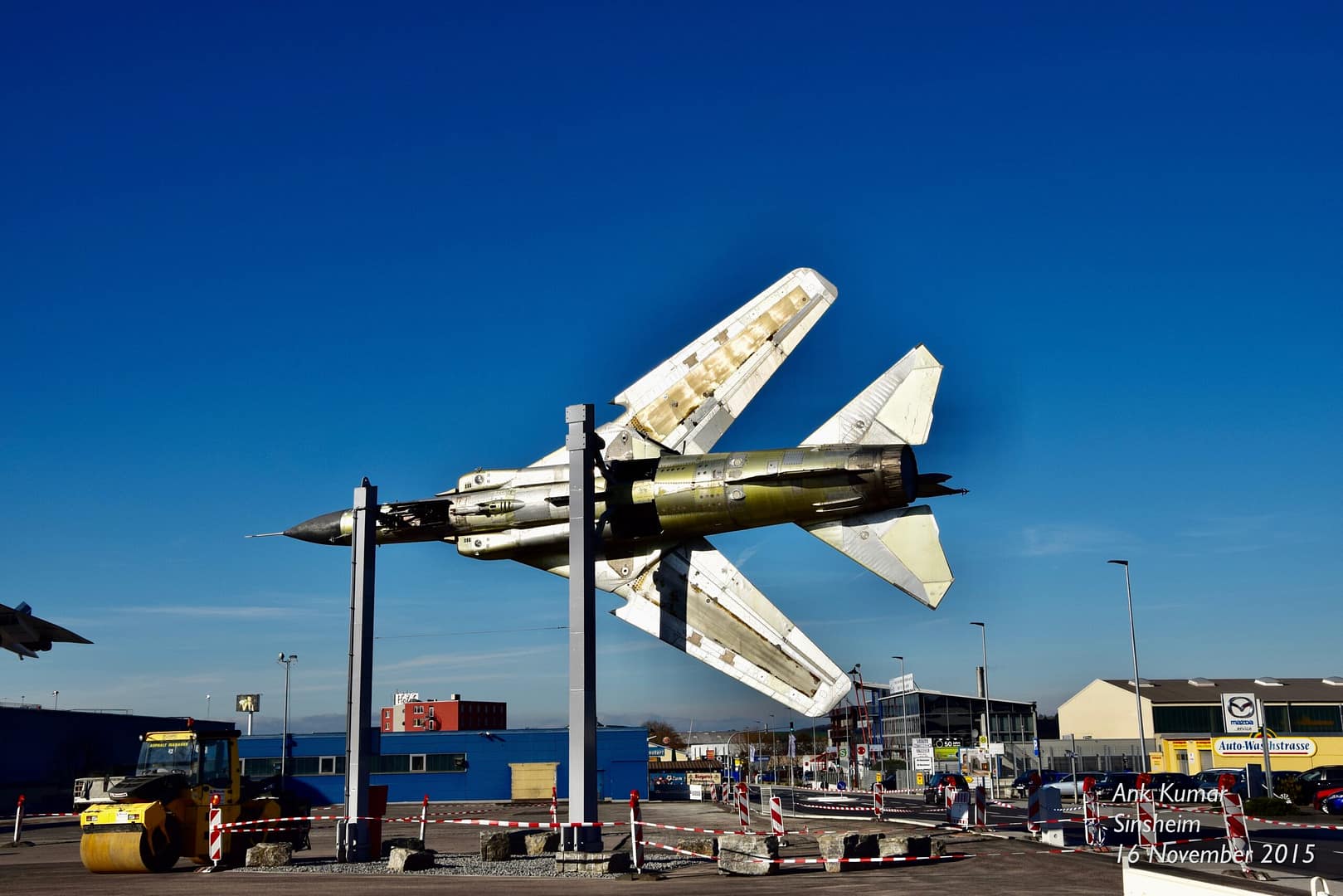
A close walkaround of a MiG-23ML ‘Flogger’ with an engine run, the same variant Bassem flew to Israel (AirShowStuff).
A gift the Israelis could hardly believe
For all the alarm over the breach, the prize was extraordinary. Israel had just become one of the first Western-aligned states to receive an intact, operational MiG-23 — one of the Soviet Union’s most advanced fighters — delivered to its doorstep by an enemy pilot.
The mood in the Israeli leadership was almost giddy beneath the official frowns. Defense Minister Yitzhak Rabin said it was fortunate the MiG had not been shot down, because Israel now had the chance to examine its engine and avionics. Prime Minister Yitzhak Shamir, speaking to schoolchildren the next day, urged that the windfall not be spoiled by squabbling over how it had slipped through.
Behind closed doors, though, there were, as one report dryly put it, a lot of red faces among the IDF brass. Within hours, Chief of Staff Dan Shomron appointed a two-man committee of inquiry under Brig. Gen. Herzl Buddinger to work out exactly how a hostile jet had crossed the border unseen.
Why a Syrian major flew east
Bassem’s reasons were personal, not ideological. A 16-year veteran of the Syrian Air Force, he told his Israeli interlocutors he had been mistreated by fellow officers and airmen and had quietly prepared his escape for months.
Here the sources diverge, and it is worth being honest about it. Contemporary wire reports described him as a 34-year-old, unmarried Sunni Muslim born in Aleppo; later accounts say he was a Druze who settled, anonymously at first, in a village near Haifa. The discrepancy has never been cleanly resolved in the open record.
Damascus, predictably, told a different story altogether. Syria claimed the jet had made a forced landing because of a mechanical fault, and asked the Red Cross to arrange the return of pilot and plane. Days later it shifted tack and branded Bassem an Israeli spy — even as an Israeli inspection of the aircraft turned up no malfunction at all.
Putting the Flogger through its paces
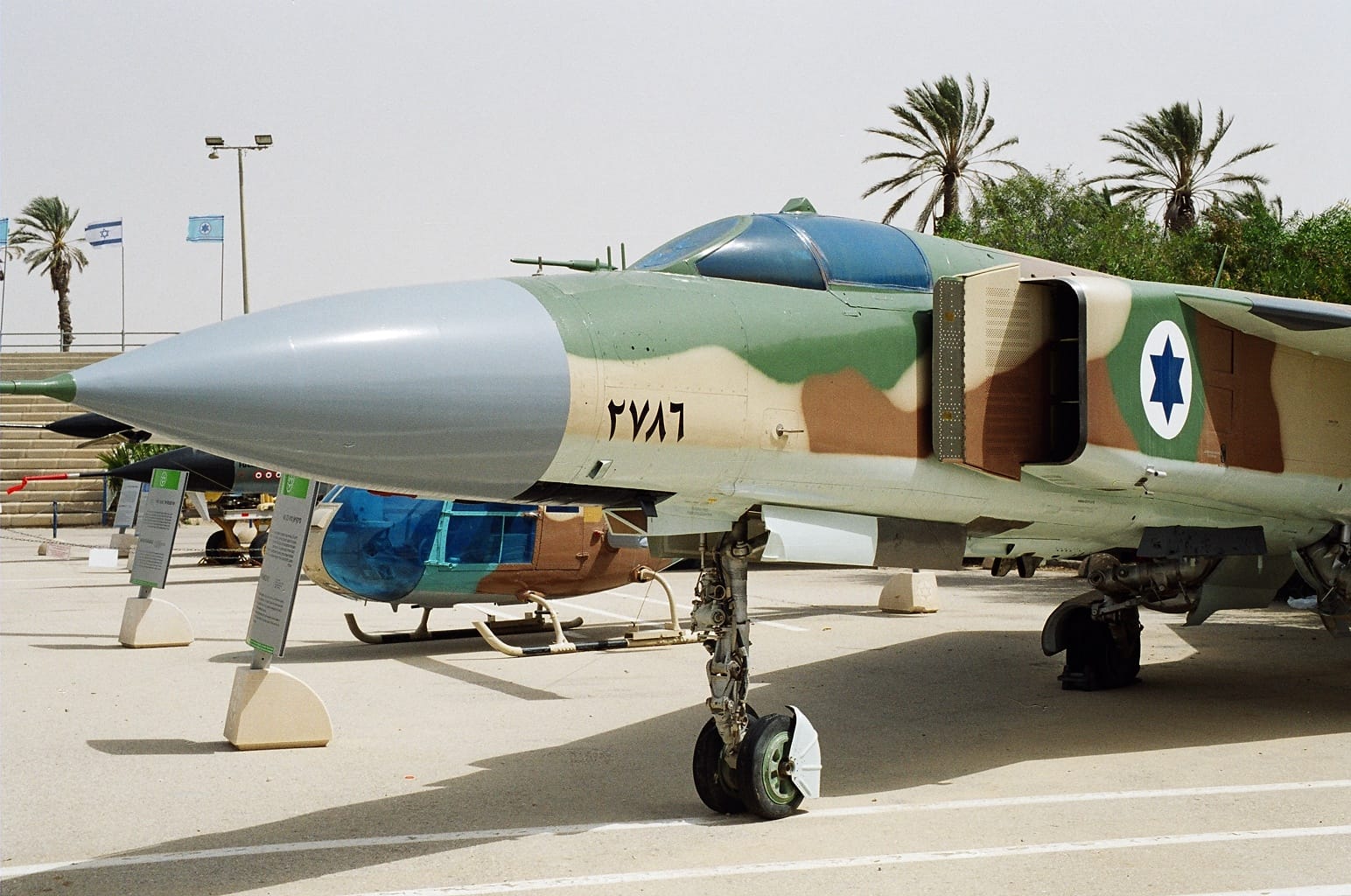
The MiG had arrived unarmed save for a full load of cannon shells, with Syrian flare dispensers bolted to the base of the tail. It was spirited away to the security of Tel Nof, and the engineers and test pilots of the IAF Flight Test Center went to work — helped, remarkably, by Bassem himself, who could offer little more than his checklist.
On January 29, 1990, the Flogger flew again, this time in Israeli hands, with the center’s commander Lt. Col. Ofer Safra at the controls. A full evaluation followed: mock dogfights against frontline IAF fighters, careful probing of the radar and systems, a hunt for every strength and weakness.
The verdict was nuanced. The Israelis were genuinely impressed by the MiG’s thrust and acceleration, and found it simple to fly with easy avionics. But the cockpit layout was poor, rearward visibility bad, and the stick forces in hard manoeuvring exhaustingly heavy. Overall they judged it broadly comparable to the F-4 Phantom, save for a more modern radar.
Where the Flogger rests today
Israel kept the MiG flying until the first half of 1993, logging somewhere between 12 and 18 sorties, and almost certainly shared what it learned with the Americans. The jet was then loaned to Israel Aircraft Industries, which used it to develop upgrade packages aimed at the newly opening market in Eastern Europe.
When IAI was finished, the Flogger went on display at the Israeli Air Force Museum at Hatzerim, its Syrian roundels painted over with Israeli markings on the nose but left untouched beside the wing — a quiet record of where it came from.
And the pilot? By one account, the man who handed Israel a Cold War prize lived out his days quietly and died of natural causes before the eyewitness who first spotted him could ever pay a visit. Seven minutes in the air; a lifetime of anonymity on the ground.
Sources: The Aviation Geek Club; Jewish Telegraphic Agency (archive, Oct. 1989); Deseret News / Reuters (Oct. 1989); Wikipedia “List of Cold War pilot defections”; Bill Norton, “Air War on the Edge.”
 English
0 Comments