
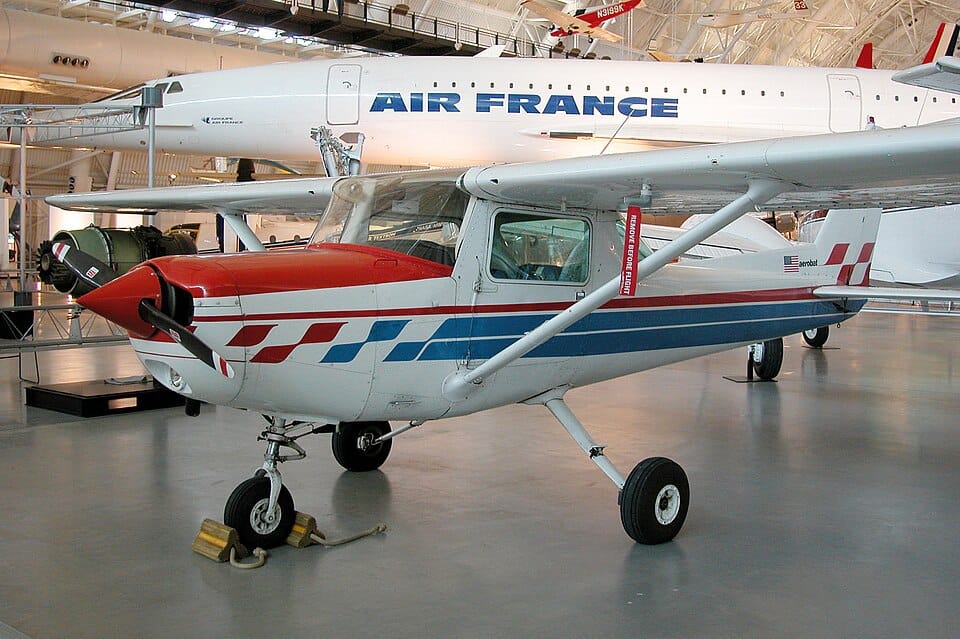
In the early hours of September 30, 1956, the patrons of a Washington Heights bar were treated to a sight that nobody in New York City — before or since — has witnessed at closing time. A single-engine Cessna touched down on St. Nicholas Avenue, rolled to a stop in front of the tavern, and out climbed Thomas Fitzpatrick, a decorated US Marine Corps veteran who had just flown from New Jersey to settle a bar bet. He walked inside, ignored his stunned friends, and ordered a beer before last call.
Two years later, he did it again.
The First Landing
The story begins, as so many great aviation stories do, with alcohol and an argument. Fitzpatrick was drinking at a bar on St. Nicholas Avenue in Washington Heights, the northernmost neighborhood of Manhattan, when a fellow patron expressed doubt that anyone could get from New Jersey to Upper Manhattan in fifteen minutes. Fitzpatrick, who had learned to fly and who possessed the particular brand of confidence that comes from several hours of steady drinking, felt this was a challenge that demanded a practical demonstration.
He drove to the Teterboro School of Aeronautics in New Jersey, where he was a student, and — without permission, authorization, or anything resembling a flight plan — took a single-engine Cessna. At approximately 3:00 AM, he lined up on St. Nicholas Avenue, a wide, straight boulevard that runs through Washington Heights, and brought the aircraft in for a landing.
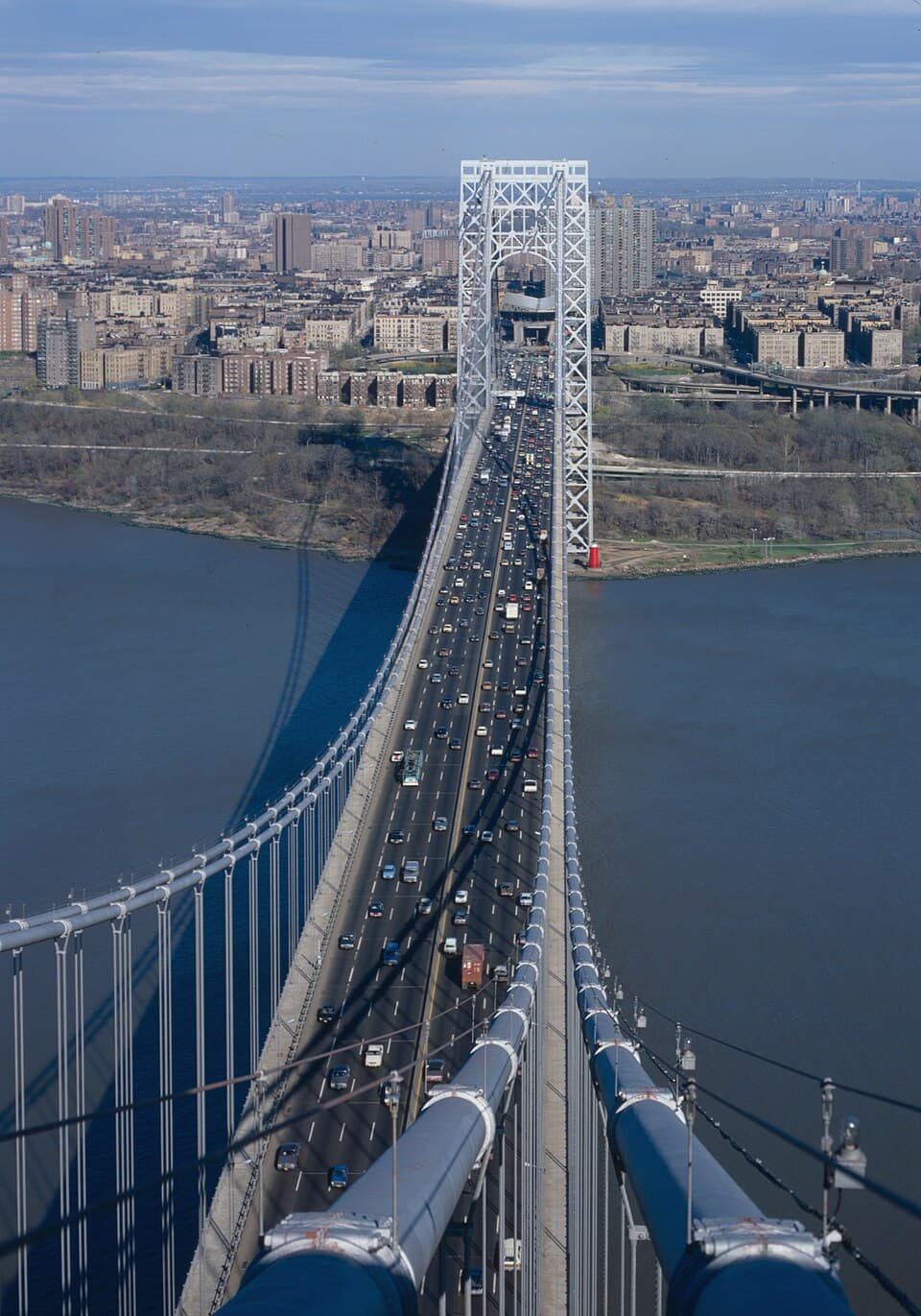
The landing was, by all accounts, clean. The 60-foot-wide avenue, clear of traffic at that hour, provided just enough room for the Cessna small wingspan. Fitzpatrick taxied the aircraft to a stop directly in front of the bar, climbed out, and strolled inside with the air of a man who had just proven a point that really needed proving.
Police arrived. Fitzpatrick was charged with grand larceny for stealing the aircraft and with violating New York City administrative codes that, perhaps unsurprisingly, prohibit aircraft from landing on city streets. However, the owner of the Cessna declined to press charges on the larceny count. The remaining violation earned Fitzpatrick a $100 fine — roughly $1,100 in today money.
The Second Landing
This is where the story crosses from remarkable into genuinely unbelievable. On October 4, 1958 — just over two years after his first Manhattan landing — Fitzpatrick was once again in a bar, once again drinking, and once again dealing with a patron who did not believe his story about landing a plane on a New York street. History, it seems, has a sense of humor.
Fitzpatrick responded the only way he knew how. He drove back to the same flight school in New Jersey, stole another Cessna, and flew it to Manhattan. This time he landed on Amsterdam Avenue near 187th Street, directly in front of a Yeshiva University building. It was just before 1:00 AM.
Quick Facts
- Pilot,Thomas Fitzpatrick (1930-2009)
- First landing,September 30, 1956 — St. Nicholas Ave near 191st St
- Second landing,October 4, 1958 — Amsterdam Ave near 187th St
- Aircraft,Single-engine Cessna (stolen from NJ flight school)
- Motivation,Bar bet / proving a boast
- First penalty,$100 fine
- Second penalty,6 months in prison
- Military service,US Marine Corps, decorated veteran
The authorities were less amused the second time around. Judge John A. Mullen, confronted with a repeat offender who had apparently learned nothing from his $100 fine, sentenced Fitzpatrick to six months in prison. According to the judge, “Had I had the authority, I would have committed him to a mental institution.”
The Man Behind the Stunt
Thomas Fitzpatrick was not a random daredevil. Born in 1930, he served as a United States Marine and saw combat in the Korean War, where he earned a Purple Heart. His military service record was distinguished enough that it likely influenced the lenient treatment he received after the first landing.
After his prison sentence, Fitzpatrick settled down, married, had children, and worked as a steamfitter in New York City for decades. He rarely spoke publicly about his nocturnal flights, though the story became one of New York City enduring urban legends. He passed away in 2009 at the age of 79.
Could It Happen Today?
The short answer is no. Post-9/11 airspace restrictions over Manhattan are among the strictest in the world. The Temporary Flight Restriction (TFR) over New York City is permanent and comprehensive. Radar coverage, transponder requirements, and alert systems would detect an unauthorized aircraft long before it could descend to rooftop level. And the consequences would be measured in years, not months or hundred-dollar fines.
But in the 1950s, radar coverage over cities was minimal, general aviation was lightly regulated, flight school security was essentially nonexistent, and the idea that someone would deliberately fly a stolen plane into Manhattan for a bar bet was too absurd for anyone to plan against. Thomas Fitzpatrick found a gap in the system that existed only because nobody had imagined anyone would be crazy enough to exploit it. Then he exploited it twice.
 English
0 Comments