
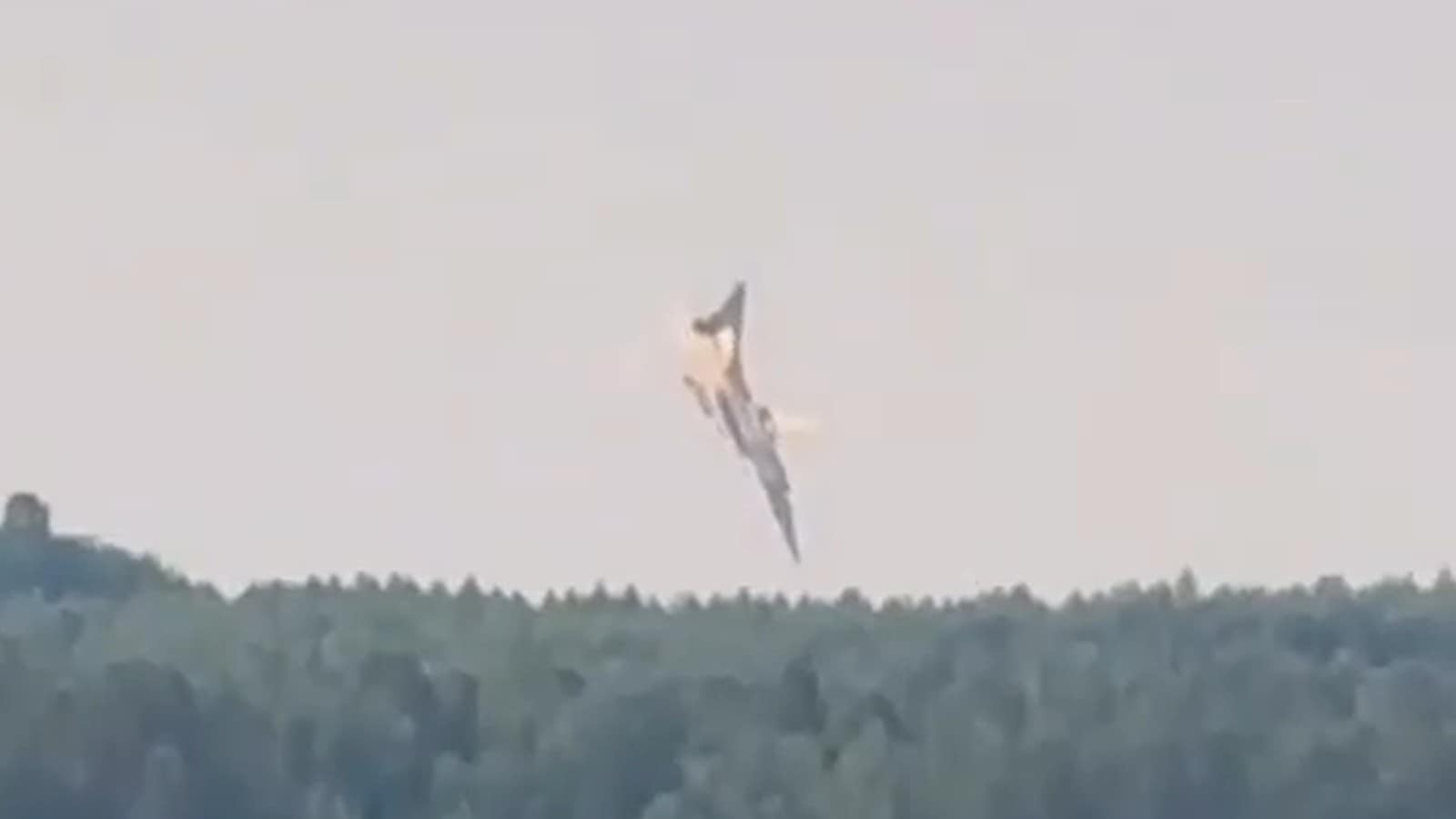
The video is brief and brutal. A Russian Tu-22M3 strategic bomber, one of the heaviest combat aircraft Moscow flies, tips into a steep nose-down dive, trails fire, and disappears behind a treeline. A beat later, a column of black smoke marks where it hit the forest floor.
The Backfire went down on June 15, 2026, near the town of Svirsk in Russia’s Irkutsk region — roughly 50 kilometres from Belaya Air Base, one of the main homes of Russia’s long-range bomber fleet. It was, according to Moscow, a scheduled training flight. Remarkably, all four crew members ejected and survived.
That the crew lived is the good news for Russia. The bad news is what the loss says about a bomber fleet that is being flown hard, hit often, and is running low on spare airframes.
Quick Facts
- Aircraft: Tupolev Tu-22M3 “Backfire-C” strategic bomber
- When: June 15, 2026, during a scheduled training flight
- Where: Near Svirsk, Irkutsk region (~50 km from Belaya Air Base)
- Crew: All four ejected and survived; injuries not life-threatening
- Weapons: None aboard, per the Russian Ministry of Defense
- Likely cause: Preliminary reports point to engine failure (unconfirmed)
- Fleet impact: Drops Russia’s Tu-22M3 force to roughly 56 airframes
Four Parachutes, Then the Fireball
Witnesses near the Angara River reported seeing several parachutes in the sky moments before the bomber struck a wooded area and exploded. The Tu-22M3 carries a crew of four, and all of them got out. They were taken to hospital with injuries described as not life-threatening.
The way the aircraft fell — a sustained, near-vertical dive rather than a low-altitude stall — suggests the crew had altitude to work with, time to steer away from the nearby town, and a window to punch out before impact. Russian officials said the jet was carrying no weapons.
Here is how Moscow framed it.
An Aging Fleet Under Strain
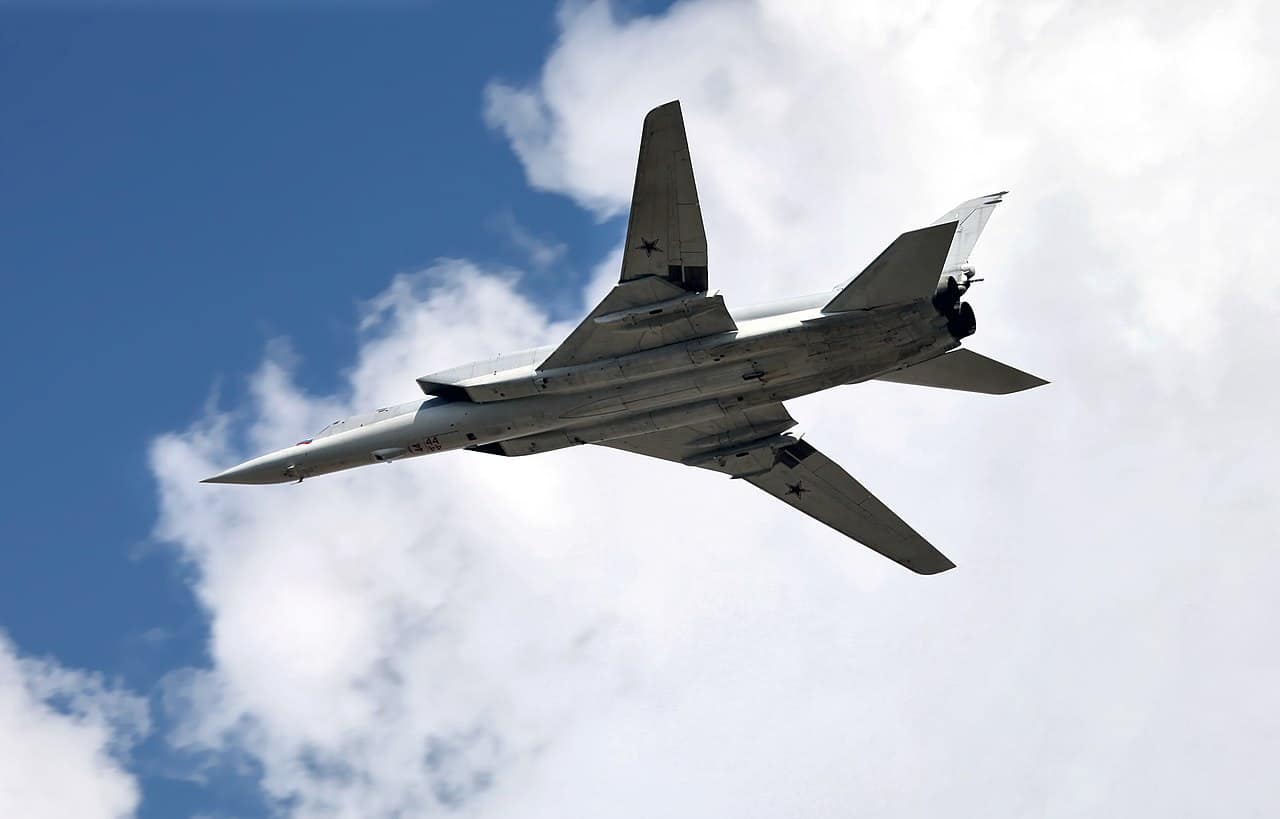
The Tu-22M3 is one of the three pillars of Russia’s long-range aviation, alongside the Tu-95 and the Tu-160. Since the full-scale invasion of Ukraine, Backfires have been worked relentlessly, launching heavy Kh-22 and Kh-32 cruise missiles at Ukrainian cities from inside Russian airspace.
But the fleet is old and shrinking. Reference figures compiled at the end of 2025 put the active Tu-22M3 force at around 57 aircraft; this crash brings that to roughly 56. There is no production line to replace them — the type went out of production decades ago — and the surviving jets average more than 30 years old. Each loss, combat or accident, is effectively permanent.
It has also been a brutal stretch for the Backfire. Ukraine claimed a Tu-22M3 shot down over the Stavropol region in 2024, and in June 2025, Ukraine’s audacious “Spiderweb” drone raid struck Belaya Air Base — the same base near this crash — damaging or destroying several bombers parked on the ramp.
Caught on Camera
What makes this loss stand out is the footage. Strategic-bomber crashes are rarely filmed; this one was captured from multiple angles and spread across social media within minutes, showing the dive, the fire, and the smoke plume rising over the Siberian forest.
The clip below collects the circulating footage of the crash.
Four men walked away from a falling bomber on June 15. The Russian Aerospace Forces were not so lucky: they are down one more Backfire they cannot replace.
Sources: Russian Ministry of Defense (via state media); The Moscow Times; Meduza; Defense Express; aviation-safety.net.


 English
0 Comments