
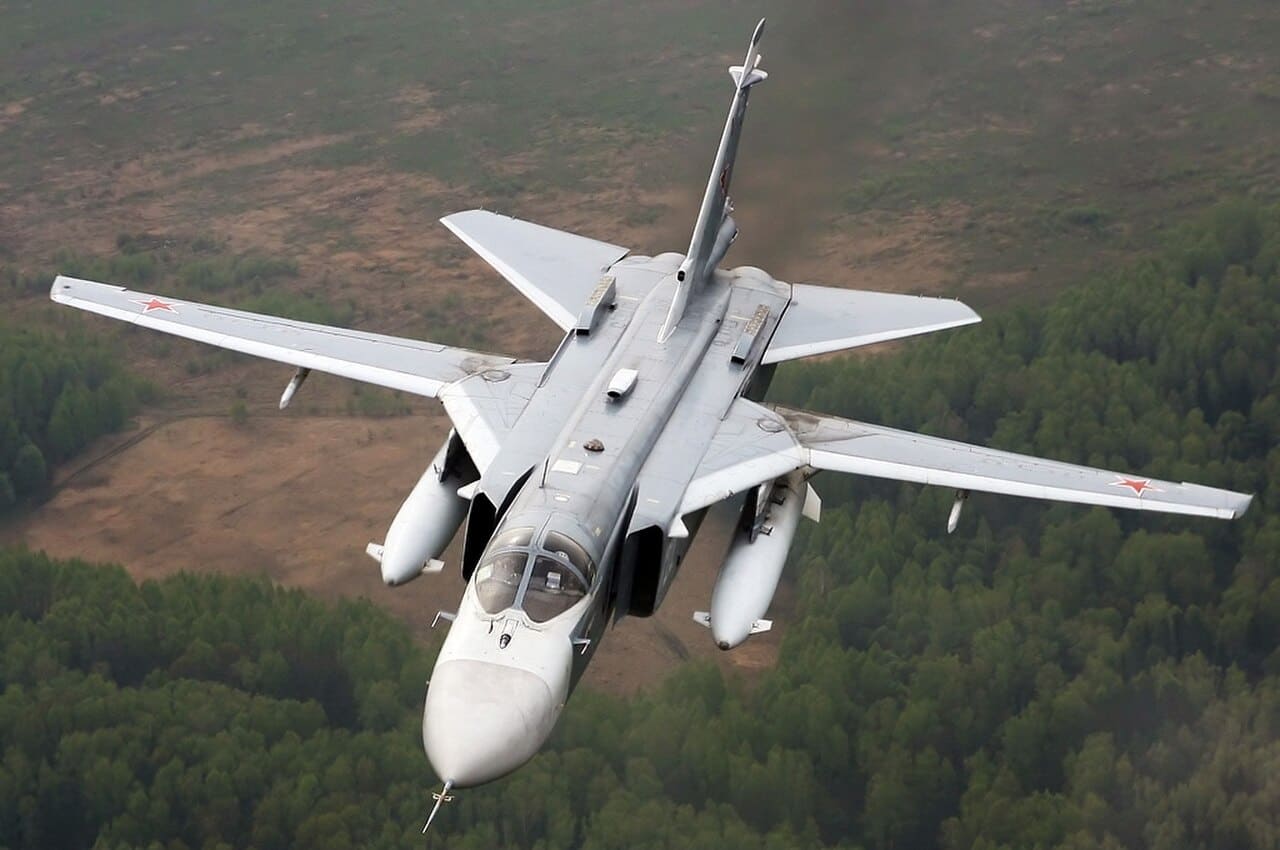
For three years, Ukrainian Air Force Su-24 Fencers and Su-27 Flankers have been launching American-made GBU-39 Small Diameter Bombs and JDAM-ER kits at Russian positions inside occupied Ukraine. Every one of those bombs comes with a U.S. export licence, a U.S. supply chain, a U.S. veto on what targets they can be used against, and a U.S. accounting of every single round. After the first months of 2026, the U.S. supply has become inconsistent, the political conditions attached have become unpredictable, and Ukraine has done what every state under sanctions or restrictions has eventually done in the history of warfare: it built its own.
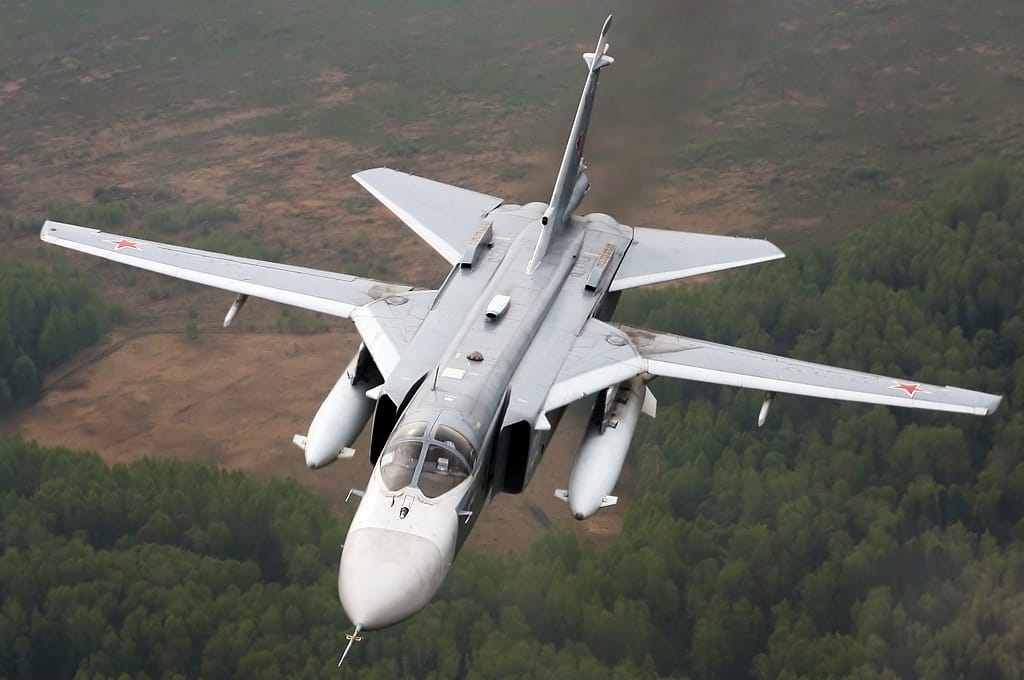
The Ukrainian-developed standoff glide bomb broke cover on 18 May 2026. The Ukrainian Ministry of Defence has not announced its designation publicly, but official footage of the weapon being released from a Su-24M confirms it is real and combat-ready — and almost certainly the first in a family. It was developed in 17 months by DG Industry, a Ukrainian firm backed by the state Brave1 defence-innovation cluster.
Quick Facts
Weapon type: Air-launched precision-guided glide bomb (range-extended)
Designation: Not publicly disclosed by Ukrainian Ministry of Defence
Estimated weight class: 250 kg warhead
Estimated range: officially “dozens of kilometres”, depending on launch altitude and speed
Guidance: Inertial navigation with satellite guidance, optical terminal correction likely
Launch platforms confirmed: Su-24M Fencer (release footage); designed for rapid integration on the Su-27, MiG-29 and Su-25
Status: Declared ready for combat use on 18 May 2026; an experimental batch has been purchased
Strategic significance: Ukraine no longer dependent on US-controlled JDAM-ER and GBU-39 supplies for standoff strike
Why Ukraine needed its own
The Russian air defence net inside occupied Ukraine and along the contact line has been the dominant constraint on Ukrainian air operations since early 2022. S-300, S-400, Buk-M3, Tor, Pantsir — Russian surface-to-air missile systems make every Ukrainian Su-24 or Su-27 sortie near the front a calculated risk. The only way Ukrainian crews have been able to strike with any frequency is by launching standoff weapons from outside the engagement envelope of those systems.
The U.S.-supplied JDAM-ER (a wing-kit modification of a 500-pound bomb) has been the workhorse since early 2023. It gives Ukrainian aircraft about 70 km of standoff range when released at high subsonic speed from medium altitude. It is precise. It is reliable. It is also tied entirely to American supply discipline, American political conditions, and American intelligence about Russian air defence positions. Every JDAM-ER delivered has come with American end-use monitoring and target authorisation rules that Ukraine cannot escape.
The newer GBU-39 Small Diameter Bomb has supplemented JDAM-ER for harder targets at slightly greater range. Same political and supply constraints apply.
What the new weapon does
From the photographs and the limited official acknowledgement, the new Ukrainian glide bomb appears to be a clean-sheet design built around what Ukraine has and what Ukraine can manufacture in volume. A 250 kg warhead. Pop-out wings (or possibly fixed wings with control surfaces) for glide extension. Inertial navigation with satellite guidance — almost certainly using GPS, possibly also Ukrainian access to European Galileo signals or even a homegrown receiver. Likely some form of terminal optical guidance for hardened or moving targets.
Officials describe the range as dozens of kilometres, depending on release altitude and speed — a bracket comparable to the JDAM-ER. That is far enough that the launching aircraft can stay outside the Pantsir engagement envelope and well outside the close-in S-300 PMU2 envelope, even if not always outside the S-400 envelope at its longer ranges.

The export question
Here is where the story gets interesting beyond Ukraine. Once a state has developed a domestic precision-guided glide bomb that works against the densest, most-tested integrated air defence network in modern history, it has something other states will want to buy. Poland and a long list of militaries still flying Soviet-era types such as the Su-22 and Su-25 have been quietly waiting for a credible non-American, non-Israeli supplier of compatible precision-guided ordnance.
Ukraine is not yet at the stage of marketing this weapon abroad. The first priority is volume production for Ukrainian Air Force consumption. But within a few years, the export potential is real — and unlike a U.S. or French weapon, the Ukrainian product comes with no political conditions and no end-use monitoring. The state that built the weapon in a war for its own survival is not going to be precious about how customers use it.
What this means strategically
The bigger picture is that Ukraine has now done across three weapon categories what Israel did in the 1960s and 1970s: pivot from a client state dependent on American supply to a producer state with its own munitions industrial base. Ukrainian-built one-way attack drones (Lyutyy, Bober). Ukrainian-built cruise missiles (Neptune R-360, Long Neptune, the low-cost Trembita). And now Ukrainian-built precision-guided glide bombs.
For Russia, this is a strategic problem. Tightening sanctions on American component supply to Ukraine no longer stops the Ukrainian deep-strike campaign. For Ukraine, it is a strategic insurance policy. The country can no longer be turned off remotely by a change in policy in Washington. And for the global arms market, it is a quietly seismic shift — a new, low-cost, combat-proven supplier is about to enter the field.
Sources: The War Zone; Ukrainian Ministry of Defence; United24 Media; OSINT analysts on X.


 English
0 Comments